
Saudi Arabia’s 2026 Nitaqat cycle is resetting expectations for private-sector localisation, and logistics operators feel the pressure quickly because workforce structure drives operational continuity. Nitaqat is the Ministry of Human Resources and Social Development (MHRSD) program that ranks employers by their Saudi-to-expat ratio and places them into bands that control access to key services. Depending on your band, your company’s ability to issue new work visas, transfer sponsorships, renew Iqamas and work permits, and access government services can be enabled or blocked. In 2026, the program shifted in ways that make compliance less forgiving, even for employers whose headcount mix has not changed.
The new cycle is described as a three-year phase running through 2028, with stepped-up requirements inside that window. Sources describe the 2026 update as the most significant phase since the 2021 overhaul, including raised sector quotas and moved-up band thresholds. Assessment also moved to the entity level, meaning same-activity branches are counted together rather than treated as separate buffers. Another 2026 shift is the move away from fixed quotas toward thresholds that scale with headcount, so a growing operator can see its required localisation expectations rise smoothly as it hires. This is why firms that were stable in Green can find themselves nearer to Red without changing their internal ratios.
Why Logistics Operators Face a Higher Compliance Burden in 2026
Two mechanics matter most in day-to-day logistics execution: the band consequences and the digital proof requirements. Nitaqat bands are commonly described as Platinum, Green, and Red, with Platinum being the most compliant and Red severely restricted; one source also explains Yellow as a mid-performing tier with partial restrictions, while other sources state Yellow was abolished and former Yellow establishments were reclassified as Red. Separately, the 2026 update ties Saudization credit to Qiwa. From April 15, 2026, a Saudi employee does not count toward your Saudization percentage unless their contract is electronically documented and authenticated on Qiwa, with GOSI registration no longer sufficient on its own. For operators managing multiple sites and fast-moving roles, missed contract documentation can turn real Saudi headcount into “invisible” headcount for Nitaqat calculations.
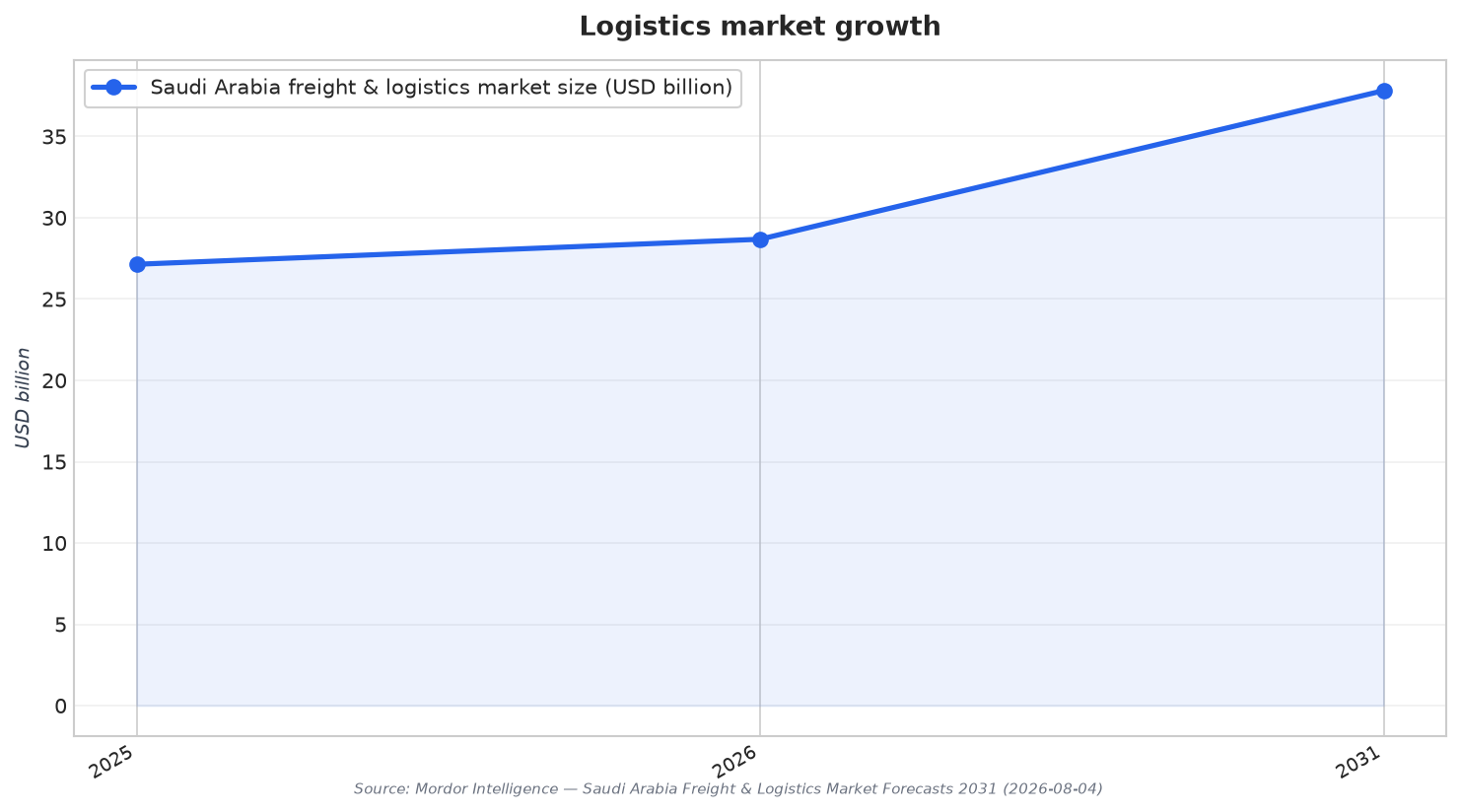
Enforcement interacts with sector economics. One market forecast values the Saudi Arabia freight and logistics market at USD 27.14 billion in 2025 and estimates growth from USD 28.68 billion in 2026 to USD 37.82 billion by 2031, at a 5.69% CAGR for 2026–2031. In that same forecast, freight transport held 58.92% of the market share in 2025, while CEP services are projected at a 6.45% CAGR for 2026–2031. Yet constraints are highlighted alongside growth: the workforce gap is estimated at 663,000 logistics professionals by 2030, driver shortages are flagged under Saudization rules, and visa curbs are described as limiting foreign recruitment. The forecast also notes heavy-truck driver roles remain hard to fill despite average pay of SAR 39,996 (USD 10,665), and it attributes a 7% inflation in line-haul rates to scheduling constraints such as mandatory Saudization targets and capped shift hours.
For logistics and procurement teams, the practical response is to treat localisation as an operating constraint instead of an HR side project. One procurement-focused guide stresses building role maps, identifying scarce capabilities, and creating pathways for Saudi nationals into buyer, planner, and logistics coordination tracks. The same theme aligns with what the Nitaqat 2026 rule changes demand: active monitoring of your band status, disciplined contract documentation on Qiwa, and planning that anticipates thresholds that rise with headcount. If you hire through an Employer of Record (EOR), sources warn you inherit the EOR’s Nitaqat band, not your own, which makes vendor diligence part of workforce risk control. In short, Saudi Nitaqat 2026 logistics quotas are not just a compliance issue; they shape how quickly operators can scale without triggering visa, renewal, and service restrictions.
What is Nitaqat and why does it matter for logistics operators?
How does the 2026 Nitaqat cycle change Saudization compliance through 2028?
What is the Qiwa contract rule in 2026?
What market and workforce pressures make the 2026 changes harder for logistics firms?
How should operators plan for Saudi Nitaqat 2026 logistics quotas in practice?
Talk to us for your needs in:
- Identifying Suitable Warehouse Sites in Saudi Arabia
- Customized Logistics and Supply Chain Analytics
- Logistics Network Design and Optimization
- Green Supply Chain and Sustainable Logistics Solutions
- Supply Chain Risk Management and Compliance
- Advanced Supply Chain Resilience and Agility
- Logistics Market Research and Strategic Analysis
- In-Depth Market Survey for Logistics
- Market Intelligence and Insights in Logistics
- Feasibility Study and Assessment in Logistics
- Integrated Warehousing Management Solutions
- Smart Warehousing and Automation Systems
- Sustainable and Green Warehousing Practices
- Port and Airport Logistics Optimization
- Digital Logistics Solutions
- Saudi Logistics Benchmarking