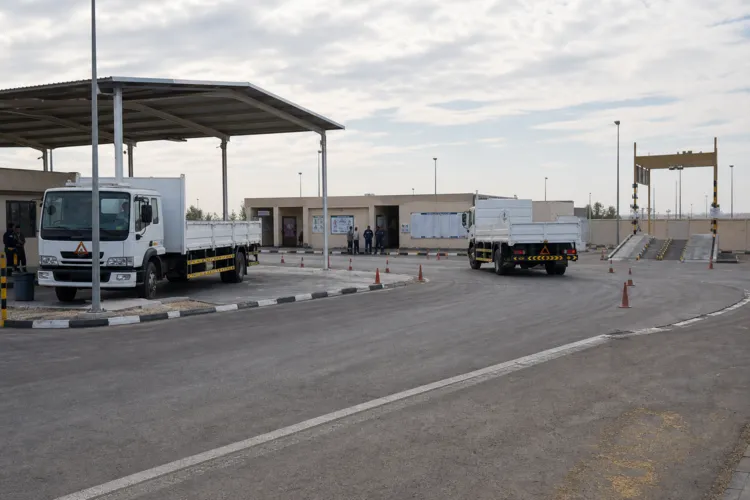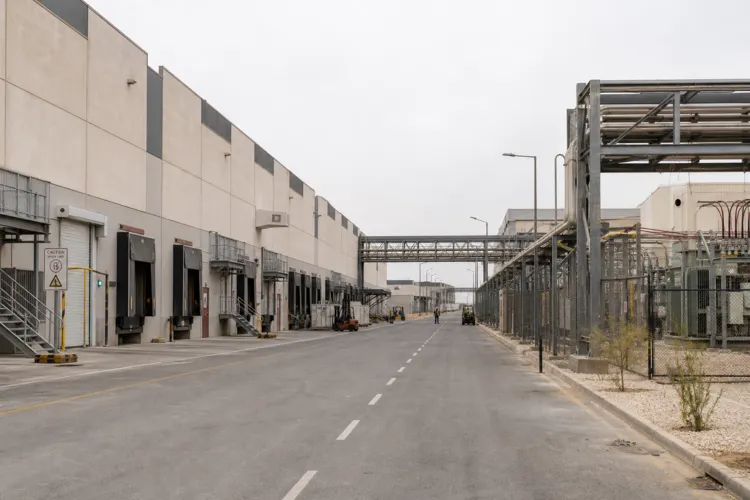
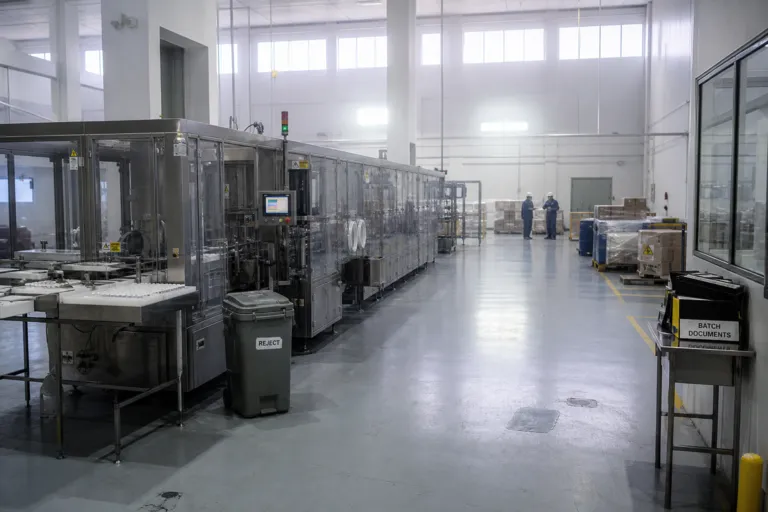
Domestic manufacturing is changing how medicines move through Saudi Arabia’s supply chain. Historically, imported products accounted for approximately 70% to 80% of the Saudi market by value, while domestic production focused on generic formulations and multinationals supplied many branded products through import channels. That structure showed its weakness during the COVID-19 pandemic, when global disruptions highlighted the risks of relying on foreign manufacturing for essential medicines. Vision 2030 and related programs now frame manufacturing as a supply security issue, not only an industrial one. The National Industrial Development and Logistics Program (NIDLP) set a target to increase the proportion of locally manufactured pharmaceuticals to 40% of market value by 2030.
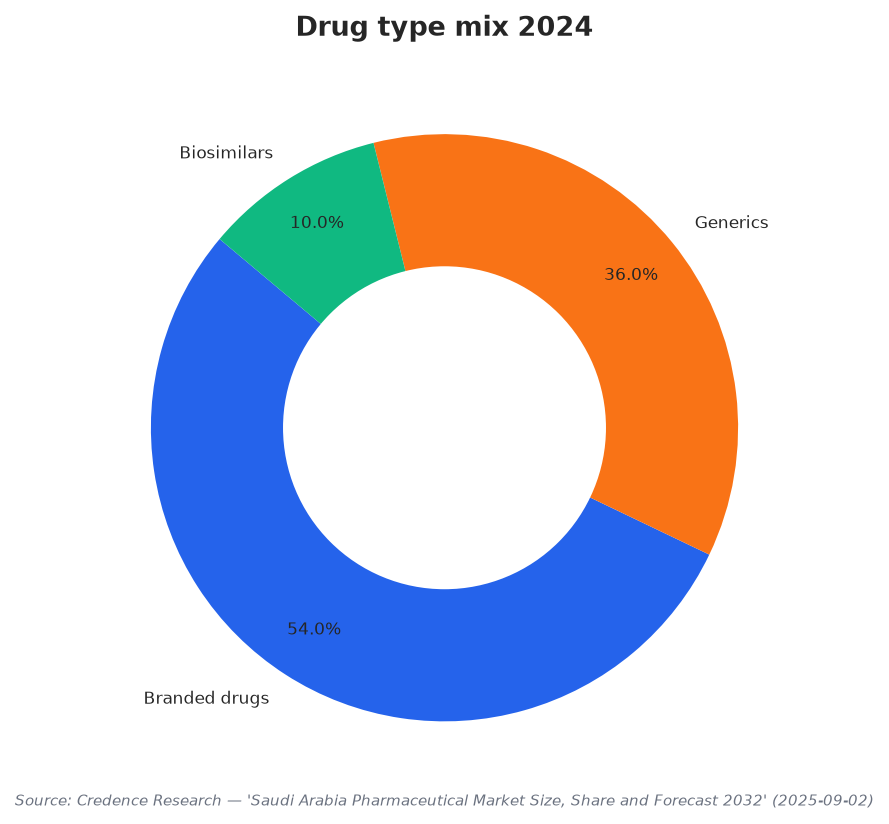
Market growth is also raising the stakes for continuity and procurement discipline. Credence Research values the Saudi Arabia pharmaceutical market at USD 12,038.16 million in 2024, up from USD 7,902.15 million in 2018, and forecasts USD 21,160.70 million by 2032, at a CAGR of 6.80%. In 2024, prescription drugs held 63% share, and branded drugs led with 54% share, while generics secured 36% and biosimilars gained 10%. Therapeutically, oncology held 29% share, followed by cardiology at 21% and diabetes at 17%. Regionally, the Central Region led with 38% share in 2024, underlining how demand concentration influences distribution and inventory planning.
How Local Plants and APIs Are Rewiring Procurement
Saudi pharma manufacturing localization is shifting from finished-dose assembly toward deeper input control. MarkWide Research describes multi-source API procurement expanding as manufacturers reduce import dependency. It notes Saudi Chemical Co. using its chemical distribution network to anchor raw material access for domestic synthesis, and SPIMACO sustaining vertical integration through its dedicated Addwaeih API Plant to control critical production stages in-country. At the same time, the Ministry of Health’s unified purchasing system is displacing fragmented hospital-level contracting for essential medicines. The same source highlights oncology and infectious disease categories as showing visible concentration, with single-supplier agreements replacing multi-vendor arrangements, changing how manufacturers plan capacity and service levels.
New investments in local capacity add practical volume and shorten supply lines. In early 2025, Apex Pharma launched its first facility in King Abdullah Economic City and planned to roll out 10 to 14 pharmaceutical products within the year, according to a report on Saudi Arabia’s generic drug market. In February 2026, Coherent Market Insights reports that Stada Arzneimittel AG revealed plans for a USD 100 million (€85 million) investment to build a pharmaceutical production facility in Saudi Arabia, aligning with Vision 2030 goals to lessen import dependence and strengthen supply chains. These projects sit alongside regulatory work: the Saudi Food and Drug Authority (SFDA) regulates market access, product registration, and manufacturing standards, and has also been described as streamlining approval pathways for generics.
Generics are a central lever because they can scale across large therapy needs while easing budget pressure. IMARC Group data cited in the generic market report puts Saudi Arabia’s generic drug market at USD 4.1 billion in 2025, with expectations of USD 8.1 billion by 2034, at a CAGR of 7.88% during 2026–2034. This growth occurs alongside a competitive structure that includes domestic manufacturers such as SPIMACO, Tabuk Pharmaceuticals, and Riyadh Pharma, while multinationals like Pfizer, Novartis, and GSK are noted in Credence Research as leaders in advanced therapies and branded drugs. The net effect is a supply chain that increasingly blends local manufacturing, tighter procurement, and regulated distribution through hospital and retail channels.
Why is Saudi Arabia prioritizing domestic pharmaceutical manufacturing?
What local manufacturing target has Saudi Arabia set for 2030?
How are APIs changing the structure of medicine supply chains in Saudi Arabia?
What recent projects show momentum in localization investment?
How does Saudi pharma manufacturing localization intersect with procurement reform?
Talk to us for your needs in:
- Identifying Suitable Warehouse Sites in Saudi Arabia
- Customized Logistics and Supply Chain Analytics
- Logistics Network Design and Optimization
- Green Supply Chain and Sustainable Logistics Solutions
- Supply Chain Risk Management and Compliance
- Advanced Supply Chain Resilience and Agility
- Logistics Market Research and Strategic Analysis
- In-Depth Market Survey for Logistics
- Market Intelligence and Insights in Logistics
- Feasibility Study and Assessment in Logistics
- Integrated Warehousing Management Solutions
- Smart Warehousing and Automation Systems
- Sustainable and Green Warehousing Practices
- Port and Airport Logistics Optimization
- Digital Logistics Solutions
- Saudi Logistics Benchmarking