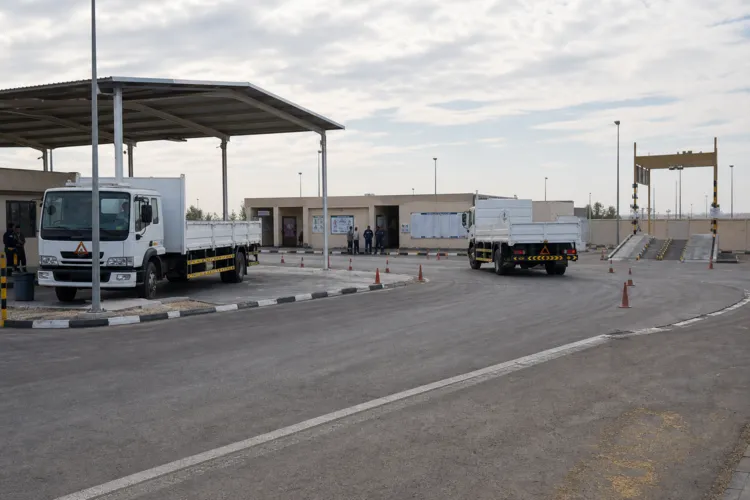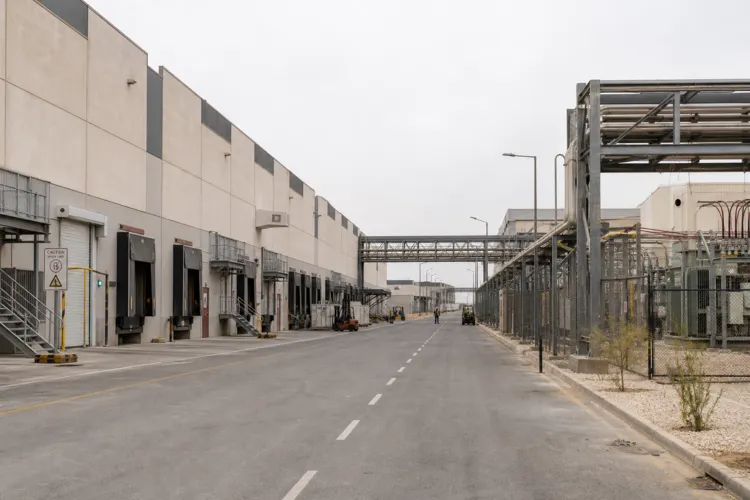
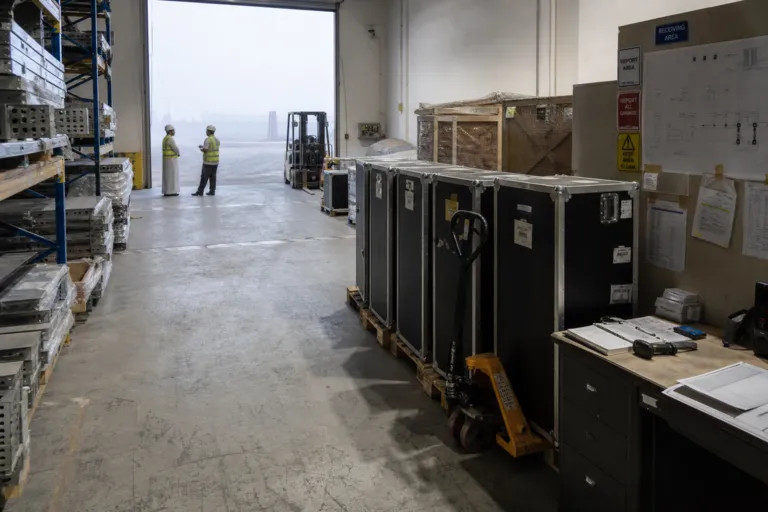
HUMAIN’s August 2025 announcement set a clear direction: new data centers in Riyadh and Dammam, equipped with advanced AI chips from leading U.S. manufacturers. Those projects sit inside a wider AI buildout that is hard to measure because the industry lacks transparency on chip supplies, total data centers, and electricity consumption. Even so, widely cited estimates show the scale of the ecosystem that HUMAIN must buy into. Epoch AI estimates there are about 20 million A.I. chips already installed in data centers worldwide. It also frames how inbound planning becomes a competitive capability, because even a single “training run” can cost hundreds of millions of dollars while tens of thousands of specialized chips churn through the data.
For Saudi data center inbound logistics, the core issue is not just moving equipment, but moving it on time in a supply chain under visible strain. Accuris lead-time tracking data shows semiconductor lead times reached 40 weeks in March 2026, with memory ICs and fiber optic components among the most acutely constrained categories consumed in enormous quantities by AI data centers. Technavio adds that lead times for essential electrical components like high-capacity transformers and switchgear have increased by over 50%, elevating construction costs and creating project uncertainty. For an AI-focused facility, that risk profile extends beyond chips into power, networking, and the components that make a rack deployable.
Why Chip-Heavy AI Facilities Stress the Inbound Pipeline
AI data centers are architected for high-density, parallel processing using thousands of interconnected AI accelerators like GPUs, supported by high-bandwidth, low-latency networking and high-performance storage. That architecture turns inbound shipments into tightly coupled sequences. SiliconAnalysts reports that AI racks can require 10–36x more fiber than traditional setups, while DAC/AOC lead times exceed 20 weeks, making interconnects an emerging bottleneck. In memory, Accuris reports that up to 70% of all memory chips produced globally in 2026 will be consumed by AI data centers, and that high-bandwidth memory now consumes 23% of total DRAM wafer capacity, up from single digits two years ago. Inbound plans that treat chips as the only constraint miss the systems reality.
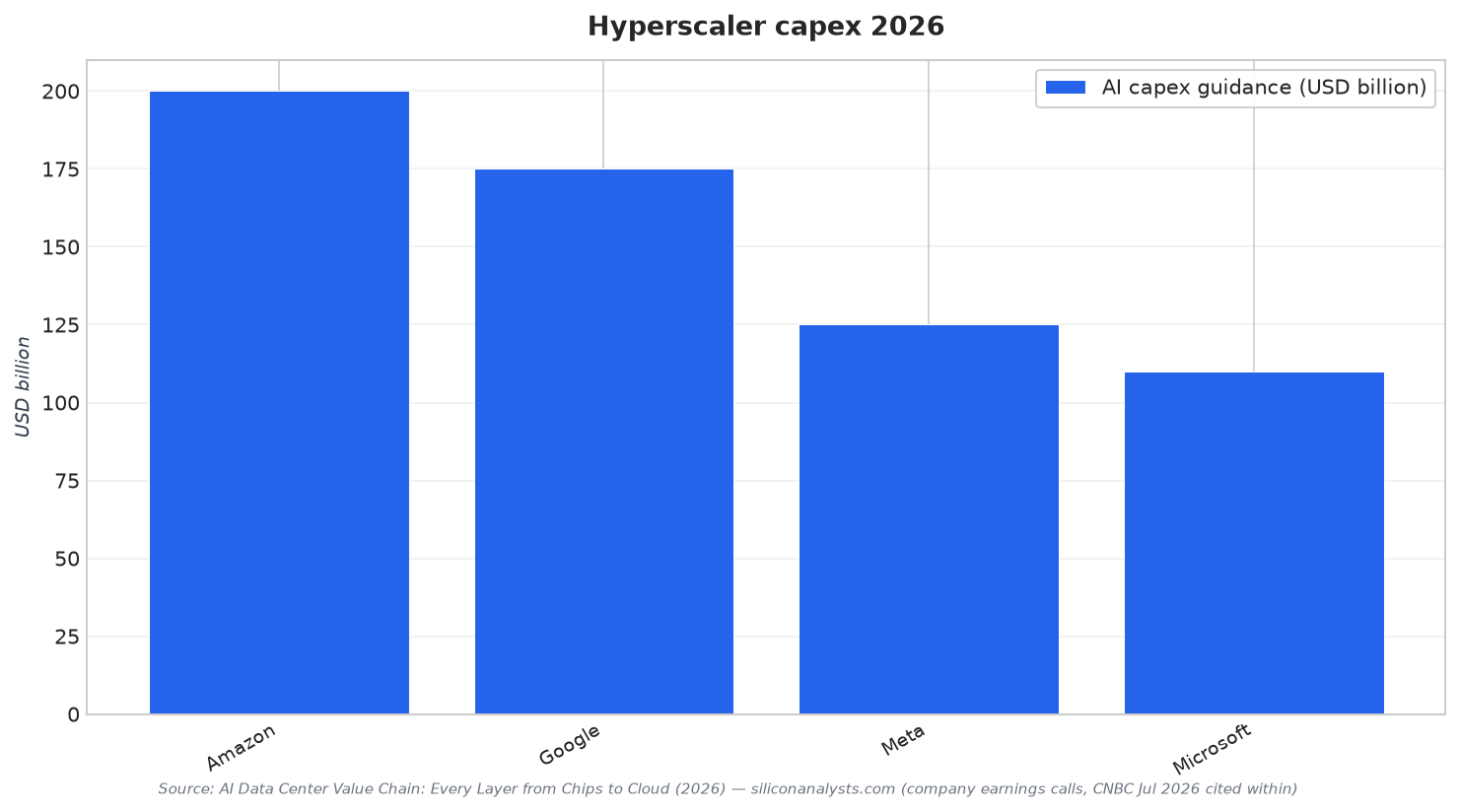
Context also matters because the biggest buyers shape what suppliers prioritize. Accuris projects the top five hyperscale data center companies—Amazon, Microsoft, Google, Meta, and Oracle—will spend over $600 billion on infrastructure in 2026, a 36% increase from 2025, with roughly 75% (approximately $450 billion) targeting AI infrastructure. SiliconAnalysts similarly notes hyperscalers spent about $410B on capex in 2025 and have guided about $700B+ for 2026. The New York Times adds that the United States is home to about 5,500 data centers, and that U.S. companies control about 80% of global computing power that drives AI, according to Epoch AI. HUMAIN’s inbound execution must compete against that demand intensity without assuming the same purchasing leverage.
So what does an “18,000-chip move” really represent in practice? Not a single shipping event, but a synchronization problem spanning chips, memory, optics, and power gear, while managing uncertainty. SiliconAnalysts shows NVIDIA’s data center AI share shifting from 86% toward about 75% (2024 to 2026E), and notes custom ASICs scaling in parallel; that diversification can change what is sourced, packaged, and delivered. Meanwhile, Technavio highlights how persistent supply chain risks for AI accelerators compound the challenge of hardware obsolescence. For HUMAIN’s Riyadh and Dammam builds, inbound logistics becomes the discipline of aligning constrained lead times with high-density AI rack realities, so the site can turn delivered components into running compute rather than stranded inventory.
What did HUMAIN announce for Riyadh and Dammam?
What do the sources say about global AI chip scale in data centers?
Which lead times most threaten inbound delivery schedules for AI data centers?
How is the AI data center boom affecting memory and interconnect supply?
What does Saudi Arabia’s data center inbound logistics need to account for in HUMAIN-style AI builds?
Talk to us for your needs in:
- Identifying Suitable Warehouse Sites in Saudi Arabia
- Customized Logistics and Supply Chain Analytics
- Logistics Network Design and Optimization
- Green Supply Chain and Sustainable Logistics Solutions
- Supply Chain Risk Management and Compliance
- Advanced Supply Chain Resilience and Agility
- Logistics Market Research and Strategic Analysis
- In-Depth Market Survey for Logistics
- Market Intelligence and Insights in Logistics
- Feasibility Study and Assessment in Logistics
- Integrated Warehousing Management Solutions
- Smart Warehousing and Automation Systems
- Sustainable and Green Warehousing Practices
- Port and Airport Logistics Optimization
- Digital Logistics Solutions
- Saudi Logistics Benchmarking