Gulf routing decisions shifted in 2026, and policy details started to matter as much as sailing schedules. A freight marketplace tracking shipper questions reported that interest moved from only asking how fast cargo could clear Jebel Ali to exploring Saudi gateways and new facilitation rules. In March 2026, Saudia Cargo, Mawani, and ZATCA launched a sea-to-air corridor through Saudi Arabia’s western ports, linking sea and air under a single transit framework so a shipment can move on one customs declaration with pre-clearance and smart inspection. That same year, uncertainty around the Strait of Hormuz pushed cargo owners toward gateways that reduce chokepoint dependence, supporting a broader port realignment across the Kingdom.
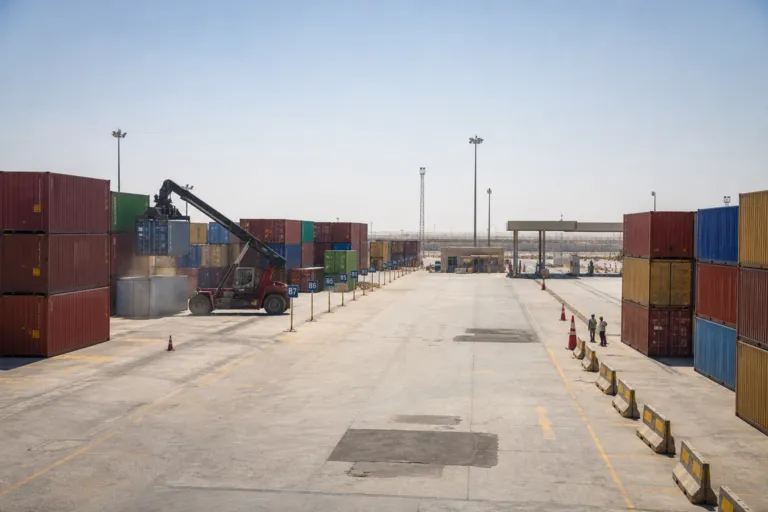
On the Eastern side, Mawani extended storage fee waivers in ways that directly affect how carriers position equipment. Arab News reported that the storage fee exemption for empty containers at King Abdulaziz Port in Dammam and Jubail Commercial Port increased from 10 to 20 days. Another Mawani update described the same 10-to-20 day extension and said it is designed to incentivize shipping lines to import and redirect empty containers into Eastern Province ports, ensuring a continuous flow for export operations. It also explicitly aims to encourage redirection of empty containers currently held in other GCC ports toward Dammam and Jubail, tightening the link between fee policy and regional equipment redistribution.
Why Dammam’s Container Policy Matters More in a Tight Warehousing Market
Redistribution works best when it is supported by storage capacity and high utilization. A JLL analysis summarized by IndexBox said occupancy surpassed 90% in Riyadh, Jeddah, and the Dammam Metropolitan Area during Q2 2026, pointing to a supply-demand gap in those regions. The same source noted Saudi Arabia’s industrial base rose to roughly 13,660 facilities in April 2026 from 12,289 in the prior year, which can translate into steadier inbound parts and outbound finished goods flows. Against that backdrop, a longer empty-container fee exemption becomes a tool to keep export operations moving, while making Dammam a more practical location to reposition equipment for nearby markets.
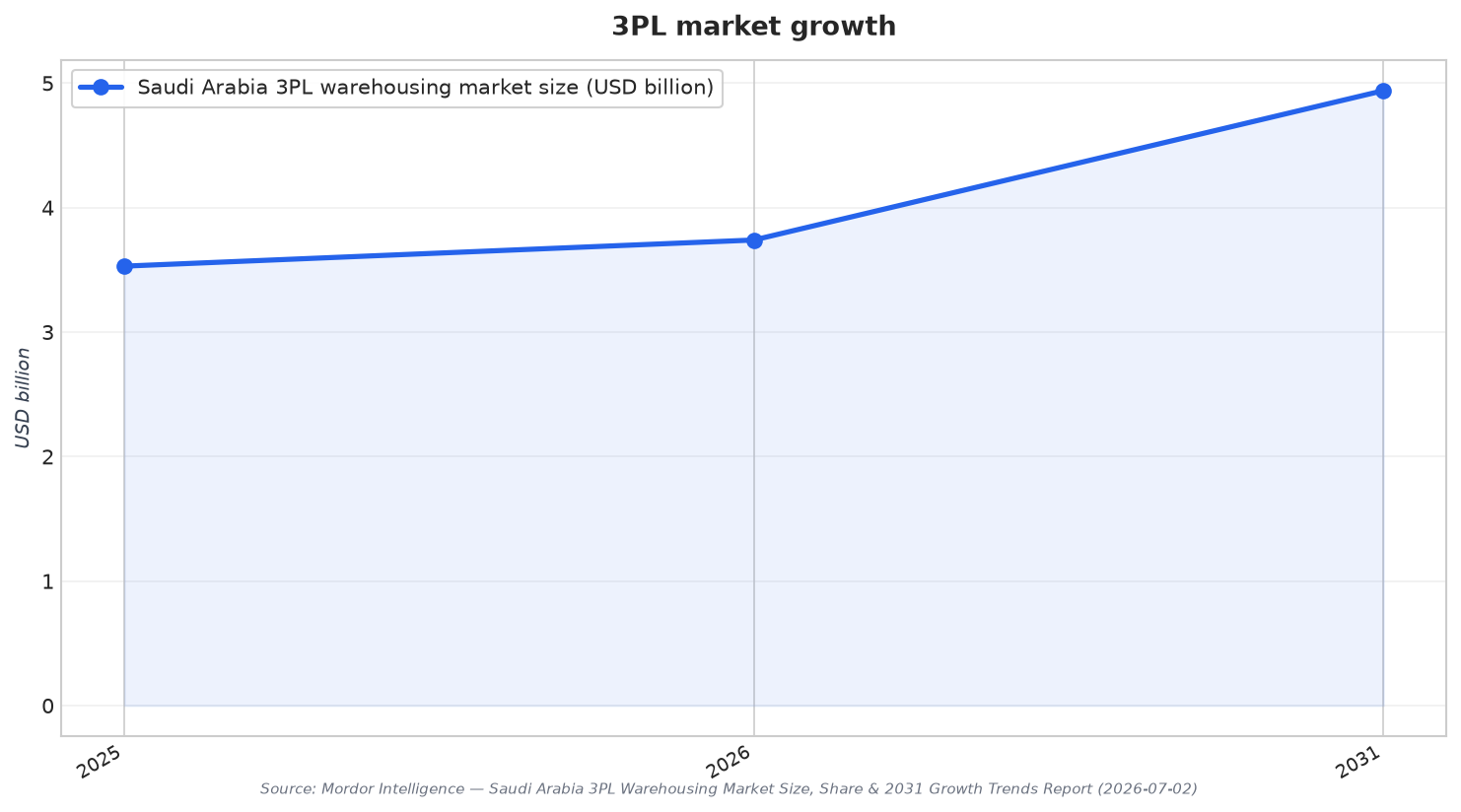
Demand signals also show why redistribution is becoming a core logistics function rather than a secondary activity. Mordor Intelligence valued the Saudi Arabia 3PL warehousing market at USD 3.53 billion in 2025 and estimated USD 3.74 billion in 2026, forecasting USD 4.94 billion by 2031 at a 5.71% CAGR. Storage led with 60.21% of the market in 2025, while bonded warehousing was projected to grow fastest among warehouse types at a 7.72% CAGR through 2031. These figures underline why ports and nearby logistics nodes focus on policies that reduce friction for container availability and transfer-oriented storage, reinforcing Dammam’s case as a redistribution point.
Saudi policy is also building corridors that complement port reforms and strengthen redistribution logic across routes. Arab News cited an international rail logistics corridor launched earlier in the month, connecting Eastern Province ports—King Abdulaziz Port in Dammam, Al-Jubail Commercial Port, and King Fahd Industrial Port in Jubail—to the Al-Haditha border crossing and onward to Jordan and other northern markets. Separately, the sea-to-air corridor sits inside the National Transport and Logistics Strategy launched in June 2021 under Vision 2030, backed by about USD 133 billion of planned investment and an aim of becoming a top-ten global logistics hub connecting three continents. In this context, the GCC storage fee exemption 2026 discussion is less about a single waiver and more about how policy levers, corridors, and constrained logistics real estate can turn Dammam into a stronger regional redistribution hub.
What storage fee exemption change did Mawani apply in Dammam and Jubail?
How does the exemption support a redistribution role for Dammam?
What market signal suggests storage and distribution space is tight around Dammam?
How is Saudi Arabia’s 3PL warehousing market expected to change after 2026?
What does the GCC storage fee exemption 2026 topic mean for Gulf container flows?
Talk to us for your needs in:
- Identifying Suitable Warehouse Sites in Saudi Arabia
- Customized Logistics and Supply Chain Analytics
- Logistics Network Design and Optimization
- Green Supply Chain and Sustainable Logistics Solutions
- Supply Chain Risk Management and Compliance
- Advanced Supply Chain Resilience and Agility
- Logistics Market Research and Strategic Analysis
- In-Depth Market Survey for Logistics
- Market Intelligence and Insights in Logistics
- Feasibility Study and Assessment in Logistics
- Integrated Warehousing Management Solutions
- Smart Warehousing and Automation Systems
- Sustainable and Green Warehousing Practices
- Port and Airport Logistics Optimization
- Digital Logistics Solutions
- Saudi Logistics Benchmarking