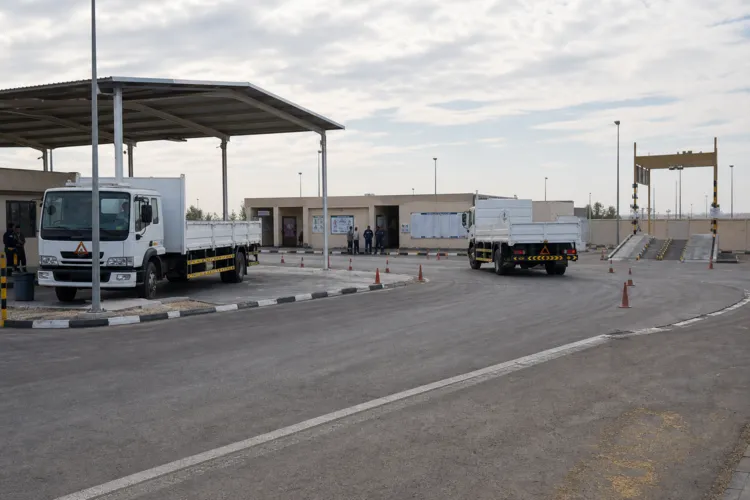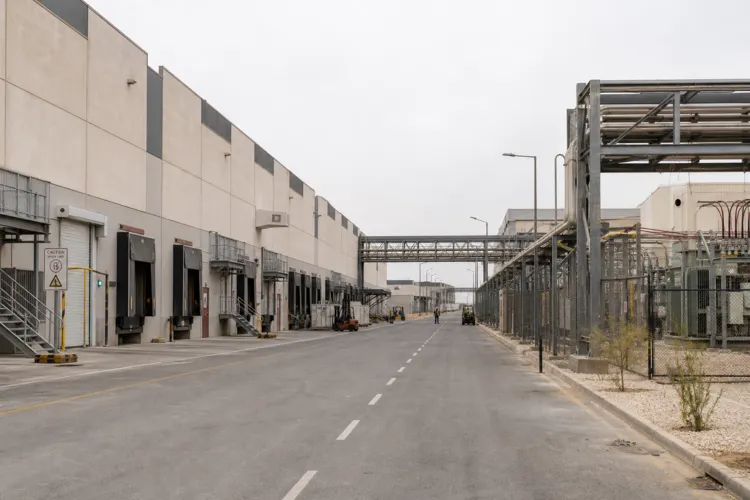
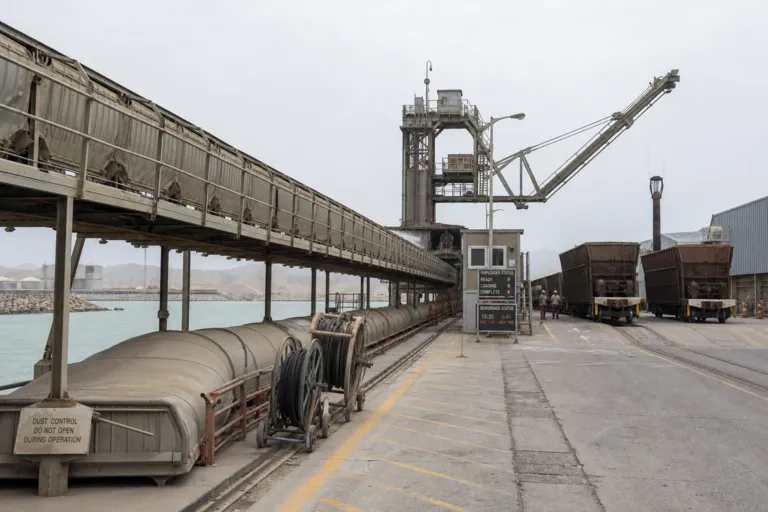
Maaden’s export routing shift is becoming one of the clearest indicators that DAP logistics in 2026 are being rewritten by security and chokepoint constraints. Maaden’s primary phosphate export hub at Ras Al-Khair sits on Saudi Arabia’s Arabian Gulf coastline, and its long-standing advantage was a direct route through the Strait of Hormuz. But maritime conditions changed after the strait’s effective closure at the end of February 2026. Vessel crossing data tracked by Windward showed only 12 vessels transited the strait on 16 August 2026, compared with a pre-conflict baseline of well over 100 daily crossings. This shock is forcing commercial decisions that reach beyond one producer, because DAP is widely traded and supply disruptions ripple into tender pricing and procurement strategies.
Against that backdrop, Maaden announced it will load a 60 000 t DAP cargo at Duqm, Oman, in late August or early September for shipment to India. It will also load the 55 000 t of DAP it sold to buyers in east Africa earlier in the month from Duqm in September, a shift that still requires trucking DAP from Ras Al-Khair. Earlier stopgap measures relied on trucking to Saudi Arabia’s Red Sea coast, mostly Yanbu, after Hormuz access deteriorated. But eastbound exports from Red Sea ports must cross Bab el-Mandeb or take a longer routing through the Suez canal and around Africa, making route selection a central competitive variable for DAP sellers and buyers.
Duqm Economics: Freight Differentials Meet Congestion and Risk
Freight is one reason the Oman option is drawing attention in trade circles. Argus understood freight for a 60 000 t bulk DAP cargo from Saudi Red Sea ports to India was around US$40/t, while the rate from Duqm to India was in the US$20s/t. That spread can materially change netbacks and pricing flexibility when markets are tight. Yet the Duqm route is not a simple cost win. Congestion at Omani ports was reportedly high, pushing up demurrage rates, and hefty war risk premiums still applied to shipments in the region. Threats from Yemen’s Houthi militants to Saudi shipping in late July also heightened risks in the Red Sea, especially around Bab el-Mandeb, reinforcing why route choice is being reassessed shipment by shipment.
These logistics constraints are also intersecting with market positioning and supply availability. Argus data showed Saudi Arabia accounted for 19pc of global combined DAP and MAP exports in 2025, so disruptions or rerouting in Saudi flows can influence international availability and trade patterns. In Maaden’s own marketing, sales signals have been visible across regions. In February 2026, Maaden reported selling 45,000-50,000t of DAP at $715-720/t fob for loading in early March and shipment to Latin America. The same report said the price was up from the prior week’s Argus assessment of $667-705/t fob for Saudi DAP. In this context, Maaden phosphate Duqm rerouting is not just a port change; it is a response to shifting risk, freight, and buyer geography.
Operationally, Maaden also revised expectations for how much it can produce under these conditions. It trimmed 2026 phosphate production guidance to the equivalent of 6 million - 6.5 million t of DAP, citing a lack of sulphur and high logistical costs. That matters because global DAP trade depends on dependable export programs, and Saudi volumes are watched closely given the country’s production and export role in the Middle East. Separately, one industry analysis citing IndexBox said Saudi Arabia dominates Middle East DAP production at 3.9M tons and exports at 3.6M tons, and accounts for 84% of total Middle East DAP production volume. Taken together, tighter guidance and forced routing choices highlight how infrastructure, security, and supply inputs are now shaping DAP trade outcomes.
Why is Maaden loading DAP at Duqm instead of Ras Al-Khair?
What volumes is Maaden planning to ship from Duqm in 2026?
How do freight rates compare between Saudi Red Sea ports and Duqm for India?
How does the Maaden phosphate Duqm rerouting affect supply and production expectations?
Talk to us for your needs in:
- Identifying Suitable Warehouse Sites in Saudi Arabia
- Customized Logistics and Supply Chain Analytics
- Logistics Network Design and Optimization
- Green Supply Chain and Sustainable Logistics Solutions
- Supply Chain Risk Management and Compliance
- Advanced Supply Chain Resilience and Agility
- Logistics Market Research and Strategic Analysis
- In-Depth Market Survey for Logistics
- Market Intelligence and Insights in Logistics
- Feasibility Study and Assessment in Logistics
- Integrated Warehousing Management Solutions
- Smart Warehousing and Automation Systems
- Sustainable and Green Warehousing Practices
- Port and Airport Logistics Optimization
- Digital Logistics Solutions
- Saudi Logistics Benchmarking