Hajj 2026 put emergency readiness under pressure in Saudi Arabia, as pilgrims arrived in very large numbers and officials faced severe heat and movement constraints. A Hajj 2026 recap reported about 1.7 million pilgrims in total, including about 1.54 million international pilgrims representing over 150 countries. In that environment, the practical question is not only clinical capacity, but how fast supplies, staff, and decisions can move across crowded sites. Reporting on the 2026 season described Saudi authorities deploying aerial drones and artificial intelligence-powered analysis systems to improve the pilgrim experience and safety.
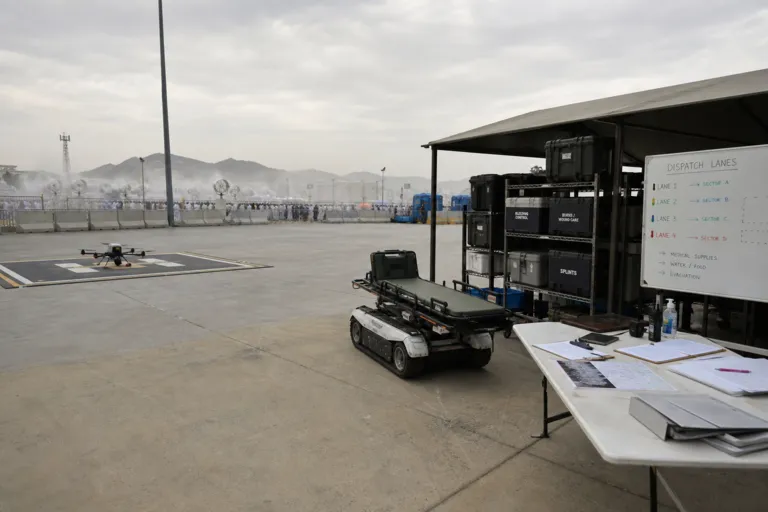
Emergency medical logistics was one of the clearest use cases. In Makkah, temperatures hit 45C in the week of Hajj, and Saudi health workers increasingly relied on drones to supply clinics treating heat-stressed pilgrims. The same report emphasized why air delivery matters: congested roads and extreme temperatures can slow ground movement, while drones can deliver medical supplies rapidly. Preparations for the medical needs of the Hajj season began nine months ago, reflecting how early logistics planning has to start when conditions can tighten quickly during the rituals.
From Trials to Operations: AI, Drones, and Smart Services
Saudi authorities framed the 2026 deployments as an extension of earlier testing. One report said the step was a continuation of operational trials conducted during the previous Hajj season for using drones in medical and logistical services. Alongside UAV operations, Saudi Arabia also used AI-powered analysis and broader smart services. The Hajj 2026 recap described comprehensive electronic applications monitoring transportation systems, lodging centers, health, and crowd density. This combination matters for emergency logistics because detection, routing, and allocation decisions depend on reliable visibility across multiple locations, not just faster delivery alone.
Private-sector commentary also pointed to continuity from Hajj 2025 into Hajj 2026. NineTenths cited 15,000 AI-monitored cameras during Hajj 2025, and described drones delivering medicine in restricted zones where ground access was constrained. It also argued that public safety drones enable continuous aerial surveillance across pilgrimage zones for rapid detection of medical emergencies, security incidents, and environmental hazards. In practice, that kind of coverage supports faster dispatch and clearer handoffs for responders, particularly when streets and walkways are saturated and every minute in heat-related situations can change outcomes.
Operational scale shows up in staffing and entry flows as well. One report stated Hajj authorities deployed over 111,000 personnel to assist incoming pilgrims with water and fans to cool off from the heat. Separately, the Hajj 2026 recap said the Makkah Route Initiative was used by 388,694 pilgrims, enabling processes such as visas, biometrics registration, and baggage clearance in home countries, which supported a quicker arrival and smoother transition. Together, these measures illustrate how Saudi drone medical logistics for Hajj fits into a wider system: drones and robotics-supported services for urgent supply runs, AI for monitoring and prioritization, and human teams positioned for direct care and heat mitigation.
How did drones support emergency medical logistics during Hajj 2026?
What heat conditions were reported in Makkah during Hajj 2026?
Was drone use at Hajj 2026 a first-time deployment?
How many personnel were deployed to assist pilgrims with heat relief measures?
What does the Saudi drone medical logistics Hajj approach connect to beyond drones?
Talk to us for your needs in:
- Identifying Suitable Warehouse Sites in Saudi Arabia
- Customized Logistics and Supply Chain Analytics
- Logistics Network Design and Optimization
- Green Supply Chain and Sustainable Logistics Solutions
- Supply Chain Risk Management and Compliance
- Advanced Supply Chain Resilience and Agility
- Logistics Market Research and Strategic Analysis
- In-Depth Market Survey for Logistics
- Market Intelligence and Insights in Logistics
- Feasibility Study and Assessment in Logistics
- Integrated Warehousing Management Solutions
- Smart Warehousing and Automation Systems
- Sustainable and Green Warehousing Practices
- Port and Airport Logistics Optimization
- Digital Logistics Solutions
- Saudi Logistics Benchmarking