From January 1, 2026, parcel delivery rules in Saudi Arabia change in a way that directly impacts delivery success. The Transport General Authority (TGA) mandate requires every shipment delivered in the Kingdom to include the official National Address, and couriers cannot complete delivery without it. Multiple shipping and commerce guides also warn that carriers must reject shipments that do not contain a compliant National Address or Short Address. For merchants shipping from outside the Kingdom, this becomes even more urgent because fixing address problems mid-transit can be difficult, especially when a package is already crossing borders, held, or flagged for return. If you want fewer failed handoffs, fewer delays, and fewer returns, you need the right address data at the moment the order is placed.
The National Address is a standardized, government-issued format designed to replace informal, landmark-based directions. Salasa describes it as an eight-character alphanumeric code that identifies each residential and commercial location, with an example like RNMA7272. Another Salasa guide adds that every residential, commercial, and government location is mapped to an 8-character code formatted as four letters followed by four numbers, and it states the system pinpoints locations with 1-square-meter accuracy. The operational message is straightforward: without a valid code, shipments may be rejected by the courier, delayed or held, returned to sender at the merchant’s cost, or marked non-deliverable. Repeated non-compliance may also trigger stricter carrier-level actions.
How to Fix Failed Deliveries Before They Happen
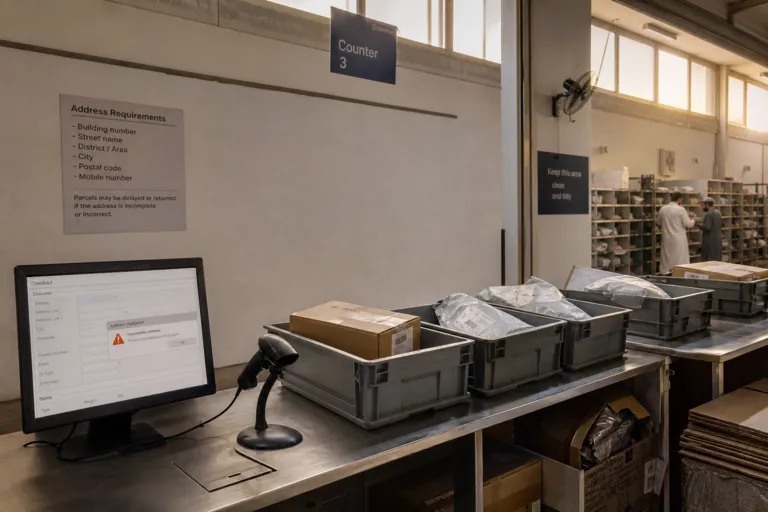
“Just ask for the National Address” is not enough if the field is not validated, mapped, and passed correctly to carriers and logistics partners. Sources aimed at merchants emphasize that the challenge is collecting accurate address data at checkout, not after a parcel is already moving. In practice, that means making the National Address field required, validating the format, and ensuring the code flows into shipping labels and API calls. Platform support differs. Salasa notes that Shopify supports the requirement but not natively, so merchants must add a custom field through the Checkout Editor, use checkout extensions or apps, add validation, and map the field to Salasa via API. WooCommerce is also described as not supporting it natively, requiring a mandatory custom field, a validation plugin, and mapping to order metadata through integrations.
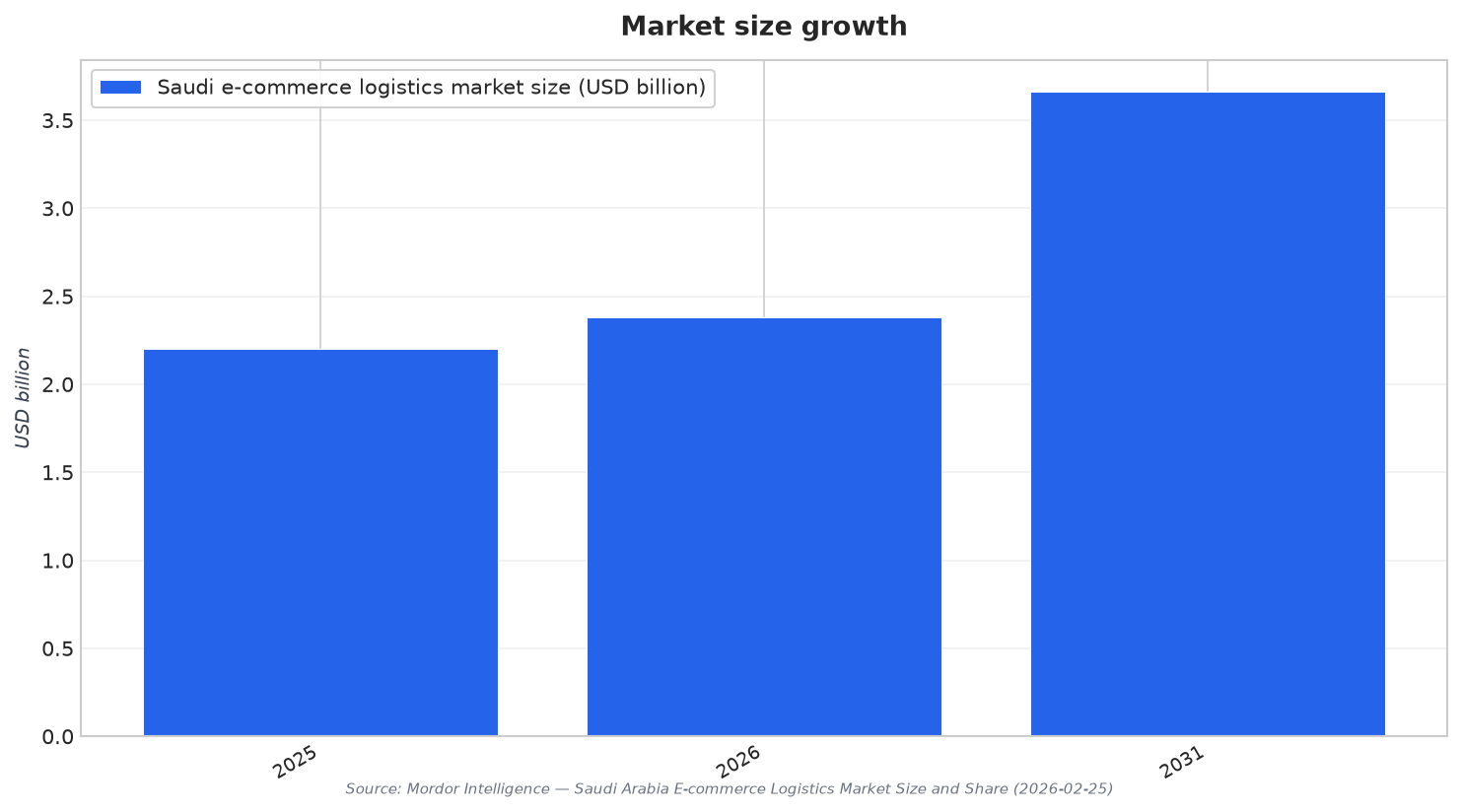
Compliance is also about cost control, not only delivery completion. Salasa lists potential consequences for non-compliant shipments, including extra courier fees, address correction surcharges, operational penalties depending on the carrier, rejected shipments, and full return-to-origin (RTO) costs charged to the merchant. It also notes reverse logistics: returns and pickups depend on National Address data too. In parallel, broader logistics indicators show why last-mile execution is under the spotlight. Mordor Intelligence forecasts the Saudi Arabia e-commerce logistics market to grow from USD 2.20 billion in 2025 to USD 2.38 billion in 2026, reaching USD 3.66 billion by 2031 at an 8.96% CAGR (2026–2031). In that environment, the Saudi national address parcel delivery requirement is positioned as a way to remove a last-mile bottleneck rather than add one.
Use the mandate as a structured checklist: capture the eight-character code every time, validate it, and keep it attached to the order across fulfillment, linehaul, and last mile. Stackry highlights that Saudi Arabia’s National Portal offers a service to verify and manage national address information, and it advises customers to update shipping addresses to include the full National Address for uninterrupted delivery. Finally, keep scope in mind: the rule applies to all shipments delivered in Saudi Arabia, including domestic and international, prepaid and COD. If your goal is fewer failed deliveries and less rework in 2026, start treating address quality as a core part of order quality, not a final-step courier problem.
When does Saudi Arabia require a National Address on every parcel?
What does the Saudi National Address look like for parcel shipping?
What happens if I ship without a valid National Address?
How do I reduce failed deliveries for Saudi national address parcel delivery as a merchant?
Do returns and pickups also require the National Address in Saudi Arabia?
Talk to us for your needs in:
- Identifying Suitable Warehouse Sites in Saudi Arabia
- Customized Logistics and Supply Chain Analytics
- Logistics Network Design and Optimization
- Green Supply Chain and Sustainable Logistics Solutions
- Supply Chain Risk Management and Compliance
- Advanced Supply Chain Resilience and Agility
- Logistics Market Research and Strategic Analysis
- In-Depth Market Survey for Logistics
- Market Intelligence and Insights in Logistics
- Feasibility Study and Assessment in Logistics
- Integrated Warehousing Management Solutions
- Smart Warehousing and Automation Systems
- Sustainable and Green Warehousing Practices
- Port and Airport Logistics Optimization
- Digital Logistics Solutions
- Saudi Logistics Benchmarking