Saudi logistics networks are being reshaped by infrastructure programs and higher expectations for shipment and inventory visibility. In the Saudi Arabia contract logistics market, transportation captured 64.30% share in 2025, reflecting how much domestic freight still moves by road along the Riyadh–Dammam–Jeddah corridor. At the same time, the Saudi Port Authority has earmarked USD 4.5 billion to modernize container yards, digital gates, and bulk terminals. As cargo flows concentrate into hubs with bonded storage and customs one-stop shops, teams need a single operational picture across ports, trucks, and warehouses to keep service stable.
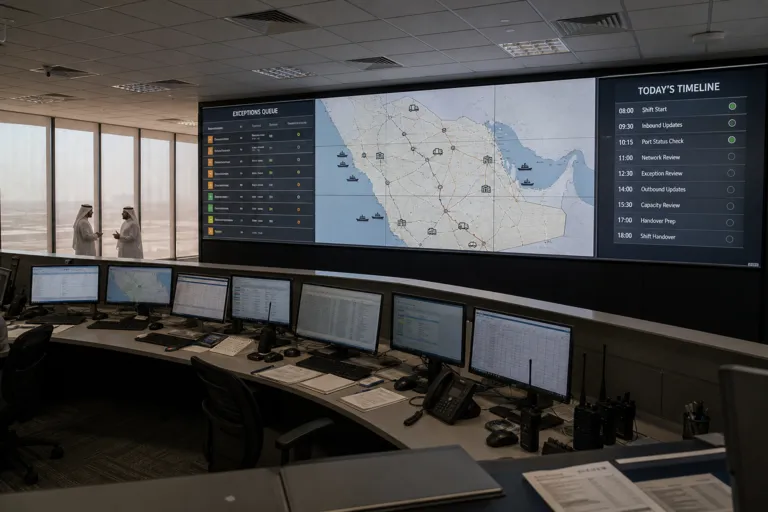
A Saudi-focused supply chain control tower is typically built as a software platform that aggregates real-time data across suppliers, logistics providers, and distribution centers, then presents it in a unified interface. The platform can connect to ERP, TMS, and WMS systems to assemble a continuous view of inventory positions, order status, shipment locations, and supplier capacity. This is aligned with broader market momentum. Mordor Intelligence projects the global supply chain control tower market expanding from USD 9.86 billion in 2025 to USD 25.76 billion by 2031, with cloud holding 62.37% of revenue in 2025. In this context, “real time” matters because periodic reporting makes it harder to identify the source and likely effect of a delay before customer service is impacted.
Architecture for Real-time Visibility Across Ports, Trucks, and Warehouses
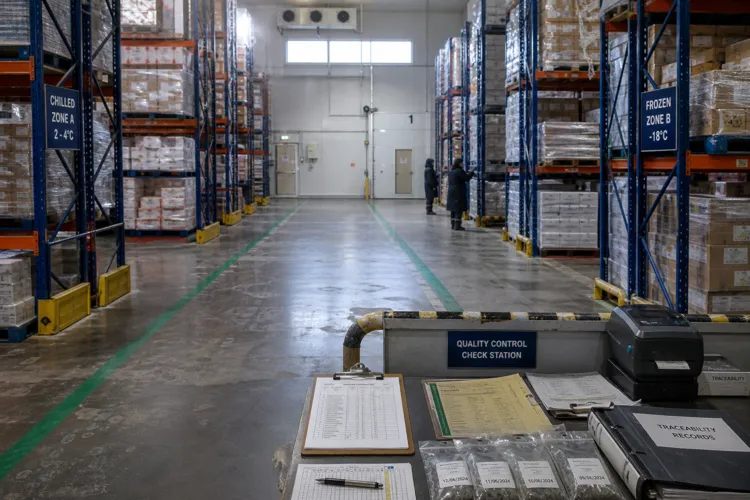
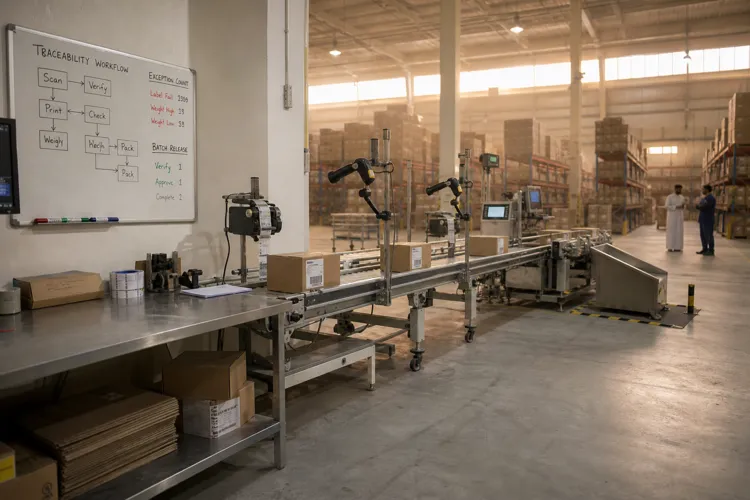
Design starts with the data spine. A practical approach is to integrate port status and gate events, road transport milestones from carriers, and warehouse execution events from WMS into one visibility layer. The goal is not only tracking, but exception management and guided action as machine learning, carrier signals, and shared data networks evolve towers beyond simple tracking. Software represents 62.13% of the global control tower market size in 2025, but services still matter for integration and operating routines. Locus notes that, in its work with global enterprises, 40–60% of shipments are typically tracked in real time before implementing a control tower, illustrating why unifying fragmented shipment tracking is often the first measurable outcome.
Saudi projects and industrial supply chains add another layer: compliance and schedule sensitivity. In the Saudi Arabia project logistics market, cargo visibility has moved from a value-added feature to a normal requirement, especially when multiple suppliers and narrow installation windows amplify the impact of short delays. Operators face pressure to provide real-time location data, customs readiness, and permit status updates, because delays can affect crane allocation, site labor scheduling, and contractor sequencing. This is where a “Supply chain control tower Saudi” strategy becomes operationally specific: visibility is not just where freight is, but whether it can legally and safely move, and whether the downstream plan can absorb disruption.
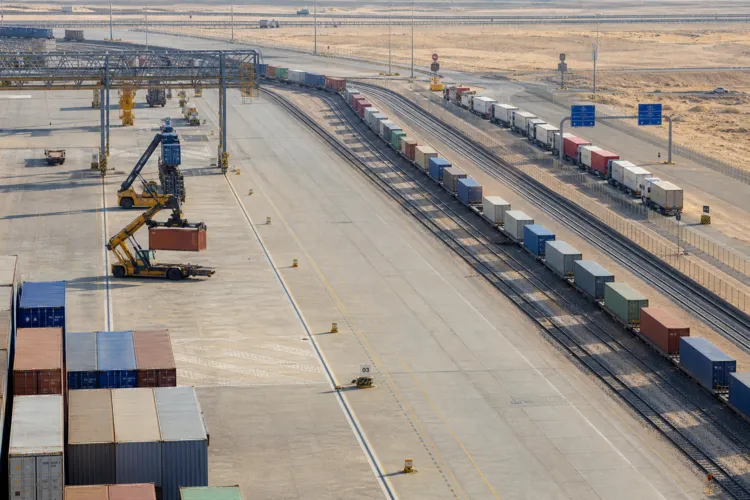
Implementation also needs to match where growth is happening. Saudi Arabia’s contract logistics market was valued at USD 1.23 billion in 2025 and is estimated to grow from USD 1.27 billion in 2026 to USD 1.51 billion by 2031, while long-term agreements longer than three years held a 55.40% share in 2025. Rail expansion is another driver of multimodal orchestration: rail track length is expected to stretch from 3,650 km in 2025 to 8,000 km by 2030, pushing shippers toward single-provider processes across rail, road, and warehouse nodes. A well-run control tower supports this shift by aligning partners on secure data sharing and coordinated response playbooks.
What is a supply chain control tower in a Saudi Arabia logistics context?
Why is real-time visibility becoming more important across ports, trucks, and warehouses in Saudi Arabia?
How does project logistics change control-tower requirements in the Kingdom?
How does rail expansion influence a control tower design for Saudi networks?
What market signals support investing in a Supply chain control tower Saudi approach?
Talk to us for your needs in:
- Identifying Suitable Warehouse Sites in Saudi Arabia
- Customized Logistics and Supply Chain Analytics
- Logistics Network Design and Optimization
- Green Supply Chain and Sustainable Logistics Solutions
- Supply Chain Risk Management and Compliance
- Advanced Supply Chain Resilience and Agility
- Logistics Market Research and Strategic Analysis
- In-Depth Market Survey for Logistics
- Market Intelligence and Insights in Logistics
- Feasibility Study and Assessment in Logistics
- Integrated Warehousing Management Solutions
- Smart Warehousing and Automation Systems
- Sustainable and Green Warehousing Practices
- Port and Airport Logistics Optimization
- Digital Logistics Solutions
- Saudi Logistics Benchmarking