Saudi manufacturers are entering a period where resilience planning is no longer optional. Regional disruptions in 2026 altered routing decisions and raised the likelihood of elevated freight costs in the near term, even as they strengthened Saudi Arabia’s position as a dependable logistics alternative. A JLL report cited a “significant shift” in Q2 2026 as disruptions redirected cargo flows toward Saudi Arabia’s Western ports, including Jeddah Islamic Port and King Abdullah Port in Rabigh, and it expects west coast ports to permanently retain a portion of diverted trade flows. For factories, that context supports a practical reset: diversify supply routes and build redundancy in sourcing, instead of relying on a single corridor or single supplier.
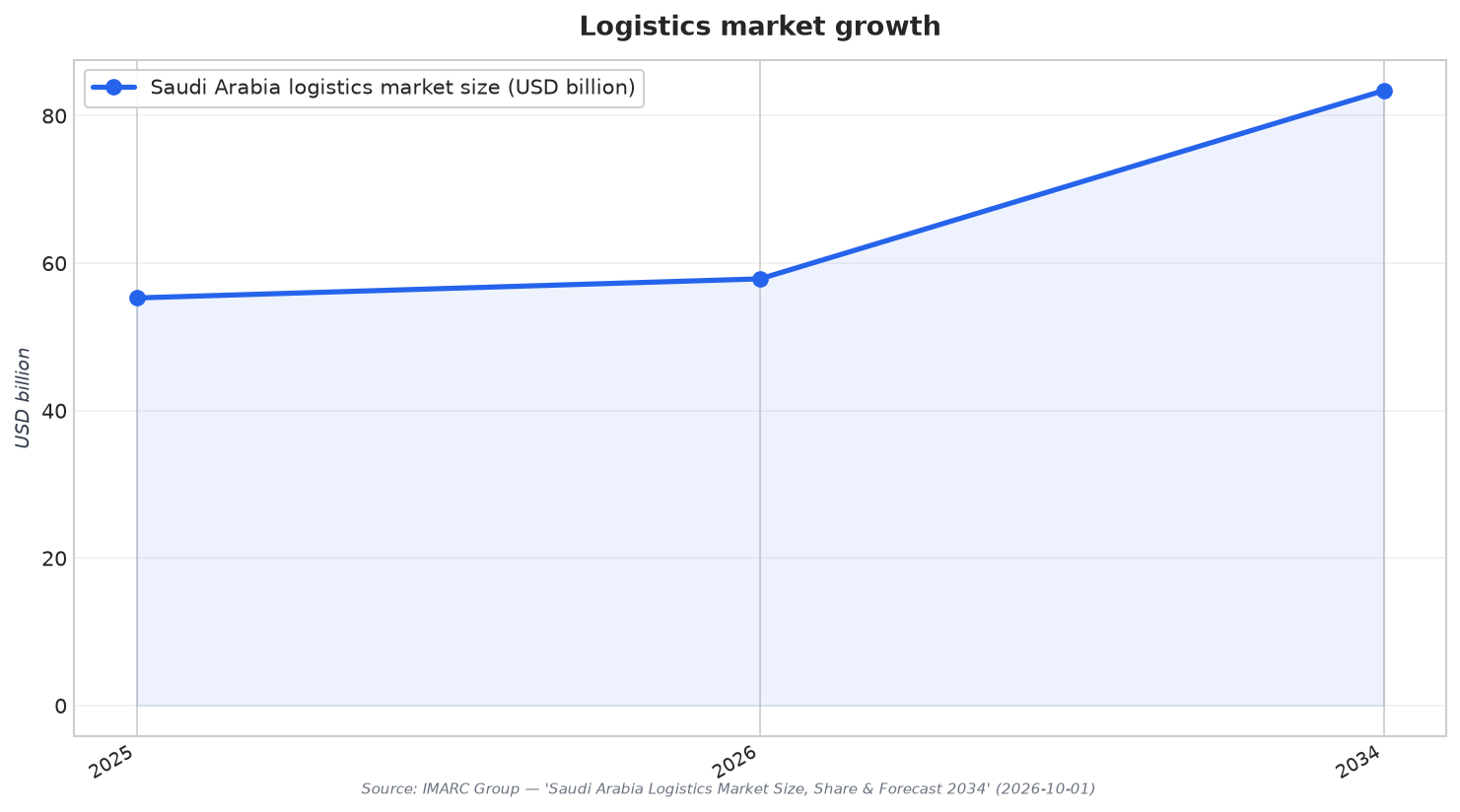
Dual sourcing works best when it is tied to logistics reality, not just procurement policy. Saudi Arabia’s logistics market was USD 55.29 billion in 2025 and an estimated USD 57.88 billion in 2026, with a projection of USD 83.41 billion by 2034, at a CAGR of 4.67% during 2026–2034. The same source reports that 3PL held a 46.12% share in 2025, roadways led transportation at 59.08%, and the highway network spans 73,000 kilometers. In practice, this mix favors manufacturers that can qualify two suppliers and then flex volumes based on transport availability, warehouse capacity, and lead-time risk, rather than committing all spend to one origin and one route.
Route Diversification: Design for the West Coast Shift and Multi-Mode Options
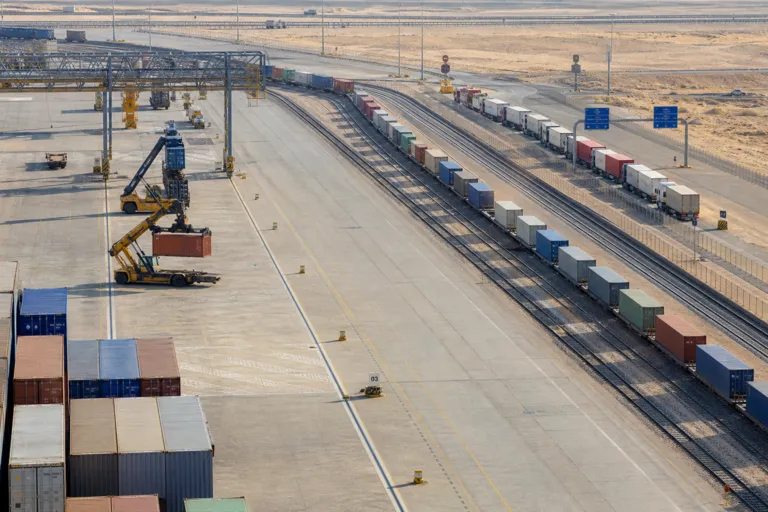
Route diversification is more than adding a backup port. It means defining approved alternatives across ports, modes, and service providers, then contracting and testing them before disruption hits. JLL’s Q2 2026 findings point to an operational reality: cargo flows can reroute quickly toward Western ports, and occupiers are prioritizing regional risk mitigation amid broader uncertainties. Manufacturers can reinforce that shift by aligning inbound lanes and outbound export plans with multi-port options and with 3PL partners that offer integrated transportation, warehousing, and last-mile capabilities. In parallel, mode planning matters. A separate freight and logistics outlook shows sea and inland waterways freight forwarding accounted for 64.62% of forwarding revenue in 2025, while air freight is projected to expand at a 6.78% CAGR during 2026–2031, reflecting resilience and lead-time priorities.
Procurement resilience also needs to reflect the trade-policy shocks reshaping costs. In April 2025, the United States imposed a baseline 10% customs duty on imports from every country, then applied partner-specific rates to more than 75 countries after a 90-day pause expired on July 9, 2025. For industrial inputs, the same analysis notes that trade-exposed manufacturing industries are absorbing a 2% to 4.5% cost increase, and 80% of manufacturing CEOs identify that pressure as their primary short-term challenge. For Saudi producers selling into global markets, those shifts influence which suppliers are viable, which bill-of-materials items need a second source, and how to structure contracts so volume can move without a full requalification cycle.
A Saudi supply chain dual sourcing strategy also depends on the speed of industrial scaling at home and the volatility seen in trade data. Saudi industrial programs target 36,000 manufacturing facilities by 2035, including 4,000 fully automated plants. In 2025, 1,201 factories commenced operations, an 11.7% increase over 2024 starts, drawing more than SAR 31 billion in investment and generating over 45,000 direct jobs. Meanwhile, trade conditions can swing quickly: Saudi merchandise exports fell 17.2% in July 2026, and analysis notes that regional conflict disrupted maritime traffic and altered routing decisions, including heavier reliance on the East–West Pipeline and Red Sea terminals when the Strait of Hormuz is constrained. Together, these signals favor manufacturers that dual-source critical inputs, maintain qualified routing alternatives, and use 3PL capacity and warehouse access to execute fast lane switches.
How should Saudi manufacturers approach a Saudi supply chain dual sourcing strategy after 2026 disruptions?
Which Saudi ports gained importance during the 2026 rerouting shift?
What logistics market signals support investing in redundancy and route options in Saudi Arabia?
What changed in U.S. tariffs that affects sourcing and export planning?
How volatile were Saudi trade conditions during 2026?
Talk to us for your needs in:
- Identifying Suitable Warehouse Sites in Saudi Arabia
- Customized Logistics and Supply Chain Analytics
- Logistics Network Design and Optimization
- Green Supply Chain and Sustainable Logistics Solutions
- Supply Chain Risk Management and Compliance
- Advanced Supply Chain Resilience and Agility
- Logistics Market Research and Strategic Analysis
- In-Depth Market Survey for Logistics
- Market Intelligence and Insights in Logistics
- Feasibility Study and Assessment in Logistics
- Integrated Warehousing Management Solutions
- Smart Warehousing and Automation Systems
- Sustainable and Green Warehousing Practices
- Port and Airport Logistics Optimization
- Digital Logistics Solutions
- Saudi Logistics Benchmarking