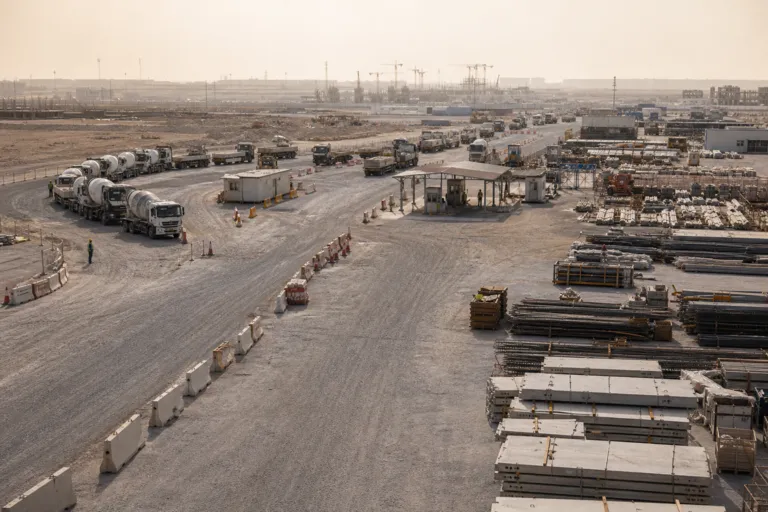
Riyadh is building at speed, and Expo 2030 adds a non-negotiable calendar to an already crowded pipeline. The event is scheduled from October 1, 2030 to March 31, 2031, and Saudi Arabia won hosting rights in November 2023 with 119 votes from BIE member states. The Expo site is planned as a permanent 6-square-kilometer district in northern Riyadh, adjacent to the planned King Salman International Airport. Invest Riyadh’s tracker reports overall construction is tracking to schedule, with 65% of site preparation and earthworks completed. That puts logistics in the spotlight early, because earthworks, foundations, and the first major structures begin shaping daily flows of trucks, equipment, and labor.
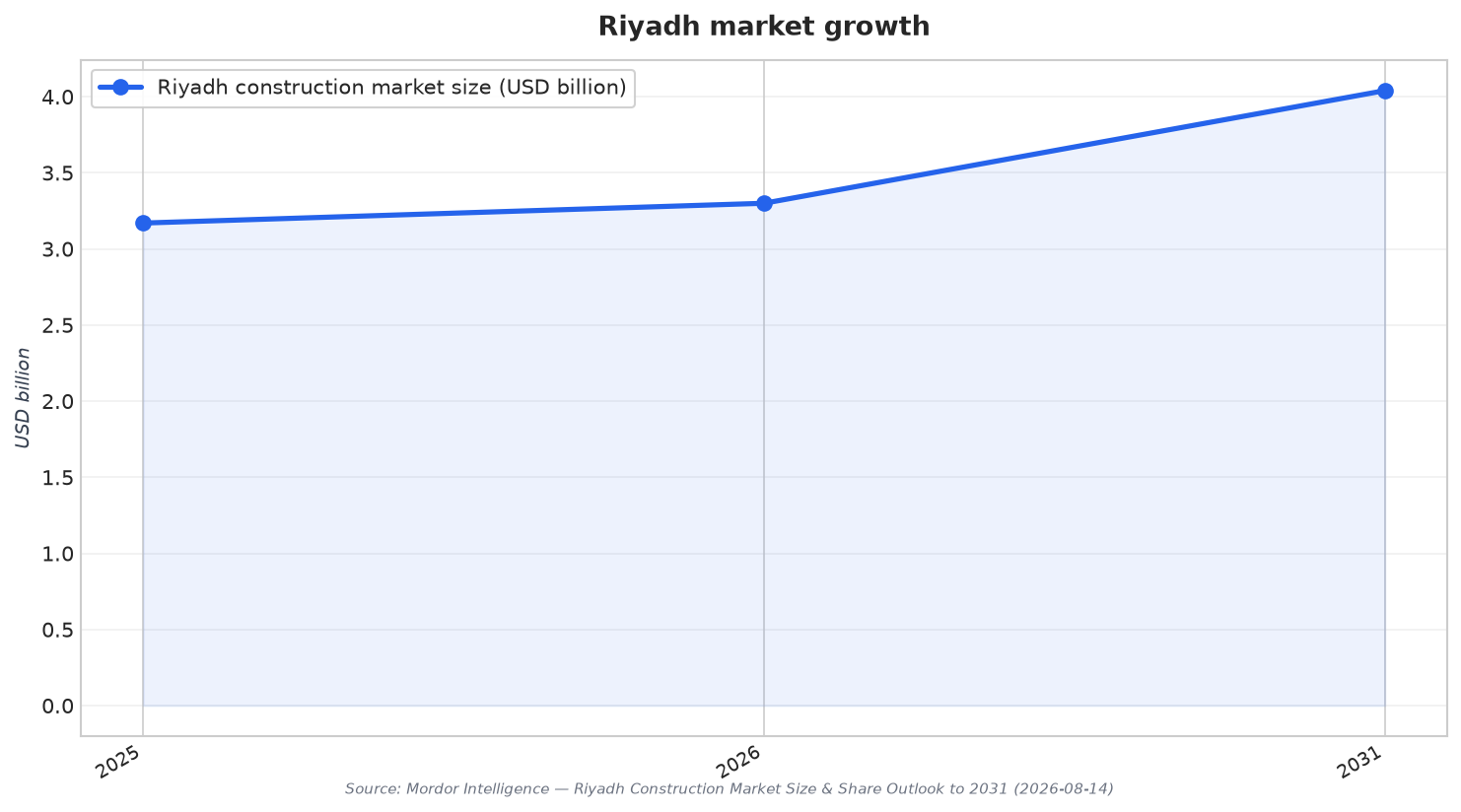
The challenge is not just volume. It is coordination across many workfaces and timelines. The Expo perimeter site investment is listed at $13.05 billion, excluding supporting infrastructure such as transport, utilities, and accommodation, which is estimated at $7–10 billion. At the same time, Mordor Intelligence values the Riyadh construction market at USD 3.17 billion in 2025 and estimates growth from USD 3.3 billion in 2026 to USD 4.04 billion by 2031. New-build activity accounted for 79.45% of the market size in 2025, and conventional on-site techniques held 86.75% share, even as modern methods are forecast to expand faster. Those ratios matter for logistics. A city dominated by new build and on-site work typically needs steady, frequent deliveries of bulk materials.
What Makes Expo Logistics Harder in a Congested Mega-project City
Expo logistics become harder when supply risk and road limits collide with fixed deadlines. AGBI reports that Bechtel has shifted towards Saudi-made pipes, cabling, and concrete to avoid shortages during war-related disruption, and it notes that Riyadh’s road network limits what can be trucked in. The same report says structural steel, precast columns, and cladding panels are being pre-assembled off site to save time, while the scale of some pavilions limits how much can be prefabricated. Labor dynamics add pressure too. AGBI reported nationwide construction hiring slowed to single-digit growth after annual growth of more than 30% in each of the previous two years. For planners, that combination pushes the case for fewer, better-planned deliveries, timed slots, and more predictable material availability.
Material movement also has to reflect how Expo is being built and who is building what. Invest Riyadh reports that as of early 2026, 125 countries have confirmed participation, with 42 electing to design and construct their own self-built pavilions and 83 using organizer-provided standardized pavilion spaces. More separate clients and contractors can mean more fragmented procurement and delivery patterns, unless governance aligns booking systems, gates, and laydown rules. The same tracker describes the Expo as a six-month demonstration of Vision 2030 outcomes, and it is expected to attract 40 million visits. Mada Properties separately states the site is six million square metres with more than 40 million visits expected, and cites estimates from Expo 2030 Riyadh Company of about SAR 241 billion GDP contribution during construction and roughly 171,000 direct and indirect jobs. Those expectations raise the cost of logistics failures.
A workable approach for Expo 2030 Riyadh construction logistics is to treat logistics as an integrated system across the Expo site and nearby city projects. The Expo is positioned near planned airport development, and Al Marwan notes the site is north of Riyadh, near King Khalid International Airport (KKIA), with plans that could include extending the Riyadh metro and adding a dedicated station to serve the Expo. Mordor Intelligence also points to Vision 2030’s USD 400 billion city-focused investment pool and cites catalytic schemes such as the USD 180 billion New Murabba downtown and the King Salman International Airport. When multiple headline projects move in parallel, the practical logistics levers are clear in the sources: shift to local materials where possible, assemble components off site when road constraints allow, and sequence deliveries to smooth peak workload periods rather than letting every package surge at once.
When will Expo 2030 Riyadh run?
How big is the Expo 2030 Riyadh site and where is it located?
What are the main cost figures cited for Expo site construction and supporting infrastructure?
What tactics are being used to manage supply risk and transport constraints for the buildout?
What does Expo 2030 Riyadh construction logistics need to prioritize as work accelerates?
Talk to us for your needs in:
- Identifying Suitable Warehouse Sites in Saudi Arabia
- Customized Logistics and Supply Chain Analytics
- Logistics Network Design and Optimization
- Green Supply Chain and Sustainable Logistics Solutions
- Supply Chain Risk Management and Compliance
- Advanced Supply Chain Resilience and Agility
- Logistics Market Research and Strategic Analysis
- In-Depth Market Survey for Logistics
- Market Intelligence and Insights in Logistics
- Feasibility Study and Assessment in Logistics
- Integrated Warehousing Management Solutions
- Smart Warehousing and Automation Systems
- Sustainable and Green Warehousing Practices
- Port and Airport Logistics Optimization
- Digital Logistics Solutions
- Saudi Logistics Benchmarking