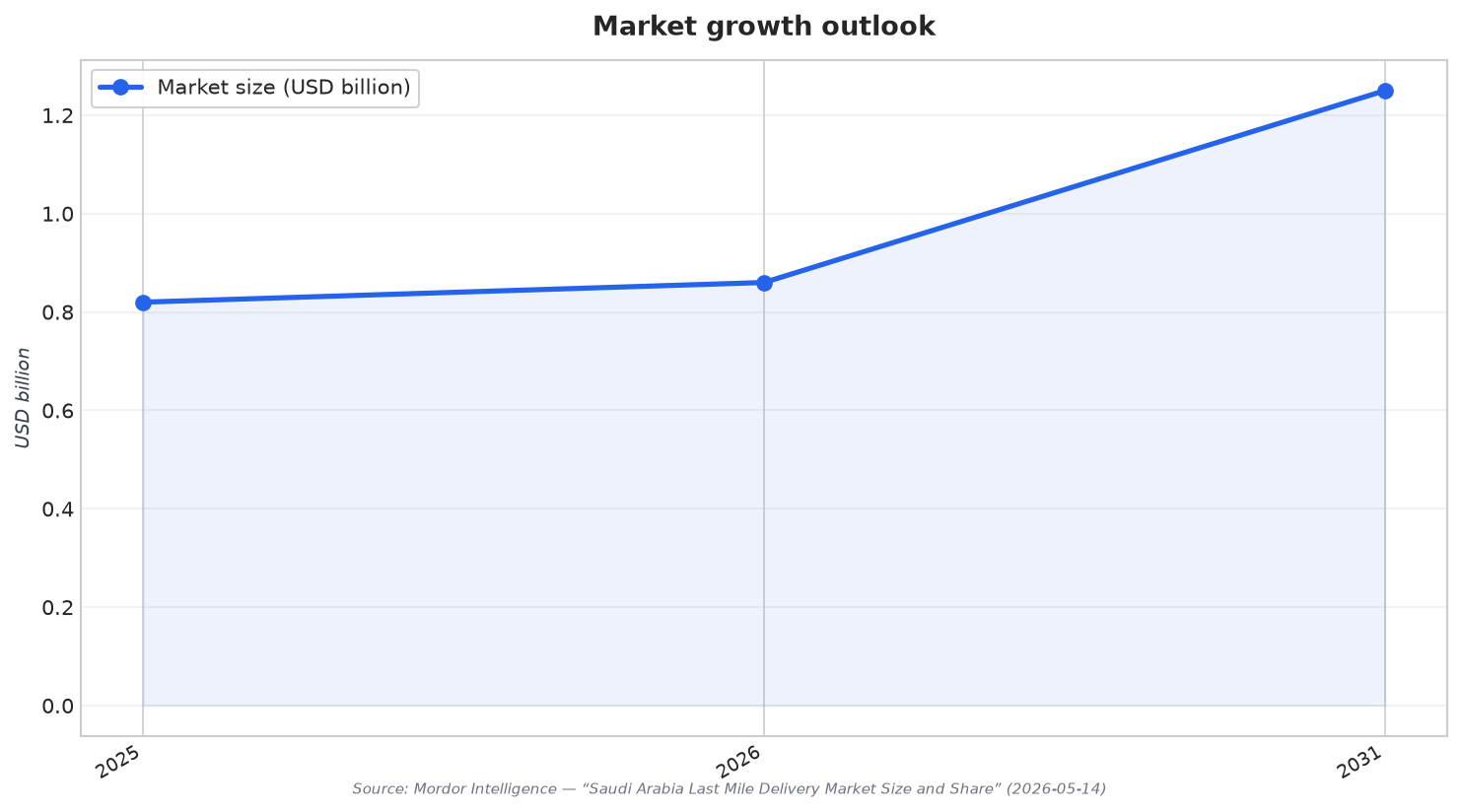
Saudi Arabia’s last-mile delivery market is entering a new phase where labor policy, platform operations, and demand spikes collide. Multiple forecasts show sustained growth. Grand View Research projects the Saudi last-mile delivery market to reach US$ 13,248.6 million by 2033, with a 6.3% CAGR from 2026 to 2033. Mordor Intelligence sizes the market at USD 0.82 billion in 2025 and USD 0.86 billion in 2026, reaching USD 1.25 billion by 2031 with a 7.81% CAGR from 2026 to 2031. These outlooks differ in methodology, but both frame a market that is expanding while operational requirements tighten.
Demand pressure is visible in transaction volumes. Mordor Intelligence reports e-commerce orders climbed 49% year-on-year to 118 million in Q1 2026, and that Riyadh alone generated 44% of orders. In the same analysis, digital payments account for 79% of transactions and 96% of point-of-sale interactions are contactless, which changes how couriers manage handoffs and reduces cash handling friction. Segment mix also shapes the economics of each drop. Mordor Intelligence states B2C flows commanded 71.6% of the market in 2025, while Grand View Research puts B2C at a 74.05% revenue share in 2025. Standard delivery held 62.57% share by service in 2025, while same-day delivery is projected to expand at a 9.46% CAGR through 2031.
Why Driver Localization Is an Economics Shock, Not Just a Hiring Change
The policy layer matters because it directly alters cost structure and routing decisions. A Markntel Advisor press release flags a key market challenge: enforcement of 100% Saudization for light-vehicle and motorcycle delivery drivers operating through registered delivery platforms. It notes that higher labor costs can add pressure to courier economics, especially where individual parcels require separate doorstep trips. This is where Saudi delivery app driver localization becomes more than a staffing issue. Operators must balance workforce requirements with dense routing in high-order areas, while still meeting faster delivery promises that are spreading beyond tier-1 cities.
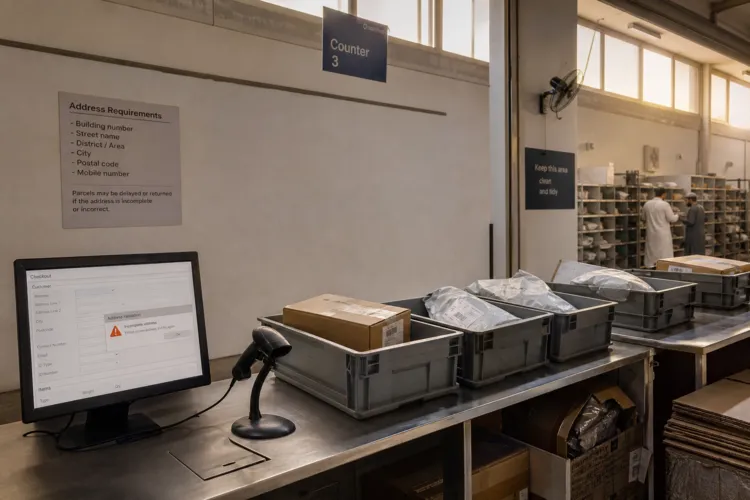
Compliance and network formalization also influence the labor model. Mordor Intelligence says April 2024 courier-licensing reforms formalized 37 operators, channeling gig deliveries into compliant networks and raising service standards. That shift can change how platforms structure onboarding, scheduling, and performance management because delivery capacity becomes tied to registered operations. Mordor also highlights unresolved address-standardization outside tier-1 cities, keeping first-attempt failure rates high. When first-attempt success is inconsistent, the economics of each delivery worsen, and the value of route optimization, better coverage planning, and tighter delivery-slot discipline rises.
Digital conditions support faster models, but they also raise the bar. Saudi Mobility Consulting cites TS2.tech reporting roughly 99% internet penetration, and a digital economy at around 15% of GDP, growing about 11% year-on-year in 2024. The same source cites Consultancy-me: active usage at 34% implies 66% untapped, while existing users order for urgent needs at 70% and for convenience at 60%. These behavior signals reinforce why speed is becoming a baseline expectation. Mordor Intelligence links this to infrastructure ambition, citing Vision 2030’s commitment to invest SAR 280 billion (USD 74.6 billion) in transport and logistics corridors, digital customs platforms, and special economic zones. In this environment, localization requirements push companies to treat workforce planning as core to service design, not an afterthought.
How is delivery-platform driver localization changing Saudi last-mile economics?
What demand signals are shaping last-mile delivery operations in Saudi Arabia?
How big is the B2C share in Saudi Arabia’s last-mile delivery market?
What regulatory or compliance shifts are mentioned for Saudi couriers?
What is one forecast for Saudi Arabia’s last-mile delivery market growth?
Talk to us for your needs in:
- Identifying Suitable Warehouse Sites in Saudi Arabia
- Customized Logistics and Supply Chain Analytics
- Logistics Network Design and Optimization
- Green Supply Chain and Sustainable Logistics Solutions
- Supply Chain Risk Management and Compliance
- Advanced Supply Chain Resilience and Agility
- Logistics Market Research and Strategic Analysis
- In-Depth Market Survey for Logistics
- Market Intelligence and Insights in Logistics
- Feasibility Study and Assessment in Logistics
- Integrated Warehousing Management Solutions
- Smart Warehousing and Automation Systems
- Sustainable and Green Warehousing Practices
- Port and Airport Logistics Optimization
- Digital Logistics Solutions
- Saudi Logistics Benchmarking