Dangerous goods transport in Saudi Arabia is shaped by both global frameworks and local authorities. Internationally, the International Air Transport Association (IATA) sets standards for airlines, freight forwarders, ground handlers, and shippers, with detailed guidelines for hazardous materials. Locally, the Zakat, Tax and Customs Authority (ZATCA) matters for customs clearance, import and export compliance, and restricted goods classification in Saudi Arabia. For petrochemical and chemical shippers, that means compliance starts before booking capacity. It begins with correct cargo classification and continues through labeling, pre-shipment checks, and the paperwork needed to move without delays across borders and domestic legs.
Classification is a practical duty, not just a definition. Dangerous goods are substances or items that can pose risks to health, safety, property, or the environment during transport. In Saudi Arabia, you will also hear the term hazardous materials or “hazmat.” Under the United Nations (UN) classification system, dangerous goods are grouped into nine hazard classes, and shippers need that structure to apply the right handling and transport rules. For day-to-day shipper workflows, classification should be confirmed from reliable shipper and regulatory records, and then tied to packing, documentation, and any cargo-specific approvals that may apply for restricted hazardous chemicals.
What “Updated Duties” Look Like in Day-to-Day Operations
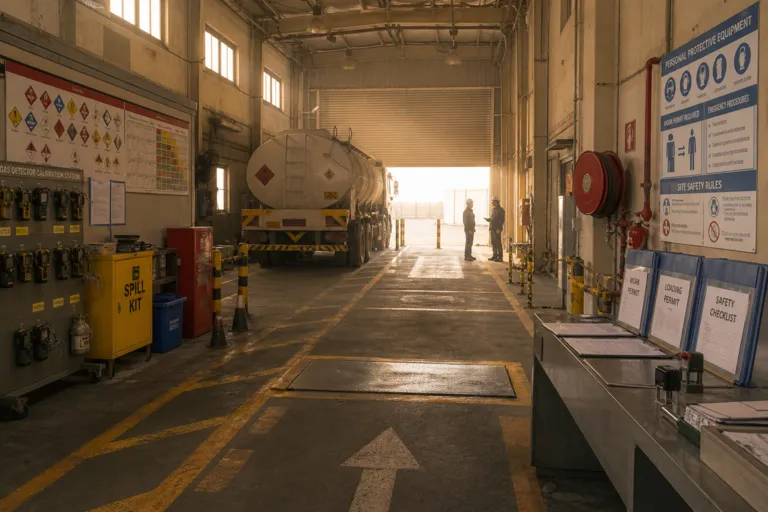
Operational readiness checks are central to how Saudi Arabia’s transport requirements are applied in the field. Guidance on dangerous goods transport in Saudi Arabia highlights several control areas: cargo-specific approvals, vehicle eligibility, driver qualifications, and cargo classification. Vehicle eligibility checks include operating cards, vehicle configuration, technical condition, inspection status, and cargo compatibility. Driver checks include the applicable driving license, a dangerous goods driver card, training, and current qualification requirements. These controls do not replace regulatory approvals. Instead, they help shippers and carriers translate compliance into repeatable trip-level actions that reduce avoidable stoppages and escalations.
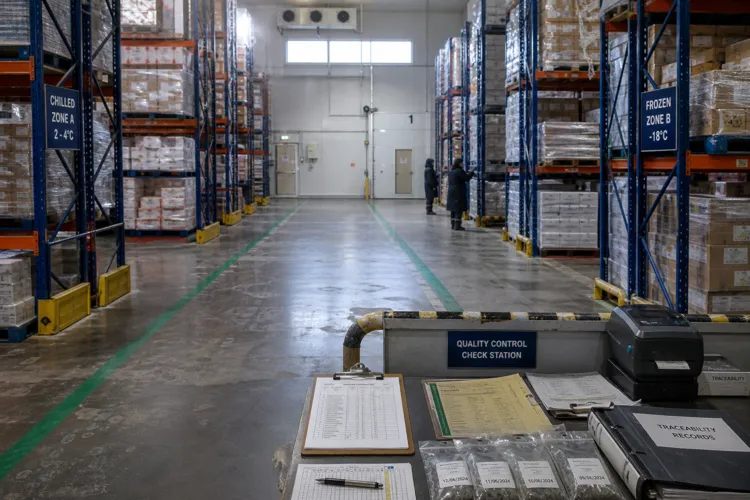
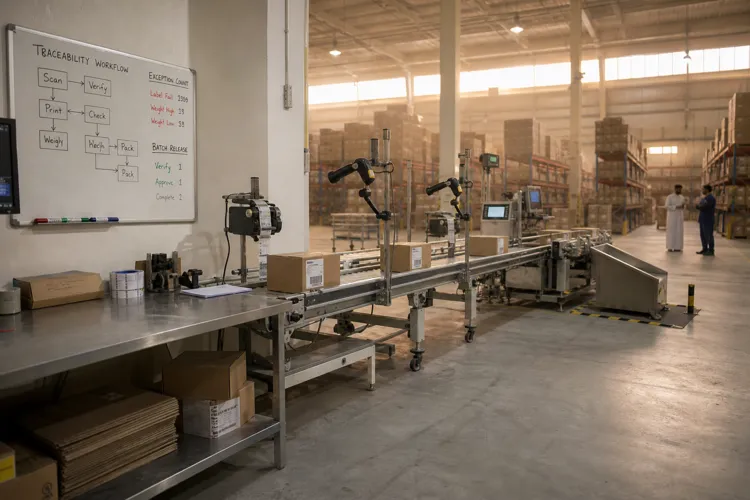
Product compliance duties also extend to standards and pre-shipment verification. In Saudi Arabia’s chemical logistics environment, compliance falls under SASO, which requires SABER platform certification, GHS-compliant labeling, and pre-shipment checks for hazardous cargo. Shippers should align these requirements with port hazardous materials regulations where relevant, because secure handling, labeling, and transportation are interconnected. This matters in a market positioned around petrochemicals. One industry overview notes petrochemical exports make up 35% of Saudi Arabia’s non-oil exports, so consistent labeling and pre-shipment checks support both domestic movements and export flows.
Capacity planning and governance also sit behind compliance decisions. DHL Express Saudi Arabia is authorized to transport certain classes of dangerous goods by both air and road, in compliance with international regulations, which underscores the need to match shipment profiles to authorized service capabilities. At the same time, broader investment and compliance tooling trends are rising globally. The global hazardous goods logistics market was valued at $218.4 billion in 2025 and is projected to reach $374.6 billion by 2034, with a CAGR of 6.2% from 2026 to 2034. In parallel, the global dangerous goods shipping compliance software market reached $2.8 billion in 2025 and is projected to expand to $5.4 billion by 2033, at an 8.2% CAGR. For shippers applying Saudi dangerous goods transport rules, these trends reinforce why rigorous documentation, accurate classification, and standardized checks are becoming non-negotiable.
Which authorities and standards shape dangerous goods shipments connected to Saudi Arabia?
How are dangerous goods classified for shipping purposes?
What trip-level controls support compliant dangerous goods transport by road in Saudi Arabia?
How do Saudi dangerous goods transport rules connect to labeling and pre-shipment checks for chemicals?
What market signals suggest stronger compliance capacity is becoming more important for shippers?
Talk to us for your needs in:
- Identifying Suitable Warehouse Sites in Saudi Arabia
- Customized Logistics and Supply Chain Analytics
- Logistics Network Design and Optimization
- Green Supply Chain and Sustainable Logistics Solutions
- Supply Chain Risk Management and Compliance
- Advanced Supply Chain Resilience and Agility
- Logistics Market Research and Strategic Analysis
- In-Depth Market Survey for Logistics
- Market Intelligence and Insights in Logistics
- Feasibility Study and Assessment in Logistics
- Integrated Warehousing Management Solutions
- Smart Warehousing and Automation Systems
- Sustainable and Green Warehousing Practices
- Port and Airport Logistics Optimization
- Digital Logistics Solutions
- Saudi Logistics Benchmarking