Saudi Arabia’s road freight system is growing and getting more complex, while operators also report driver shortages and higher operating pressure on key corridors. Mordor Intelligence expects the Saudi Arabia road freight transport market to rise from USD 6.74 billion in 2025 to USD 7.09 billion in 2026, and to reach USD 9.17 billion by 2031, a 5.27% CAGR over 2026–2031. In this environment, Saudi truck driver working hours and rest controls become a practical safety tool, not just a compliance task. When volumes rise, dispatch teams feel schedule stress, and fatigue risk can build quietly on long, repetitive highway runs.
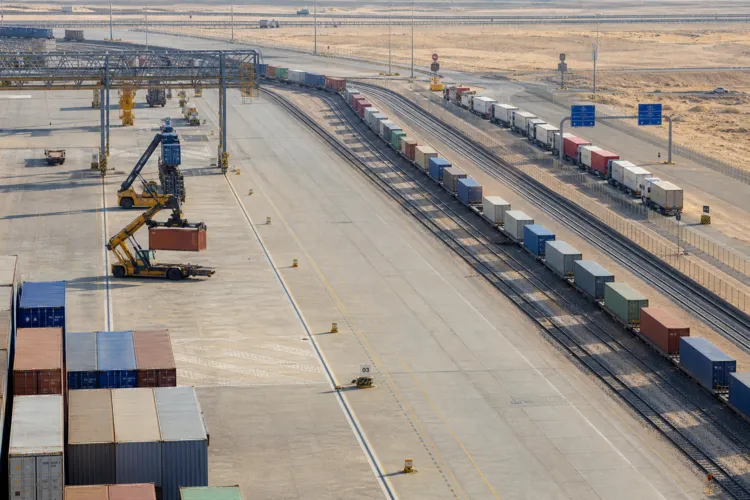
Fleet planning in the Kingdom also tilts heavily toward longer-distance patterns that can amplify fatigue if rest is treated as an afterthought. According to Mordor Intelligence, domestic movements represented 61.25% of the road freight market in 2025, while long-haul captured 71.66% share, reflecting the Kingdom’s 73,000 km highway grid. Full-truck-load dominated at 78.42% share in 2025. These shares suggest many drivers spend sustained time in-cab on stable routes. That can be operationally efficient, but monotonous driving can reduce alertness over time, a phenomenon often described as highway hypnosis, even when a driver starts a shift feeling fine.
Fatigue Management Goes Beyond the Hours Clock
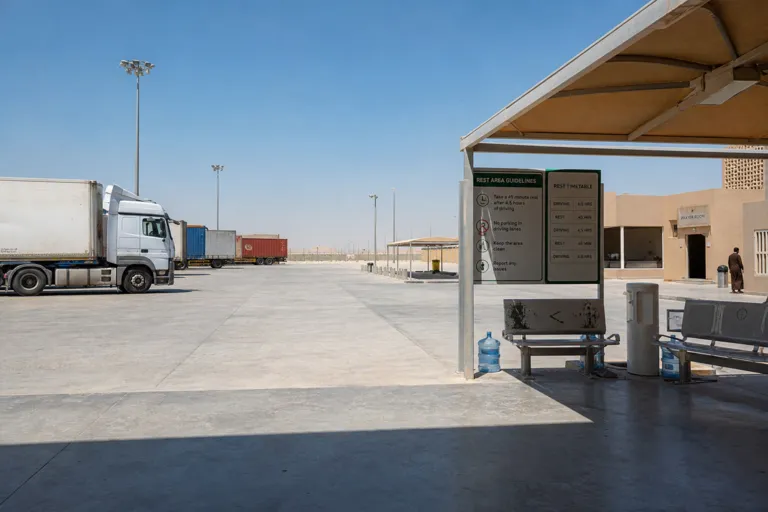
Multiple safety sources stress that hour tracking alone cannot prove a driver is truly rested. FleetRabbit summarizes the gap simply: HOS regulates time, not rest, so a driver can meet every rule and still be seriously fatigued. Global fatigue indicators show why fleets should treat rest quality as a measurable operational risk. Worldmetrics reports that drowsy driving increases crash risk by 1.5x for each 24 hours awake, and that 65% of truck crashes linked to drowsy driving involve lane deviations. It also notes that scheduled rest breaks (every 2 hours) reduce fatigue-related crashes by 35%, and that post-shift napping for 20–30 minutes reduces crash risk by 50%.
For long-haul dispatch, the biggest day-to-day trigger is often schedule pressure rather than a lack of rules. Worldmetrics reports that deadlines or tight schedules cause 55% of truck drivers to push through fatigue, while shift work (irregular hours) contributes to 40% of truck driver fatigue. It also reports that 70% of truck drivers report driving 10+ hours without a break. SaferoadCompliance frames fatigue prevention as an integrated program: rules that limit driving hours, mandate rest breaks, and require proper recordkeeping through electronic logging devices (ELDs), plus driver education, monitoring systems, and supportive scheduling. The core operational idea is to plan work so that “off duty” can become real sleep.
Saudi fleets have additional tools and incentives to professionalize fatigue management as the vehicle market modernizes. Mordor Intelligence values the Saudi Arabia heavy-duty truck market at USD 9.61 billion in 2026 and forecasts USD 15.19 billion by 2031, at a 9.61% CAGR. The same report states higher diesel prices at SAR 1.79 per liter and notes mandated telematics that allow fleets to verify savings down to the route level. Telematics and ELD-style recordkeeping can also support fatigue programs by showing patterns that create risk, such as repeated late starts or compressed recovery time between runs. As freight growth accelerates, pairing working-hour discipline with rest quality and monitoring helps protect drivers and preserve utilization.
What do Saudi truck driver working hours and rest rules aim to control in long-haul fleets?
Why can a driver be compliant on paper but still fatigued?
Which fatigue behaviors and causes should dispatch teams watch for?
What rest practices are linked to lower fatigue-related crash risk?
How do telematics and recordkeeping fit into fatigue management for Saudi fleets?
Talk to us for your needs in:
- Identifying Suitable Warehouse Sites in Saudi Arabia
- Customized Logistics and Supply Chain Analytics
- Logistics Network Design and Optimization
- Green Supply Chain and Sustainable Logistics Solutions
- Supply Chain Risk Management and Compliance
- Advanced Supply Chain Resilience and Agility
- Logistics Market Research and Strategic Analysis
- In-Depth Market Survey for Logistics
- Market Intelligence and Insights in Logistics
- Feasibility Study and Assessment in Logistics
- Integrated Warehousing Management Solutions
- Smart Warehousing and Automation Systems
- Sustainable and Green Warehousing Practices
- Port and Airport Logistics Optimization
- Digital Logistics Solutions
- Saudi Logistics Benchmarking