Saudi Arabia’s excise tax regime for sweetened beverages changed on 1 January 2026, creating immediate implications for pricing, product strategy, and the way beverages move from importer or producer to shelf. Under the prior approach, sweetened beverages faced a flat 50% excise tax based on retail price, regardless of sugar levels. The reform replaced that model with a progressive, sugar-based system measured in grams per 100 ml, aligning the tax signal with formulation choices. The change affects food and beverage companies, FMCG businesses, importers, distributors, and investors operating in the Saudi market, because excise tax is charged at a single stage when goods are imported, produced, or released from a tax warehouse for consumption.
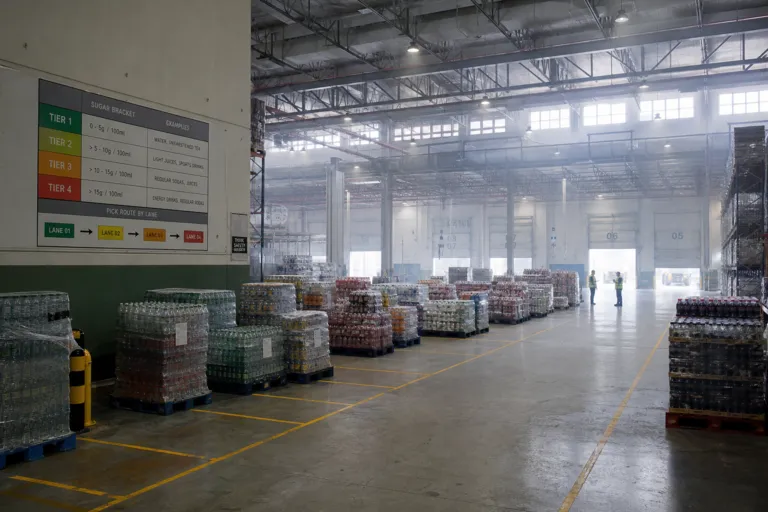
The new four-tier structure splits products by sugar content per 100 ml, and that categorization now shapes distribution decisions, especially for portfolios that span “zero,” low, medium, and high sugar options. Tier 1 covers products with 0 g/100 ml that are sweetened only with artificial (non-caloric) sweeteners and is exempt from excise tax. Tier 2 covers drinks with less than 5 g of sugar per 100 ml and is also set at zero excise tax in the 2026 change summary. Tier 3 covers 5 g to 7.99 g per 100 ml and is listed at SAR 0.79 per litre. Tier 4 begins at 8 g or more per 100 ml and is described as subject to the highest excise tax rate, reinforcing why reformulation and SKU-by-SKU routing decisions matter.
Why the Definition of “Sweetened Beverage” Rewires Distribution Planning
A critical operational point is that the scope can extend beyond ready-to-drink beverages on shelves. ZATCA’s definition includes syrups and concentrates, beverage powders and gels, and extracts or other products that can be diluted into drinks. That pulls more items into excise-controlled flows, which can change which entities must register, how goods are stored, and when tax liability is triggered. For teams managing Saudi sugar excise beverage distribution, this means classification work becomes a frontline distribution task, not a back-office check. It also explains why some consumers may assume powdered mixes or concentrates are “different,” while the regulatory lens can treat them under the same umbrella if they become a sweetened beverage.
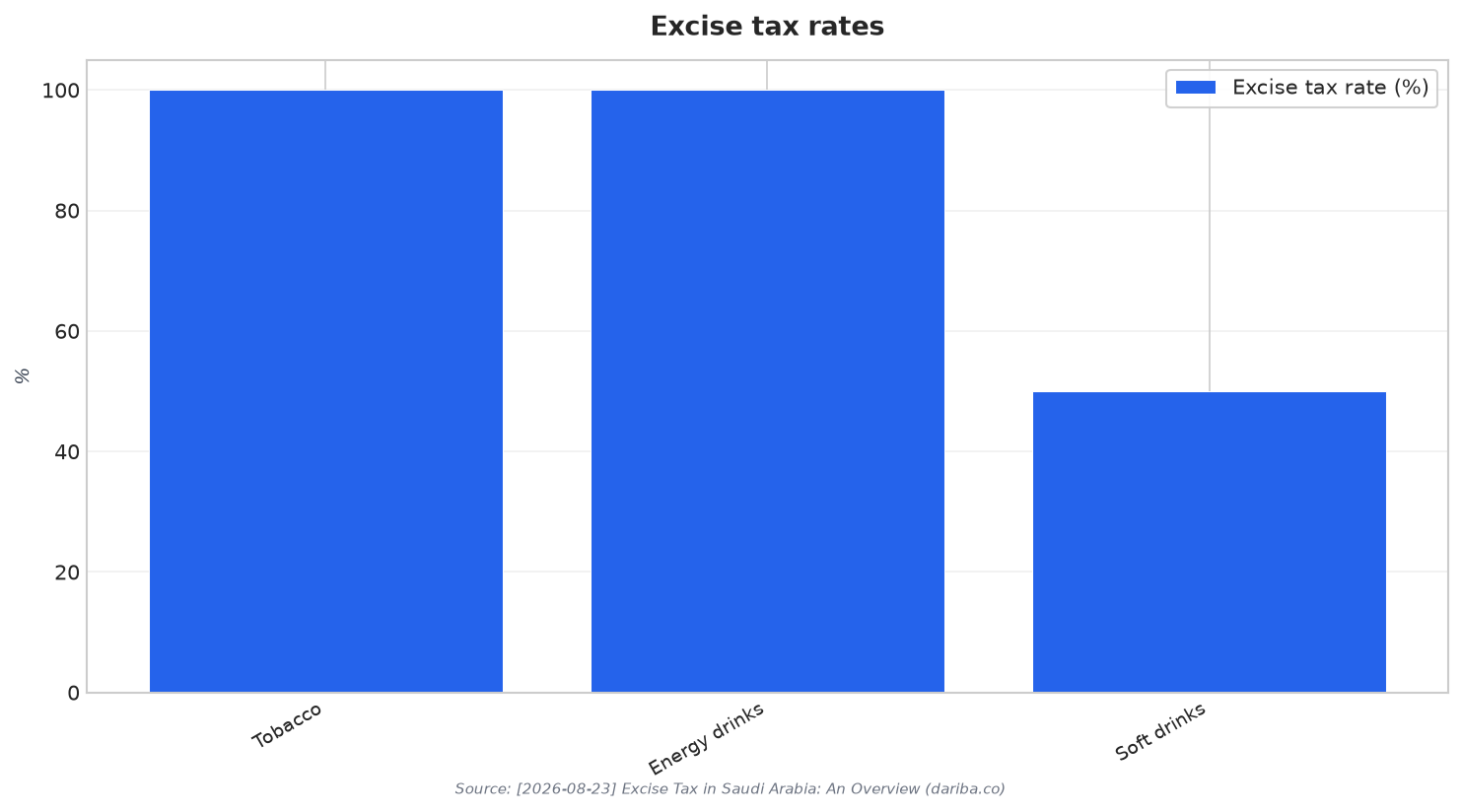
Excise tax sits alongside other Saudi indirect taxes and category rates, so distribution leaders need to model how the stack affects channel pricing and assortment. An overview of the regime notes excise tax rates of 100% on tobacco, energy drinks, and e-smoking devices and liquids, and 50% on soft drinks, with sweetened beverages now changing under the 2026 tiers. VAT applies broadly at 15%, and excise is described as landing before VAT is calculated. The same overview also lists sweetened-beverage-specific exemptions: 100% natural juices with no added sweeteners, milk-based drinks with at least 75% milk content, and plant-based milk alternatives that meet ZATCA’s nutritional criteria. Each exemption can influence portfolio design and which products a distributor prioritizes in different outlets.
Channel strategy matters because distribution in Saudi Arabia is not uniform, and modern retail plays an outsized role in the wider food and beverages landscape. A market report states that in 2025, supermarkets and hypermarkets held a 57.10% share of Saudi Arabia’s food and beverages market, positioning them as a primary consumer touchpoint. In practice, a tiered sugar excise can intensify negotiations over shelf price architecture, promotions, and which pack sizes or variants get priority in high-volume outlets. At the same time, the reform is described as part of a broader GCC-wide initiative toward a volumetric, sugar-based model endorsed by the GCC’s Financial and Economic Cooperation Committee, adding regional consistency that can matter to cross-border portfolio planning.
What changed in Saudi Arabia’s excise tax for sweetened beverages in 2026?
How do the four tiers classify sweetened beverages?
Which products beyond ready-to-drink beverages can fall under the sweetened beverage rules?
How does the Saudi sugar excise affect beverage distribution decisions?
Which retail channel is highlighted as dominant in Saudi Arabia’s food and beverages market?
Talk to us for your needs in:
- Identifying Suitable Warehouse Sites in Saudi Arabia
- Customized Logistics and Supply Chain Analytics
- Logistics Network Design and Optimization
- Green Supply Chain and Sustainable Logistics Solutions
- Supply Chain Risk Management and Compliance
- Advanced Supply Chain Resilience and Agility
- Logistics Market Research and Strategic Analysis
- In-Depth Market Survey for Logistics
- Market Intelligence and Insights in Logistics
- Feasibility Study and Assessment in Logistics
- Integrated Warehousing Management Solutions
- Smart Warehousing and Automation Systems
- Sustainable and Green Warehousing Practices
- Port and Airport Logistics Optimization
- Digital Logistics Solutions
- Saudi Logistics Benchmarking