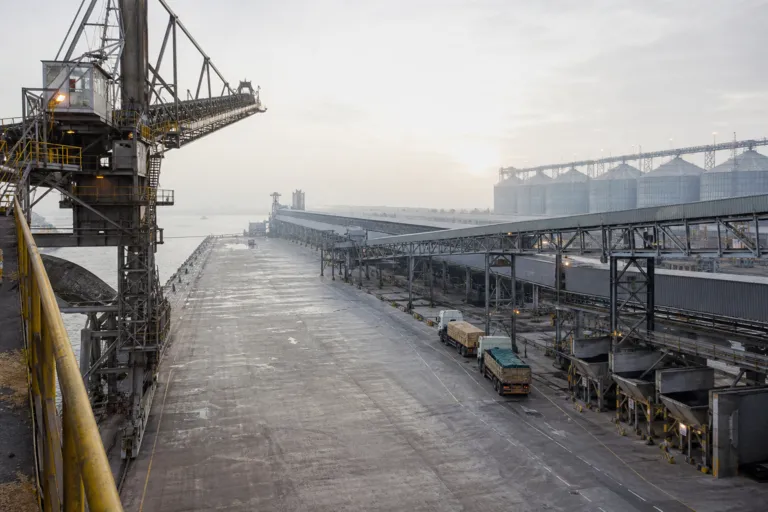
Saudi Arabia is entering a new phase of centralized coordination in wheat procurement and storage. A USDA assessment cited in Saudi market coverage says SABIL is set to take over wheat purchasing, alongside operating wheat storage silos and maintaining strategic stocks in the next few months. This matters for how ships are scheduled, how silos are filled, and how trucks are dispatched, because purchasing decisions directly shape delivery windows and discharge priorities. The policy discussion is also moving in parallel: the same USDA report notes discussions indicating government intentions to exit wheat imports and hand that responsibility to the private sector, particularly to the National Grain Supply. In that backdrop, the key operational story is less about adding infrastructure and more about consolidating who directs existing assets.
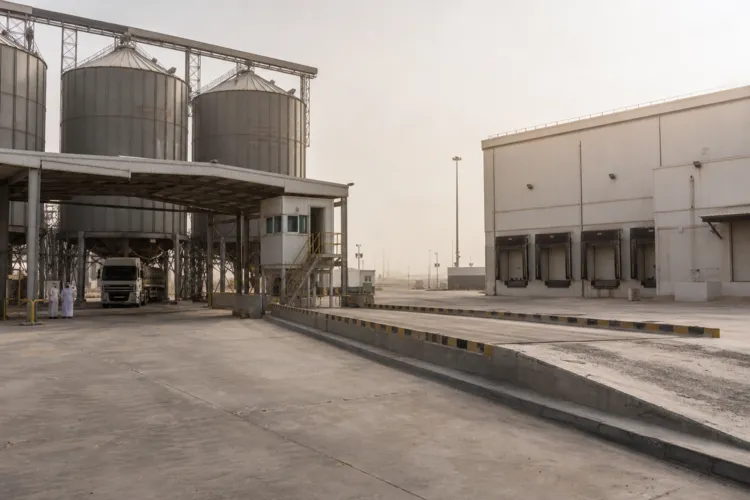
The domestic consolidation became clearer on 12 October, when SALIC transferred full ownership of National Grain Company (NGC) to its subsidiary SABIL after acquiring the remaining 50% stake. Arab News reports the integration combines SABIL’s management of the strategic wheat reserve, the national silo and storage network, and grain handling and distribution capabilities with NGC’s expertise in international sourcing of grain and feed inputs and local market operations. Saudi FoodTech adds that the consolidation “adds no capacity,” but it changes coordination across the chain from international sourcing to the Kingdom’s silos. NGC remains a separate legal entity, wholly owned by SABIL, and it runs a grain terminal at Yanbu port that specializes in international sourcing of grains and feed inputs, creating a direct link between port handling and inland distribution decisions.
How Centralization Redirects Port, Silo, and Trucking Priorities
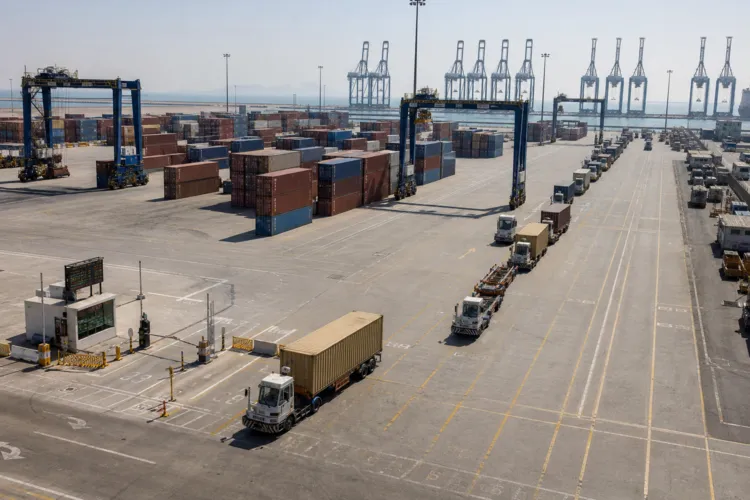
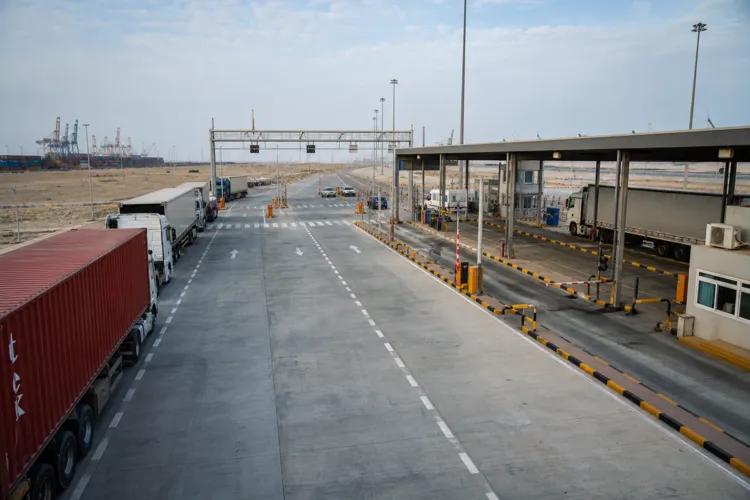
Centralization can shift operational priorities even when no new tonnes are added. SABIL now pairs a 14-branch national silo network with an in-house importer and port terminal operator, which can tighten the sequencing between vessel discharge and silo intake. Saudi FoodTech notes an open question: how SABIL balances serving private importers with competing against them, because SABIL already serves private buyers. It discharged its first corn cargo for a private importer at Dammam in July 2025 and signed a logistics agreement with ARASCO in October 2025. When one operator sits across procurement, handling, and storage, it can harmonize berthing plans, allocate storage slots across branches, and align truck dispatching with real-time intake capacity. In general transportation terms, a USDA transportation note explains grain can move by truck, rail, barge, and oceangoing vessel, and that usage is not one-to-one with transportation because grain may be moved more than once, such as being trucked to another location. This helps explain why coordination across steps can materially change flow patterns without changing overall volumes.
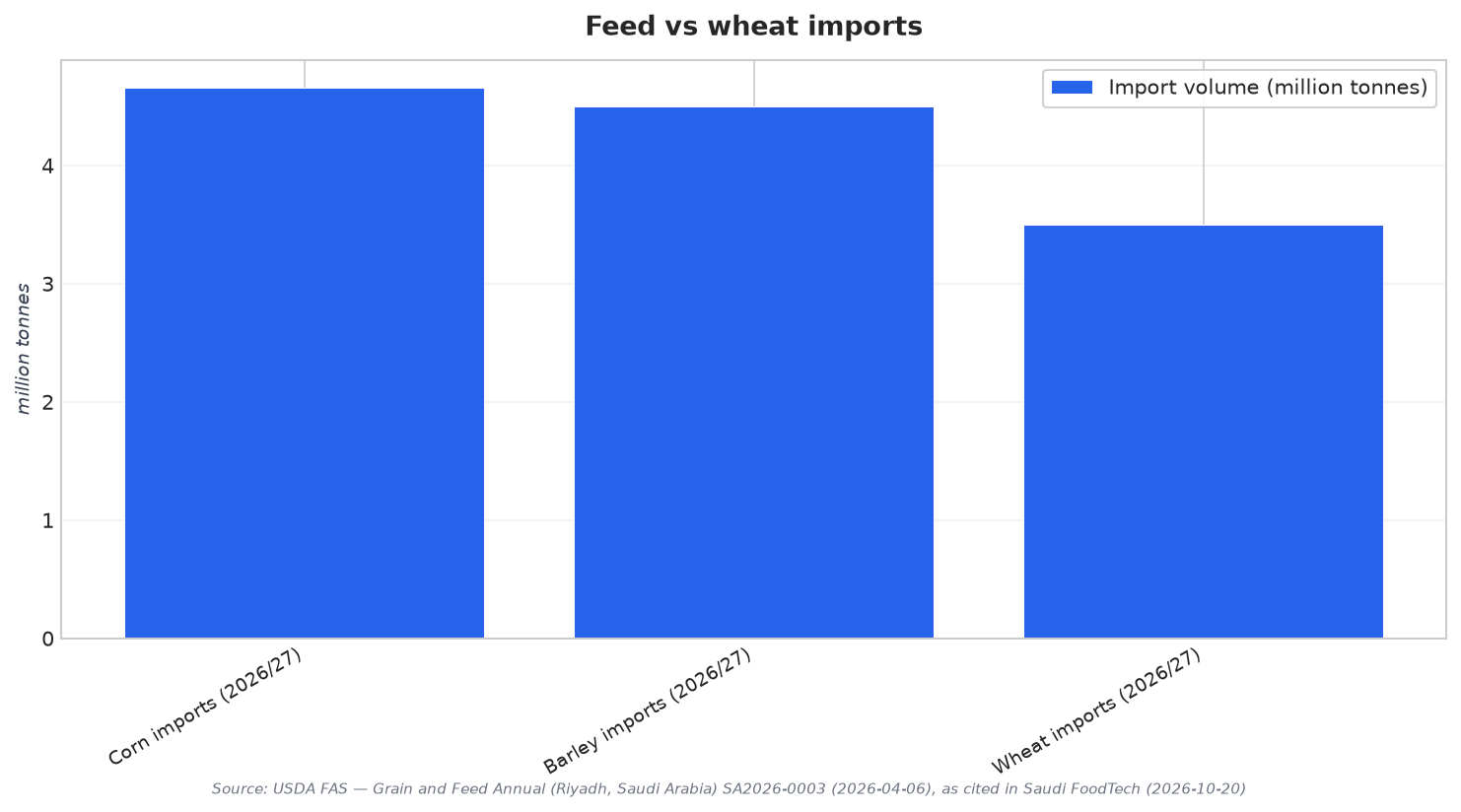
Wheat sits inside a wider grain logistics picture where feed flows are larger in Saudi Arabia, which can influence how shared port and silo resources are prioritized. USDA forecasts cited by Saudi FoodTech put Saudi corn imports at 4.66 million tonnes and barley at 4.5 million tonnes in 2026/27, against 3.5 million tonnes of wheat. Saudi FoodTech also states corn and barley imports are forecast at more than 2.5 times wheat imports. That matters because NGC is positioned as a feed-input sourcing platform at Yanbu, while SABIL is built around the wheat reserve and silo system. If procurement is centrally scheduled, operators can coordinate discharge windows and inland movements so that wheat reserve requirements do not clash with feed cargoes needed by poultry, dairy, and livestock supply chains that the Kingdom is expanding while limiting water-intensive fodder farming at home. The practical effect is that trucking cycles and storage occupancy can be planned across multiple commodities, not just wheat.
Looking beyond Saudi Arabia, global storage trends provide context for why centralized procurement often pairs with modernized silo operations. IndexBox says feed production is becoming more sophisticated and there is a growing need for silos equipped with automation and quality control systems, while the trend toward larger, more centralized feed mills is leading to demand for higher-capacity silos. Market.us projects the global grain storage silos market at USD 1.6 Billion in 2025, rising to around USD 2.5 Billion by 2035, at a CAGR of 4.7% from 2026 to 2035. These are global figures, not Saudi metrics, but they frame why entities that control procurement and logistics may push for tighter inventory management and quality controls. In the Saudi case, the near-term takeaway for SALIC wheat import logistics is straightforward: no announced changes to volumes, prices, or delivery terms, but a clearer single operator path from international sourcing through ports and into a nationwide silo system.
What changed when SALIC transferred NGC to SABIL?
Is Saudi Arabia adding new grain capacity through this consolidation?
How can centralized purchasing change port, silo, and trucking flows without adding volume?
How large are Saudi feed grain imports compared with wheat in the 2026/27 forecast?
What does the SALIC wheat import logistics shift mean for private importers?
Talk to us for your needs in:
- Identifying Suitable Warehouse Sites in Saudi Arabia
- Customized Logistics and Supply Chain Analytics
- Logistics Network Design and Optimization
- Green Supply Chain and Sustainable Logistics Solutions
- Supply Chain Risk Management and Compliance
- Advanced Supply Chain Resilience and Agility
- Logistics Market Research and Strategic Analysis
- In-Depth Market Survey for Logistics
- Market Intelligence and Insights in Logistics
- Feasibility Study and Assessment in Logistics
- Integrated Warehousing Management Solutions
- Smart Warehousing and Automation Systems
- Sustainable and Green Warehousing Practices
- Port and Airport Logistics Optimization
- Digital Logistics Solutions
- Saudi Logistics Benchmarking