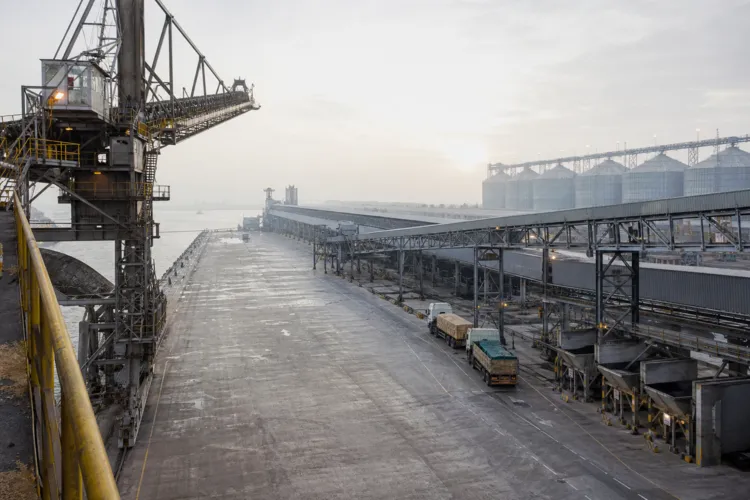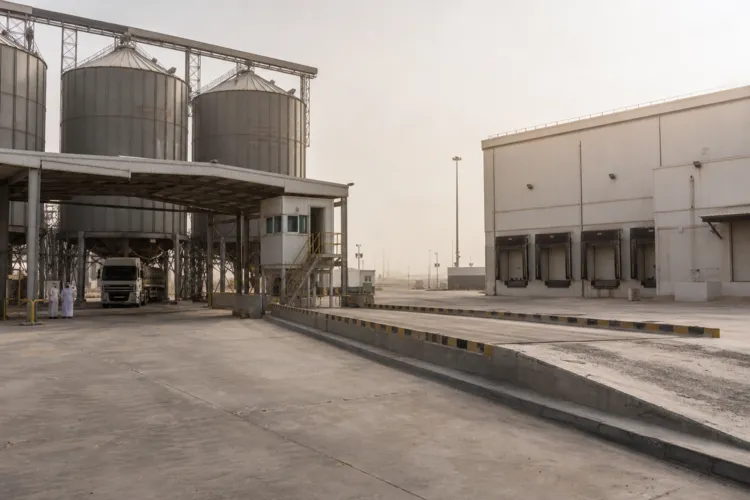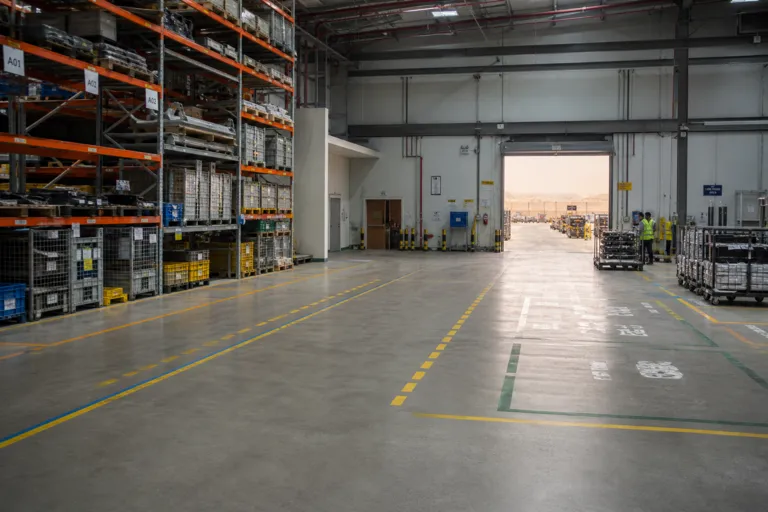
Localizing the Saudi EV manufacturing supply chain is increasingly about how inbound parts logistics is designed around new anchor plants and supplier commitments. In King Abdullah Economic City (KAEC), the King Salman Automotive Cluster is taking shape, bringing together CEER, Lucid, Hyundai, component suppliers, and other automotive services, according to Al Majalla. A key logistics advantage is proximity to King Abdullah Port, existing logistics infrastructure, and the special economic zone (SEZ). This co-location matters because inbound flows depend on predictable port access, staging space, and service providers that can keep production lines supplied without long buffers.
Ceer’s production plans set a scale signal that changes how inbound networks must perform. Rest of World reports Ceer’s KAEC factory is designed for as many as 240,000 vehicles a year, with deliveries promised for March 2027, and notes the EVs were designed and engineered in Saudi Arabia and will be built at the KAEC plant. The same report highlights imported specialist inputs, including motors from Croatia’s Rimac and South Korea’s Hyundai Transys, and a platform from Taiwan’s Foxconn. That mix points to a near-term reality: inbound logistics must reliably manage international parts alongside any local content, with tight coordination from port discharge through line-side delivery.
What Supplier Deals Mean for Port-to-Plant Inbound Flows
Supplier agreements are not just industrial policy signals; they reshape day-to-day inbound parts handling, packaging, and sequencing. Ceer targets sourcing 45% of its vehicle materials and components from Saudi companies by 2034. In February 2026, it announced 16 agreements and MoUs worth more than SAR 3.7 billion, covering glazing, plastics, adhesives, fluids, manufacturing equipment, and engineering services. These categories have different inbound characteristics, from fragile glazing to chemical handling for fluids and adhesives. As more of these flows originate in-Kingdom, inbound planning shifts from import-heavy containers to more domestic linehaul patterns and consistent plant replenishment cycles.
Lucid’s current operating footprint shows why inbound logistics capability matters even before full localization is achieved. EnterpriseAM reports Lucid’s AMP-2 line reassembles Air and Gravity kits shipped from Arizona at around 5k units a year, while stamping, body-welding, and paint facilities are still under construction rather than running commercially. That still creates a working baseline for local logistics and workforce routines. ArabWheels adds that Lucid is expanding toward full vehicle production and that the expanded plant is designed to add capacity for around 150,000 vehicles a year, which would intensify inbound scheduling, delivery frequency, and inventory discipline as the site moves beyond kit reassembly.
Across this ecosystem, OEM procurement concentration and global sourcing constraints shape what inbound teams must optimize. IMARC states the OEM channel dominates EV component distribution at 72.4% through factory-gate procurement by Lucid Group and Ceer Motors, supported by PIF’s structured supply chain development program. The same source says international battery cell suppliers collectively supply essentially all Saudi Arabia’s battery cell requirement through import-dependent supply chains, while Foxconn’s partnership with Ceer is facilitating Chinese EV component supply chain entry with Taiwanese and mainland Chinese component suppliers establishing regional presence. For inbound logistics, this means balancing import-dependent critical items with a growing regional supplier footprint, and building processes that can scale as volumes rise.
How does the Saudi EV manufacturing supply chain affect inbound parts logistics?
What is Ceer’s localization target, and why does it matter for inbound planning?
What did Ceer’s February 2026 supplier announcements include?
What do the sources say about Lucid’s current production setup in Saudi Arabia?
What share of EV component distribution is attributed to the OEM channel in Saudi Arabia?
Talk to us for your needs in:
- Identifying Suitable Warehouse Sites in Saudi Arabia
- Customized Logistics and Supply Chain Analytics
- Logistics Network Design and Optimization
- Green Supply Chain and Sustainable Logistics Solutions
- Supply Chain Risk Management and Compliance
- Advanced Supply Chain Resilience and Agility
- Logistics Market Research and Strategic Analysis
- In-Depth Market Survey for Logistics
- Market Intelligence and Insights in Logistics
- Feasibility Study and Assessment in Logistics
- Integrated Warehousing Management Solutions
- Smart Warehousing and Automation Systems
- Sustainable and Green Warehousing Practices
- Port and Airport Logistics Optimization
- Digital Logistics Solutions
- Saudi Logistics Benchmarking