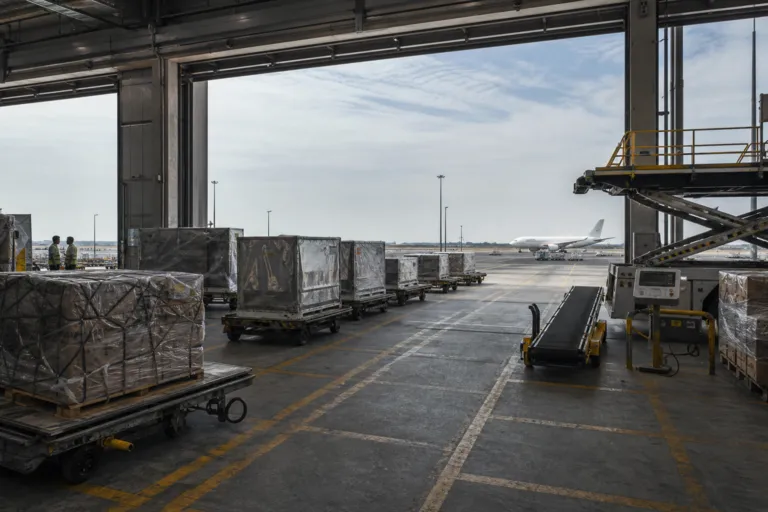
Regional security shocks have turned air cargo continuity into a board-level topic for Saudi shippers moving time-sensitive cargo, industrial components, and essential supplies. Recent reporting described disruptions affecting scheduled flights and forcing airlines and cargo operators to reassess routing and capacity decisions, including services operating through Riyadh. Earlier figures attributed to Cirium in separate reporting put cancellations at 46.4% of flights across Saudi airports during the disruption, although that number was not independently verified in the article citing it. The operational lesson is still clear: when passenger schedules are cut, lower-deck capacity can disappear even if freighters are not directly hit, and shipper allocations can evaporate mid-week.
A contingency plan works best when it is anchored to objective capacity indicators, not just headlines. During a recent Riyadh shutdown, Rotate data showed combined inbound and outbound capacity on freighters and widebody passenger aircraft across Saudi Arabia down 33% versus the equivalent 72-hour period a week earlier, a decline of 3,537 tonnes to 7,292 tonnes. At Riyadh, capacity across all airlines (excluding narrowbody passenger aircraft) fell 99%, from 3,925 tonnes to 26 tonnes. The notice to airmen for King Khalid International Airport stated the aerodrome was unavailable due to precautionary measures until 9pm UTC on 17 October. For shippers, these figures translate into a simple trigger: when a primary gateway drops toward minimal capacity, shipments must be revalidated, rebooked, and pre-cleared for alternate handoffs.
How to Build a Routing-and-Capacity Playbook That Survives Closures
Saudi air cargo contingency planning should start with segmentation and pre-approved alternates. One market intelligence source recommends segmenting cargo by urgency, value, temperature sensitivity, and disruption exposure, then diversifying gateways and carriers and creating tested playbooks that connect air freight planning with road, rail, warehousing, and inventory decisions. The same source highlights route diversification, multimodal alternatives, and digitally coordinated operations as resilience priorities when capacity is constrained and visibility is limited. For Saudi exporters and importers, that means writing decision rules in advance: which SKUs can accept rerouting, which must move on the next uplift, and which should pause until stable capacity returns.
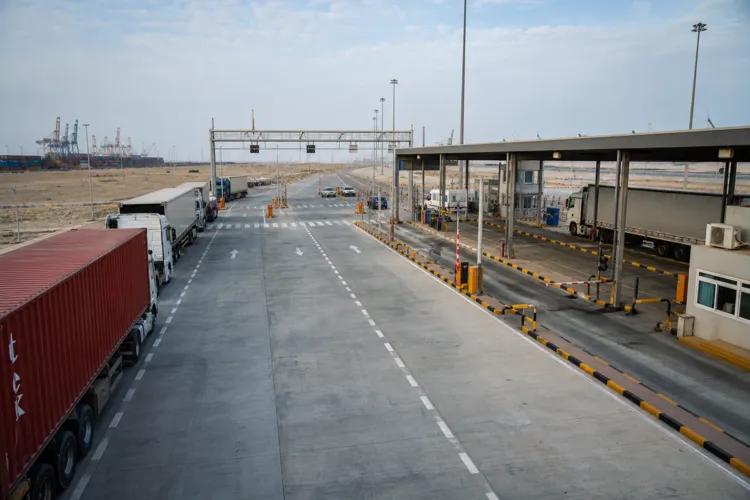
When air networks fracture, road becomes the bridge between functional airports. Forwarders told The Loadstar they were securing as much trucking capacity as possible across the region, particularly in Saudi Arabia, as shipments were redirected from disrupted Gulf hubs toward airports that remained operational. DHL Global Forwarding said it had been booking significant trucking capacity to reposition cargo between airports and logistics hubs, with much of that effort focused on Saudi Arabia because trucking companies were thought to be better able to obtain cross-border permits than operators based in the UAE. However, the same reporting warned that moving cargo in bond across borders can be slowed by customs and border congestion, with border authorities focused on passenger flows and paperwork. A workable plan therefore includes bonded-movement scenarios, buffer time, and a fallback for when trucking is too slow.
Alternative Gulf gateways should be mapped before the next disruption. Oman Air described Muscat operating “business as usual” during recent turbulence and confirmed some Saudi-bound shipments were waiting in Muscat following cancellations into Riyadh. Oman Air also reported adding extra flights from Muscat to cities including London, Amsterdam, Rome, Milan, Istanbul, Bangkok, Kuala Lumpur, Mumbai, and Jeddah, and introducing an additional daily widebody flight to London Heathrow that generated extra cargo capacity. On the risk side, EASA’s conflict-zone bulletin revised on 9 October recommended avoiding two defined areas of Saudi airspace at all altitudes and exercising caution throughout the remainder of the Jeddah flight information region. Finally, shippers should watch rate and demand signals: WorldACD reported worldwide tonnages up 9% year on year in September, while worldwide average rates were 25% above September 2025 levels, and Freightos FAX showed southern Asia–North America rates up 36% since 5 March and southern Asia–Europe up 54% since 3 March as capacity tightened.
What triggers should Saudi shippers use to activate an air cargo contingency plan?
How can cross-border trucking support air cargo continuity during Gulf disruptions?
Which alternate gateway was described as operating normally during recent disruption?
How do market conditions affect contingency costs when disruptions hit?
What should Saudi air cargo contingency planning include beyond air bookings?
Talk to us for your needs in:
- Identifying Suitable Warehouse Sites in Saudi Arabia
- Customized Logistics and Supply Chain Analytics
- Logistics Network Design and Optimization
- Green Supply Chain and Sustainable Logistics Solutions
- Supply Chain Risk Management and Compliance
- Advanced Supply Chain Resilience and Agility
- Logistics Market Research and Strategic Analysis
- In-Depth Market Survey for Logistics
- Market Intelligence and Insights in Logistics
- Feasibility Study and Assessment in Logistics
- Integrated Warehousing Management Solutions
- Smart Warehousing and Automation Systems
- Sustainable and Green Warehousing Practices
- Port and Airport Logistics Optimization
- Digital Logistics Solutions
- Saudi Logistics Benchmarking