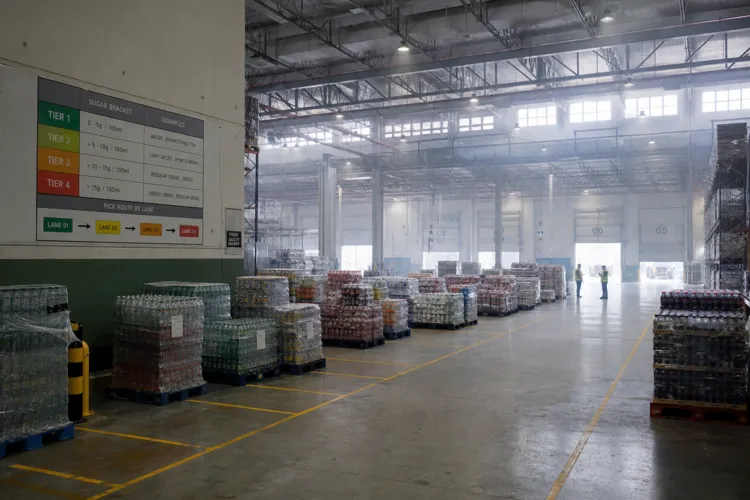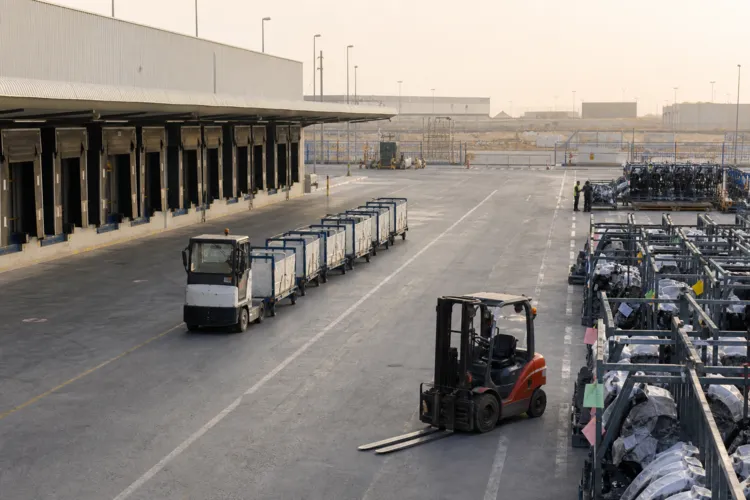
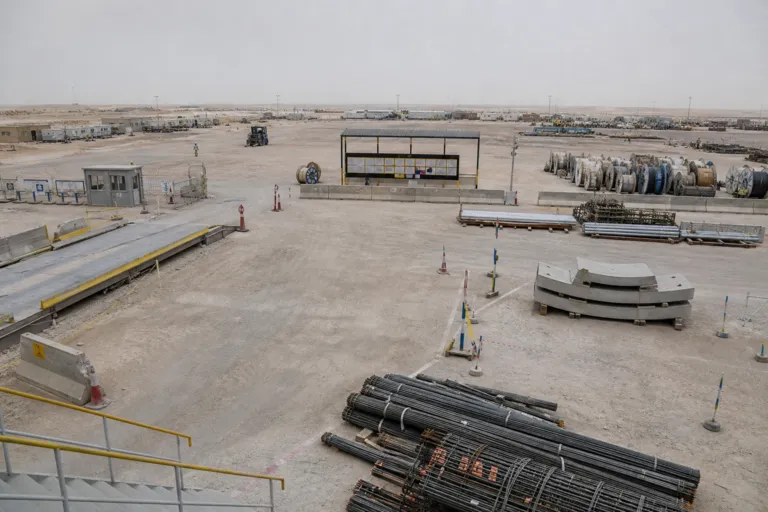
Vision 2030’s best-known builds are a portfolio of PIF-backed giga-projects, including NEOM, Red Sea Global, Qiddiya, ROSHN, Diriyah Gate, The Rig, Jeddah Central, King Salman Park, and New Murabba. A status guide tracking delivery vs. delay says their combined announced commitments still exceed USD 1 trillion, framing what it calls the most ambitious simultaneous construction programme in modern history. That scale makes construction supply chains central to execution. When multiple mega-sites compete for the same materials, transport capacity, and specialist services, delivery timing becomes a project risk. For Saudi giga-project construction logistics, the operational question is simple: can procurement and movement of goods keep pace with what is being built, not just what was promised.
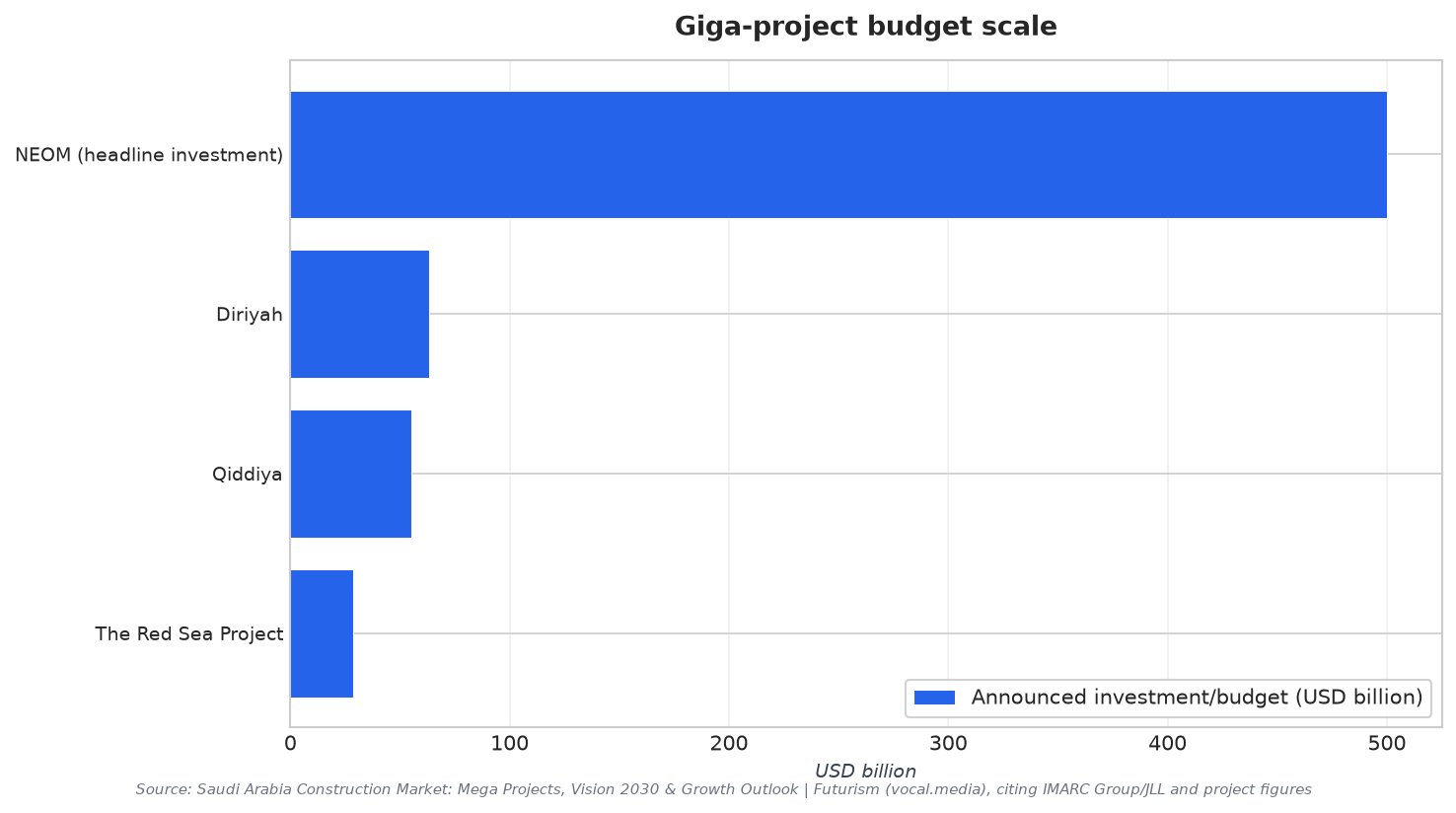
By mid-2026, the gap between announcements and delivery has become a defining constraint. One analysis cites a Wall Street Journal report of an internal audit pegging full NEOM completion at USD 8.8 trillion, while also stating PIF formally cut construction commitments from USD 71 billion to USD 30 billion. It also reports that The Mukaab cube was suspended on 28 January 2026, and that The Line’s resident target for 2030 was reduced from 1.5 million to fewer than 300,000. After roughly USD 50 billion of confirmed Saudi state spending on NEOM alone, the visible output is described as 2.4 kilometres of foundation, a closed luxury island, and a half-built ski resort. For suppliers and hauliers, these shifts can change demand profiles fast, forcing re-forecasting of volumes, storage, and route planning.
Where the Money and Contracts Create Supply-Chain Stress
Market indicators show why procurement and distribution are under constant pressure. One construction-market outlook cites IMARC Group data valuing the Saudi Arabia construction market at USD 101.4 billion in 2025, with an estimate of USD 138.4 billion by 2034 and a CAGR of 3.52% from 2026–2034. The same source says contract awards reached USD 196 billion in 2025, up 20% from the previous year, and that cumulative spending on giga-projects alone has exceeded USD 120 billion to date. It also states NEOM has received USD 24 billion in contracts, including USD 8.9 billion for The Line and USD 9.3 billion for Oxagon. In this environment, the construction supply chain is not an afterthought; it is the mechanism that converts awards into installed assets.
Pipeline size and financing signals add another layer. The same market outlook describes a USD 1.5 trillion unawarded construction pipeline (attributed to JLL), and says the Public Investment Fund has committed over USD 900 billion to giga-projects, with USD 105 billion already contracted across the portfolio. A separate feasibility-focused source frames the Vision 2030 pipeline in SAR terms and notes the 2026 budget continues an expansionary stance, with planned expenditure of SAR 1.31 trillion and a projected deficit of approximately SAR 102 billion. It also warns that material and labor costs tied to the giga-project boom have pushed up input prices across the Kingdom, and that studies using two-year-old cost data can underprice projects by a wide margin. For logistics planning, that combination means tighter procurement discipline, more bankable assumptions, and more contingency around lead times.
Supplier performance is repeatedly described as a schedule determinant, not a back-office function. A supplier-focused briefing says construction material suppliers support Vision 2030 giga-projects through timely delivery, regulatory compliance, and consistent quality, and argues that their ability to manage logistics, supply chains, and project demands directly impacts construction speed and cost efficiency. It states that in the Vision 2030 era, suppliers are no longer just vendors but strategic partners, and that without reliable supply, entire project phases can be delayed. Taken together with the contract figures and the documented scope changes, the practical playbook for Saudi Arabia’s giga builds is to design procurement around reality: what is funded, contracted, and moving on site, and what has been paused, resized, or reset.
What makes construction logistics so critical to Vision 2030 giga-project delivery?
What do sources say about contract awards and current giga-project spending?
How have changes in NEOM plans affected supply-chain expectations?
How should Saudi giga-project construction logistics teams plan around cost pressure?
Talk to us for your needs in:
- Identifying Suitable Warehouse Sites in Saudi Arabia
- Customized Logistics and Supply Chain Analytics
- Logistics Network Design and Optimization
- Green Supply Chain and Sustainable Logistics Solutions
- Supply Chain Risk Management and Compliance
- Advanced Supply Chain Resilience and Agility
- Logistics Market Research and Strategic Analysis
- In-Depth Market Survey for Logistics
- Market Intelligence and Insights in Logistics
- Feasibility Study and Assessment in Logistics
- Integrated Warehousing Management Solutions
- Smart Warehousing and Automation Systems
- Sustainable and Green Warehousing Practices
- Port and Airport Logistics Optimization
- Digital Logistics Solutions
- Saudi Logistics Benchmarking