
In 2026, the reroute premium behind Cape of Good Hope freight rates is shaped by time, fuel, and carbon policy costs that did not exist in the same way a few years earlier. One major driver is Red Sea diversions that force vessels to divert around the Cape of Good Hope rather than transit the Suez Canal and Red Sea. This adds 10 days of steaming time to vessel journeys. More days at sea means more fuel burn. It also means more exposure to carbon pricing regimes tied to EU-connected voyages, which can show up inside what importers ultimately pay.
Ahti calculated what this looks like on a typical 12,500 teu vessel sailing from Asia to Europe via the Cape at 15–16 knots. The total cost was estimated at $661,000. In that estimate, $500,000 was fuel costs. A further $125,000 was EU ETS charges. Another $36,000 was FuelEU penalties. This single route example matters because it turns “rerouting” into an itemized bill that can be modeled into all-in freight pricing, including contract adjustments and surcharges that lag when shocks happen fast.
Why Carbon Rules Turn Detours Into a Bigger Bill
FuelEU came into force in January, and Ahti calculated that a 12,500 teu vessel sailing around the Cape at 16 knots will pay an additional $36,000 in carbon fees. These fees are calculated at 50% of the fuel consumption between ports outside of the EU to and from an EU port. At the same time, the EU MRV database quantified 146 million tonnes of total CO2e emissions in 2024, which was a 20% increase on 2023 levels. Container ships accounted for 37% of these emissions, and tankers, bulk carriers, and container ships contributed 70% of that 146 million tonnes.
Costs are also framed by what comes next. If, as expected, the IMO agrees in October to implement its own global carbon charges in 2028, Ahti said charges will rise substantially. EU charges were cited as $109,000 via Suez and $146,000 via the Cape. IMO Remedial Unit charges were cited as $332,000 via Suez and $443,000 via the Cape. The EU has pledged to scrap its carbon pricing if a global charge is introduced. But in the meantime, the Cape route is explicitly shown as the higher-cost option in both the EU and IMO charge comparisons.
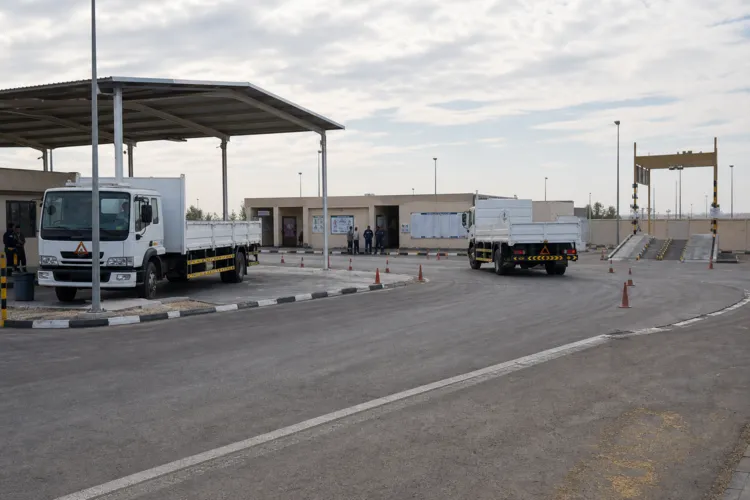
For Saudi importers, the “really paying” part can also include workarounds that shift cost from sea to land. Shipping companies are offering combined sea and land routes. MSC said it would ship to Jeddah and King Abdullah Port on the Red Sea, transfer containers to trucks to Dammam, and then use feeder services to move freight onward. Hapag-Lloyd is also launching overland options via Saudi Arabia and Oman. Trade flow numbers show the intensity of these shifts: goods crossing at Ramlet Khelah nearly trebled to $830 million in March from $300 million in February.
Land corridors can cut time, but they do not eliminate the underlying drivers behind Cape of Good Hope freight rates. Route 95 cut traveling time between its start and end points by 16 hours, and it also cut out the old road across sand or diversion through the UAE. Another report noted it cuts out often 24-hour delays at UAE-Saudi border crossings that no longer need to be traversed. These are meaningful operational savings. Yet the Cape reroute premium remains anchored in longer sea time, higher fuel consumption, and carbon charges that can be explicitly higher via the Cape than via Suez in the cited charge comparisons.
What is included in the reroute premium behind Cape of Good Hope freight rates?
How much extra sailing time does diverting around the Cape add?
How are FuelEU carbon fees calculated in the cited example?
If IMO carbon charges arrive in 2028, how do Cape and Suez compare in the source figures?
What evidence shows Saudi shippers are using overland alternatives?
Talk to us for your needs in:
- Identifying Suitable Warehouse Sites in Saudi Arabia
- Customized Logistics and Supply Chain Analytics
- Logistics Network Design and Optimization
- Green Supply Chain and Sustainable Logistics Solutions
- Supply Chain Risk Management and Compliance
- Advanced Supply Chain Resilience and Agility
- Logistics Market Research and Strategic Analysis
- In-Depth Market Survey for Logistics
- Market Intelligence and Insights in Logistics
- Feasibility Study and Assessment in Logistics
- Integrated Warehousing Management Solutions
- Smart Warehousing and Automation Systems
- Sustainable and Green Warehousing Practices
- Port and Airport Logistics Optimization
- Digital Logistics Solutions
- Saudi Logistics Benchmarking