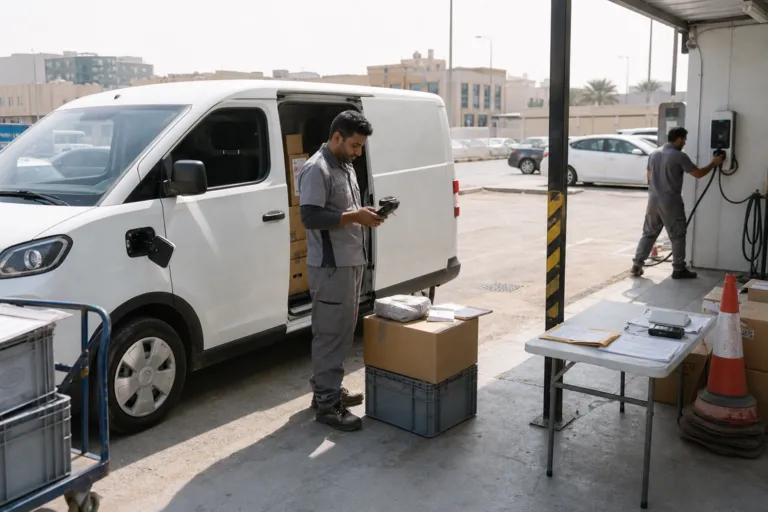
Riyadh’s electrification ambitions are turning fleet decisions into a near-term operational issue, not a distant sustainability goal. Under Vision 2030, a target of 30% EV adoption in Riyadh is cited in market research, and another industry source states the government plans to electrify 30% of vehicles in Riyadh by 2030 through the Saudi Green Initiative. For delivery operators, the message is clear: prepare for city logistics where electric vehicles play a growing role. This context matters for Saudi EV last-mile delivery, where route predictability and depot-based operations can align with charging availability and fleet procurement cycles.
Momentum is already visible in national adoption signals. Saudi Ministry of Investment data cited in one market report notes a 425% increase in EV registrations between 2021 and 2023, rising from 375 electric vehicles on Saudi roads in 2021 to over 12,000 by the end of 2023. The same source also describes incentives such as customs duty exemptions, free parking in designated areas, and reduced electricity rates for home charging stations. While these incentives are not written specifically for couriers, they shape the broader total cost conversation and can influence driver acceptance and fleet utilization in urban delivery settings.
Charging Scale and Fleet Signals That Matter for Couriers
Charging coverage is the practical enabler for electrified routes, especially where vehicles need predictable uptime. One Saudi-focused source reports public charging stations grew from 150 in 2022 to over 1,000 by early 2024. It also states the Saudi Electricity Company plans to install an additional 3,500 charging points across 1,000 locations by the end of 2025, representing an investment of SAR 500 million ($133 million). For last-mile logistics planners, those figures help frame where to prioritize pilot corridors, how to schedule charging windows, and whether to rely on public charging or concentrate charging at depots.
Market structure indicators also point to rising commercial relevance, even if passenger cars remain the core of today’s volumes. Mordor Intelligence estimates passenger cars held 76.81% of Saudi Arabia’s EV market share in 2025, while commercial vehicles are forecast to expand at a 24.53% CAGR through 2031. The same source reports Riyadh commanded 38.73% of 2025 sales. For delivery fleets, that combination suggests Riyadh is likely to see earlier concentration of vehicles, services, and support capabilities. It also aligns with commentary that fleet electrification quotas for ride-hailing and state entities can accelerate commercial-vehicle uptake.
Investment and procurement signals reinforce the sense of direction. One Saudi market report describes a $20 billion government investment package targeted at EV infrastructure development through 2030. Mordor Intelligence also highlights sovereign capital deployed through the Public Investment Fund and references a 10-year government purchase commitment for up to 100,000 Lucid units. Separately, one MEA-focused passenger EV report cites the Lucid Air electric sedan being introduced as a police vehicle in February 2024, pointing to government fleet visibility. For last-mile delivery operators, these signals matter because they can influence vehicle availability, aftersales capacity, and public confidence in electrified fleets.
What is Riyadh’s stated EV adoption target under Vision 2030 initiatives?
How fast are EV registrations growing in Saudi Arabia?
What charging expansion figures are reported for Saudi Arabia?
What do forecasts say about commercial EV growth relevant to delivery fleets?
How is Saudi EV last-mile delivery affected by these trends?
Talk to us for your needs in:
- Identifying Suitable Warehouse Sites in Saudi Arabia
- Customized Logistics and Supply Chain Analytics
- Logistics Network Design and Optimization
- Green Supply Chain and Sustainable Logistics Solutions
- Supply Chain Risk Management and Compliance
- Advanced Supply Chain Resilience and Agility
- Logistics Market Research and Strategic Analysis
- In-Depth Market Survey for Logistics
- Market Intelligence and Insights in Logistics
- Feasibility Study and Assessment in Logistics
- Integrated Warehousing Management Solutions
- Smart Warehousing and Automation Systems
- Sustainable and Green Warehousing Practices
- Port and Airport Logistics Optimization
- Digital Logistics Solutions
- Saudi Logistics Benchmarking