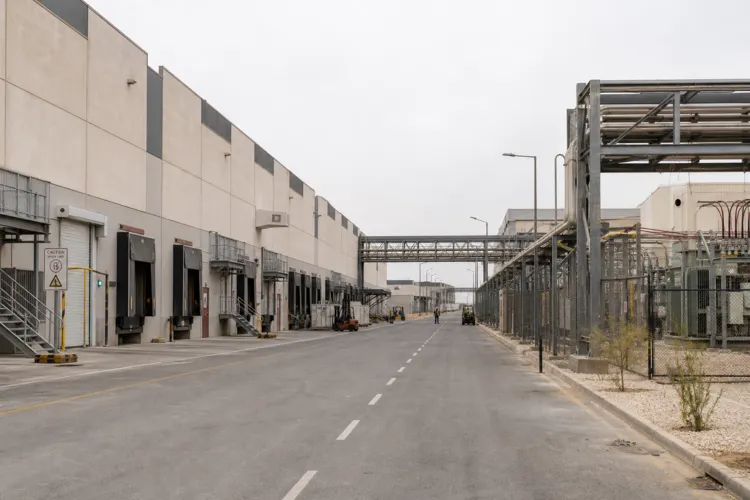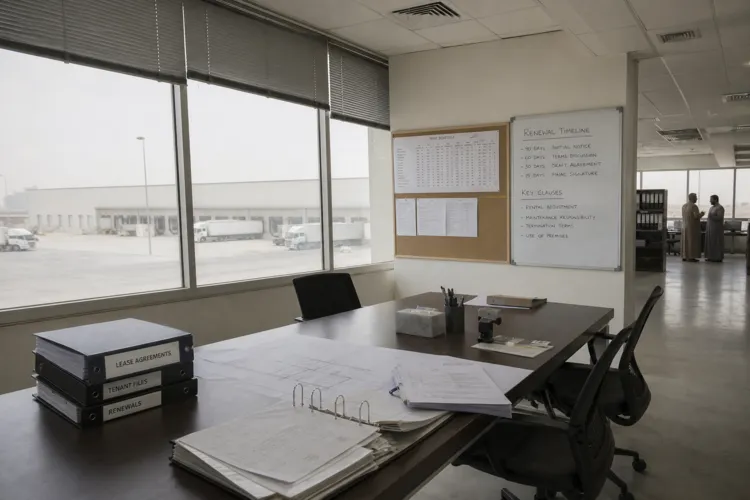
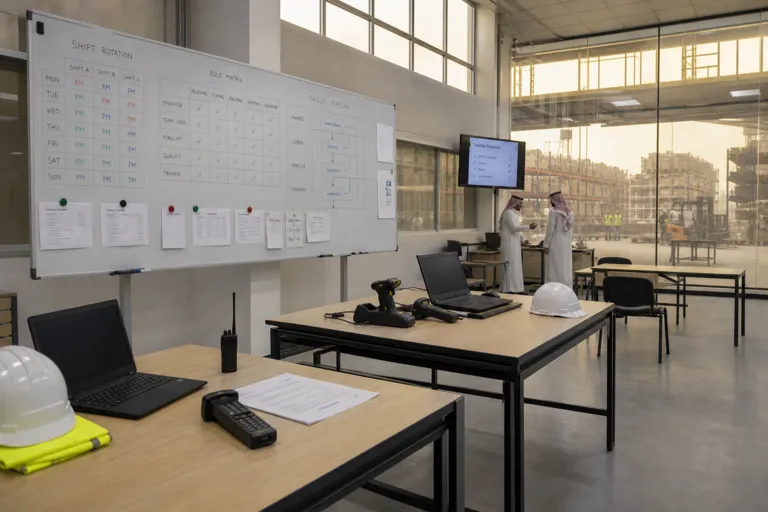
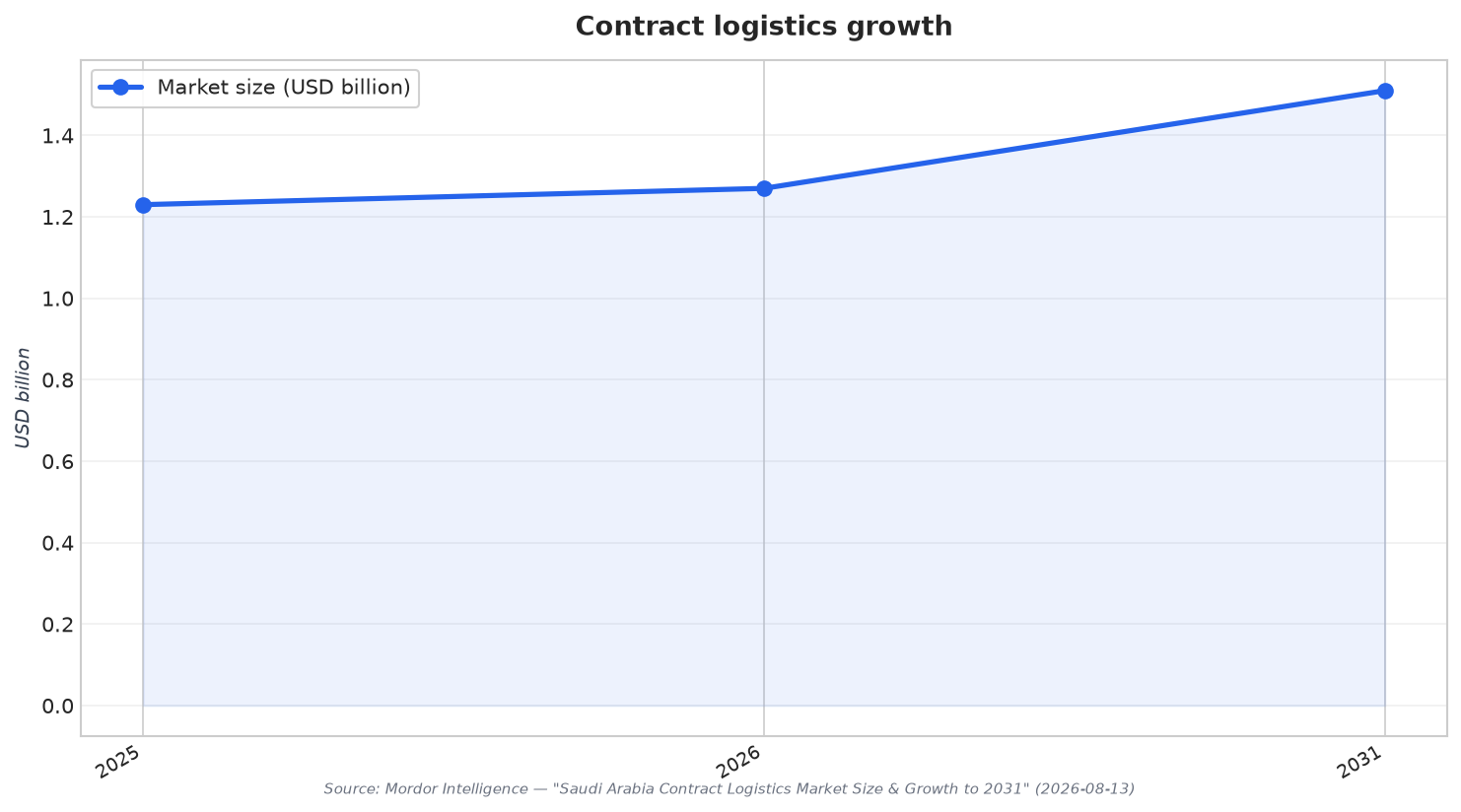
Saudi Arabia’s logistics story is increasingly operational. As new facilities come online, the challenge shifts from building capacity to staffing it with planners, supervisors, and drivers who can run complex schedules and keep service standards stable. The market indicators signal steady growth, with Ken Research expecting the KSA logistics market to expand at a 5.7% CAGR from 2022 to 2026. Contract logistics also shows measured expansion, valued at USD 1.23 billion in 2025 and estimated at USD 1.27 billion in 2026, with forecasts reaching USD 1.51 billion by 2031 at a 3.52% CAGR. Yet growth alone does not close the Saudi logistics talent localization gap; it can widen it if the skills pipeline does not match the new operating model.
Saudization progress is real, but it can hide a specialist vacuum. KiTalent reports the logistics sector reached 21% Saudi workforce participation in 2024, approaching the 25% target, while the Ministry of Human Resources and Social Development requires 25% Saudi workforce composition in large logistics enterprises as of 2025, rising to 30% by 2026. The same source notes that 73% of trading houses cannot find qualified Saudi nationals for customs compliance and trade finance roles. In a JCCI employer survey from Q4 2024, 68% of trading houses reported customs supervisor vacancies exceeding three months. This is the paradox: companies can meet quota math through general roles, while the roles that drive throughput, compliance, and performance stay hard to localize.
Why Specialist Roles Are Harder to Localize Than Headcount
Hiring difficulty concentrates in positions tied to customs, systems, and cross-border coordination. KiTalent describes a senior customs compliance manager being recruited from a competitor at a 35% salary premium, reaching total compensation of SAR 480,000 annually, signaling scarcity at the senior end. The same report cites supply chain systems analyst roles at one of Jeddah’s largest logistics operators going understaffed for six months, leading to temporary outsourcing to Dubai-based consultancies. MarkWide Research adds that mid-tier providers struggle with IT staffing gaps in Riyadh and Jeddah labor markets, and that Warehouse Management System deployments stall due to staffing gaps in those tech labor pools. These shortages affect digital visibility, compliance cadence, and process discipline, which are difficult to substitute with short-term hires.
At the same time, infrastructure and policy shifts raise the bar for operational capability. Mordor Intelligence notes regulatory liberalization that permits international operators to serve domestic line-haul lanes once reserved for Saudi-flag fleets, increasing competitive intensity and introducing global service standards. It also describes the Special Integrated Logistics Zone at King Khalid International Airport spanning 32 million ft² and slashing average e-parcel customs release times to below two hours, supported by the LOGISTI single-window. In contract logistics, Mordor Intelligence reports transportation held 64.30% of market share in 2025, while retail and e-commerce accounted for 26.60% of market size that year. As service expectations rise and automation expands, the practical need is not just more staff, but staff who can run trade compliance, systems, and cross-functional operations under tighter timelines.
The gap is measurable and geographically concentrated. The Saudi Logistics Academy estimates a sector-wide shortage of 15,000 qualified logistics professionals by 2030, and KiTalent adds that Jeddah accounts for 40% of that gap due to port concentration. These pressures sit alongside an operating environment where AI-powered systems are increasingly being used to automate routine tasks and support decision-making across operations roles, according to Consultancy-me. Closing the Saudi logistics talent localization gap requires employers to treat localization as a capability build: develop specialist tracks for customs and systems, reduce reliance on last-minute expatriate hiring as quotas rise, and align training with the operational realities created by faster clearance, more digitized workflows, and tougher service benchmarks.
What shows that logistics Saudization can hide a specialist hiring problem?
How long are key customs vacancies staying open in Jeddah’s trading houses?
What is the estimated shortage of qualified logistics professionals by 2030, and where is it concentrated?
How does IT staffing affect logistics providers’ ability to modernize operations?
What does the Saudi logistics talent localization gap look like in practical terms for employers?
Talk to us for your needs in:
- Identifying Suitable Warehouse Sites in Saudi Arabia
- Customized Logistics and Supply Chain Analytics
- Logistics Network Design and Optimization
- Green Supply Chain and Sustainable Logistics Solutions
- Supply Chain Risk Management and Compliance
- Advanced Supply Chain Resilience and Agility
- Logistics Market Research and Strategic Analysis
- In-Depth Market Survey for Logistics
- Market Intelligence and Insights in Logistics
- Feasibility Study and Assessment in Logistics
- Integrated Warehousing Management Solutions
- Smart Warehousing and Automation Systems
- Sustainable and Green Warehousing Practices
- Port and Airport Logistics Optimization
- Digital Logistics Solutions
- Saudi Logistics Benchmarking