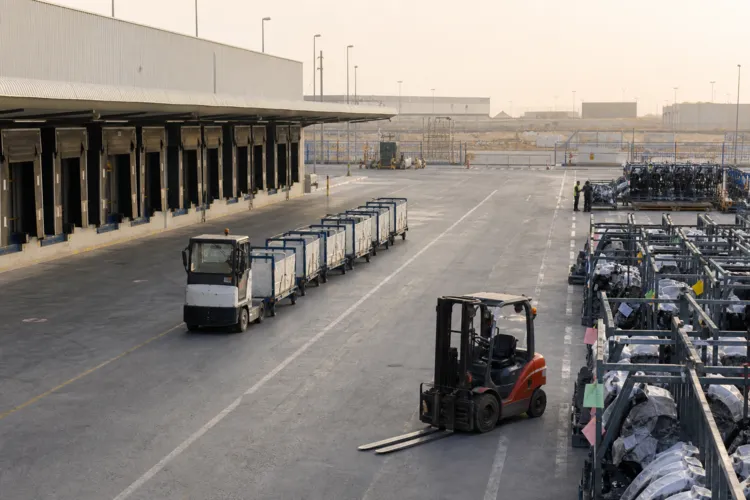
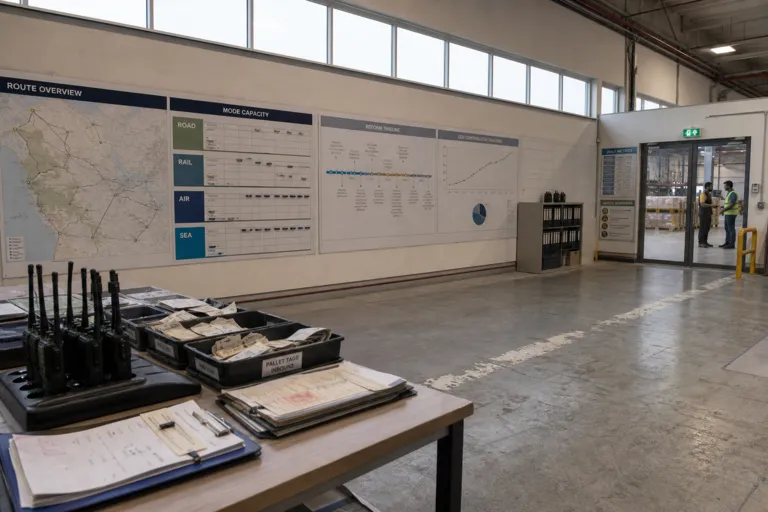
Saudi Arabia’s logistics storyline is increasingly framed around a single economic objective: moving the sector’s GDP role higher. Makreo Research states the sector currently accounts for approximately 6% of the country’s GDP, and that under Vision 2030 the Kingdom targets raising this share to 10% of GDP by 2030. That same direction is echoed in a separate market commentary that describes the government targeting an increase in the transport and logistics sector’s GDP contribution from 6% to 10%. Together, these references define the Saudi logistics GDP contribution target as a measurable benchmark that is shaping investment priorities, operational reforms, and the business case for new logistics capacity.
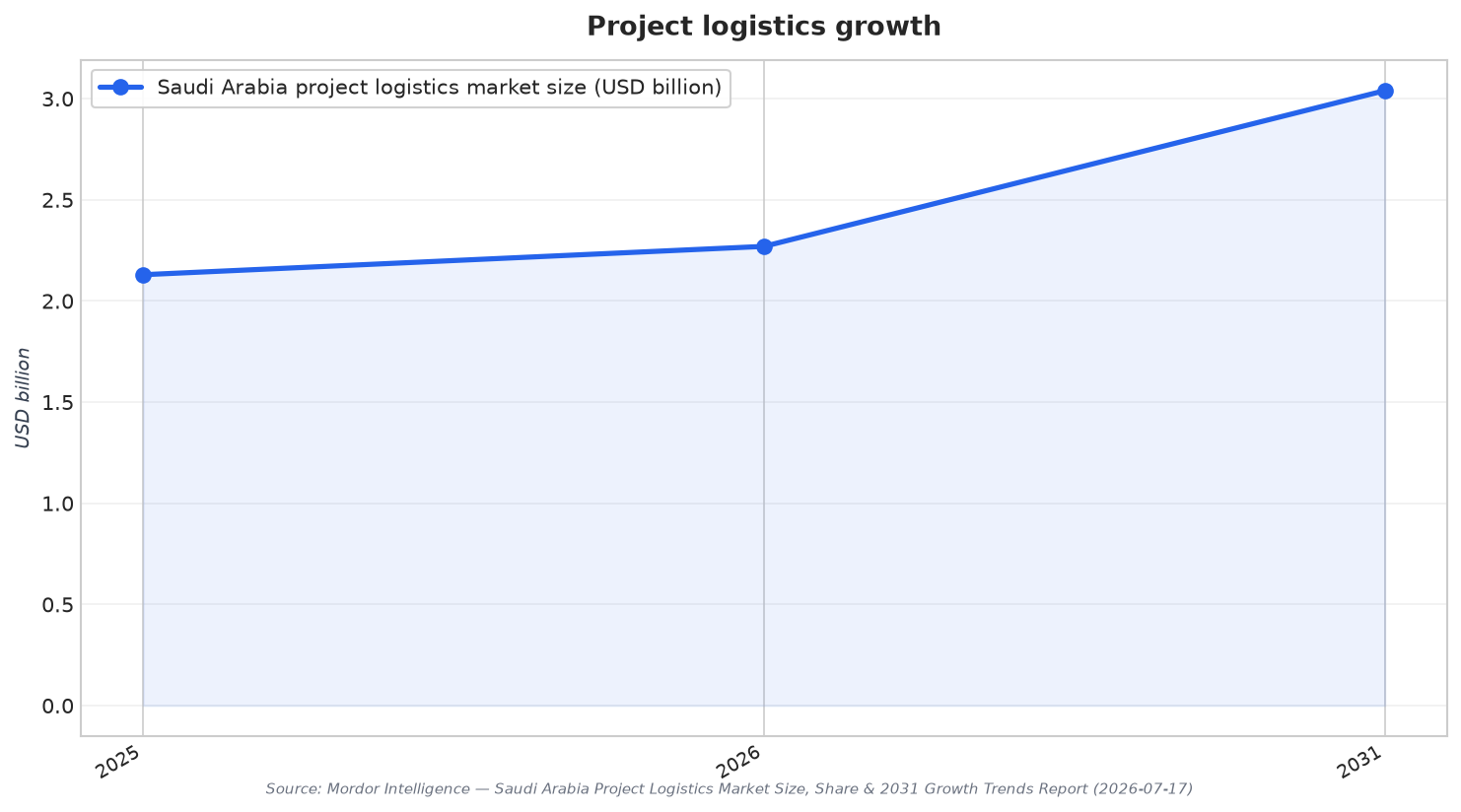
Market sizing helps show the scale of activity being built around that target. Grand View Research estimates the Saudi Arabia logistics market generated revenue of USD 140.9 billion in 2025 and is expected to reach USD 264.9 billion by 2033, while also noting that Saudi Arabia accounted for 3.4% of the global logistics market in 2025 (in revenue terms). In a more specialized slice of the ecosystem, Mordor Intelligence values the Saudi Arabia project logistics market at USD 2.13 billion in 2025, with growth estimated from USD 2.27 billion in 2026 to USD 3.04 billion by 2031 at a CAGR of 6.13% for 2026–2031. These figures do not measure GDP impact directly, but they do quantify expanding commercial throughput across mainstream logistics and complex project cargo.
What Is Changing on the Ground: Hubs, Modes, and Faster Clearance
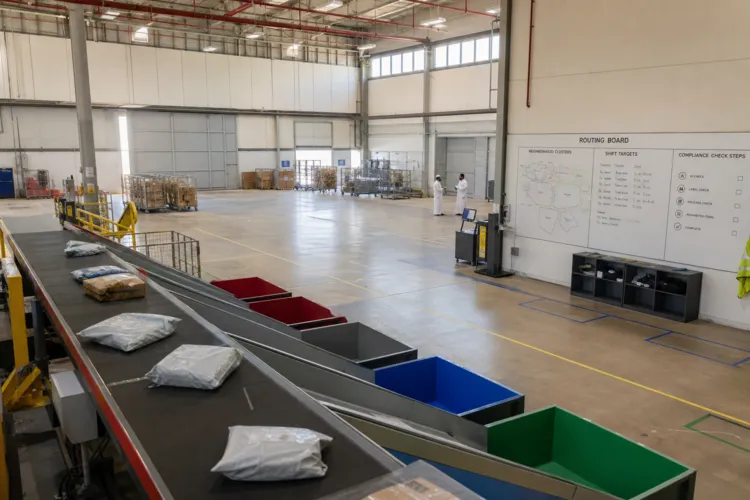
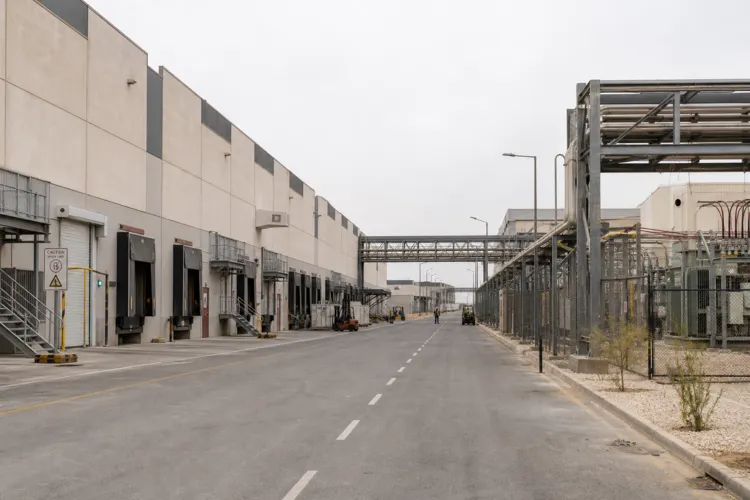
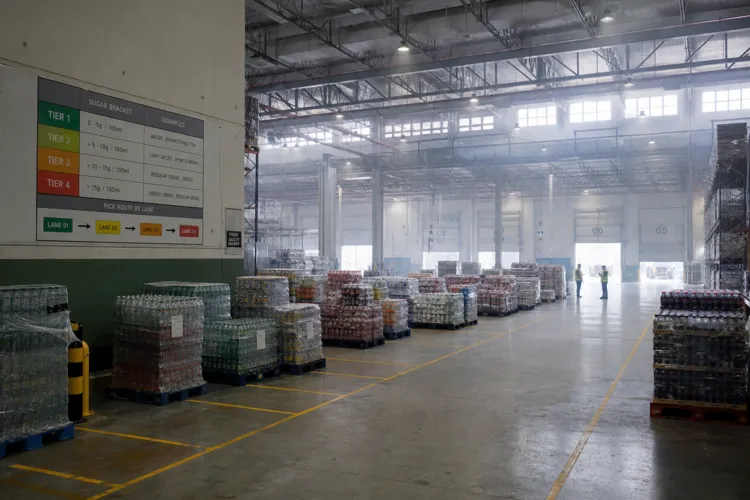
On-the-ground execution is increasingly tied to logistics zones, multimodal networks, and clearance improvements. Mordor Intelligence describes the Special Integrated Logistics Zone at King Khalid International Airport as spanning 32 million ft², offering duty-deferred storage and automated clearance that brings average e-parcel customs release times below two hours. The same source highlights how the national LOGISTI single-window streamlines documentation, and notes that similar bonded nodes near King Salman International Airport create a China–KSA gateway channeling 20.9% of Saudi inbound trade. Capacity is also being mapped inland. Makreo Research cites the 2024 Warehousing and Logistics Statistics, stating the Kingdom operated 23 activated logistics centres spanning approximately 34.6 million m², with the Makkah Region accounting for around 20.4 million m² across six logistics centres.
Reforms and network upgrades are also being positioned as levers for competitiveness and cost. Mordor Intelligence reports regulatory liberalization that permits international operators to serve domestic line-haul lanes once reserved for Saudi-flag fleets, increasing competitive intensity and bringing global service standards. It adds that DSV’s 29-facility network already handles 6% of Saudi import volumes, illustrating how scale and visibility can win contracts. Rail is another structural piece in the same forecast narrative: the source notes Saudi Arabia has 1,018 km of operational rail and that it will expand through the USD 100 billion Gulf Railway, with a corridor described as trimming transit times on Mumbai–Europe lanes by up to eight days. In the same context, the report connects these efforts to Saudi goals to cut national logistics costs to 6% of GDP by 2030.
The push to lift GDP contribution also depends on how effectively Saudi Arabia can deliver complex, high-value project flows that sit behind industrial and infrastructure buildouts. Mordor Intelligence points to demand supported by heavy-haul transport, breakbulk handling, and specialized warehousing, and cites Aramco’s gas expansion work at Jafurah as keeping project cargo flows active in 2026 due to large gas processing and pipeline contracts requiring sequenced equipment movements. In its 2025 market breakdown, transportation represented 64.32% of Saudi Arabia’s project logistics market share, while oversized or out-of-gauge cargo represented 30.91% of market size. Oil and gas plus mining and quarrying represented 36.55% of market share, while energy generation and transmission is forecast to advance at a 7.73% CAGR through 2031. These operating details explain how execution capacity can support the broader GDP ambition.
What is Saudi Arabia’s logistics GDP contribution goal under Vision 2030?
How large is the Saudi Arabia logistics market, based on the cited sources?
Which figures show expansion in project logistics activity?
What logistics-zone and warehousing capacity numbers are cited for Saudi Arabia?
What changes are described around foreign participation and domestic freight competition?
Talk to us for your needs in:
- Identifying Suitable Warehouse Sites in Saudi Arabia
- Customized Logistics and Supply Chain Analytics
- Logistics Network Design and Optimization
- Green Supply Chain and Sustainable Logistics Solutions
- Supply Chain Risk Management and Compliance
- Advanced Supply Chain Resilience and Agility
- Logistics Market Research and Strategic Analysis
- In-Depth Market Survey for Logistics
- Market Intelligence and Insights in Logistics
- Feasibility Study and Assessment in Logistics
- Integrated Warehousing Management Solutions
- Smart Warehousing and Automation Systems
- Sustainable and Green Warehousing Practices
- Port and Airport Logistics Optimization
- Digital Logistics Solutions
- Saudi Logistics Benchmarking