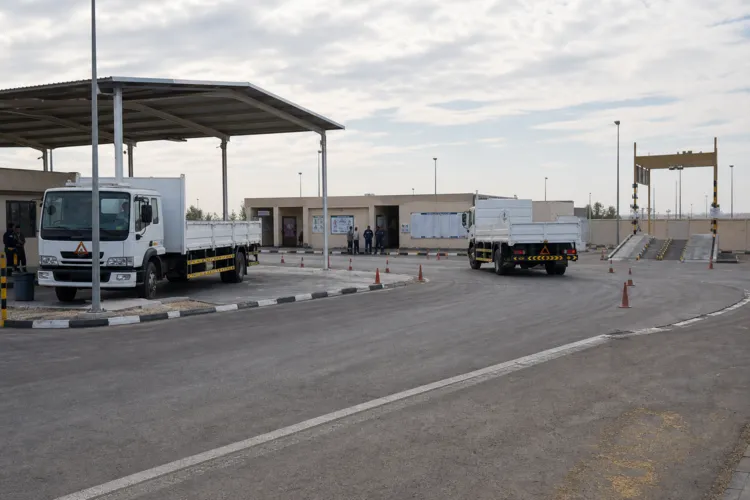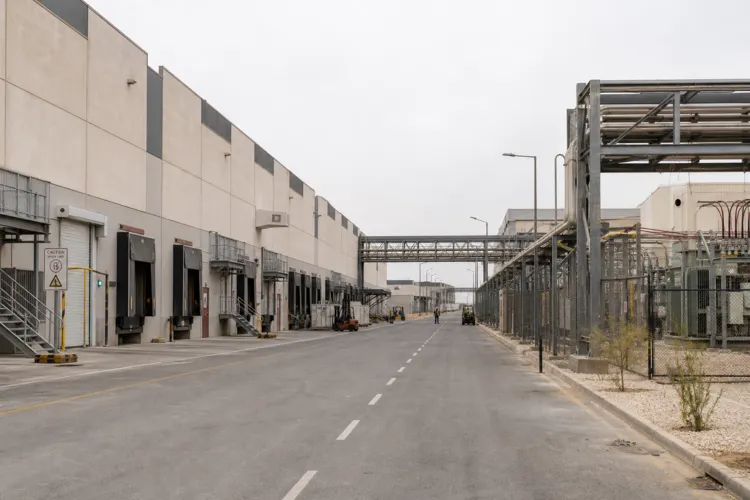
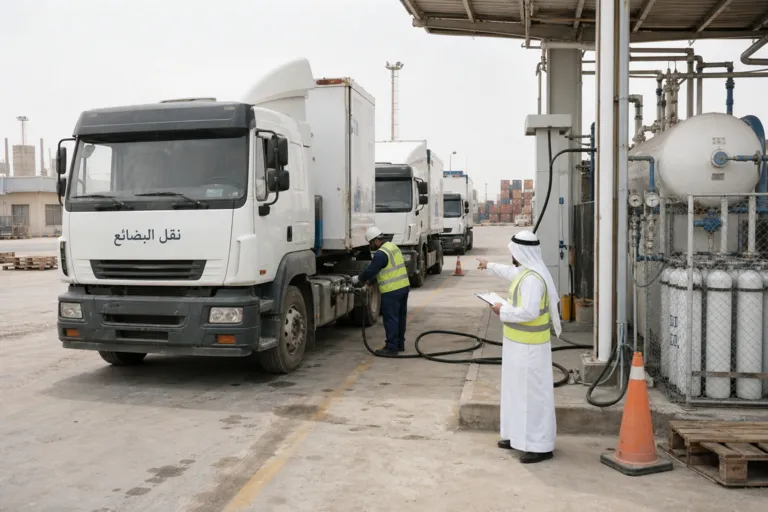
Saudi Arabia’s case for zero-emission freight corridors is strengthening as hydrogen mobility programs shift from demonstration to committed buying. IndexBox projects the Saudi hydrogen fuel cell vehicle (FCEV) market will grow from fewer than 50 units in 2026 to about 3,500–5,000 units annually by 2035, driven primarily by public transport and heavy-truck fleet mandates. The same source cites government-led pilots under the Saudi Green Initiative and the NEOM hydrogen cluster, moving toward procurement for municipal buses and logistics trucks. It also notes 200–400 FCEV buses are planned for Jeddah and Riyadh by 2028, which can help anchor early station demand and operational learning across high-utilization routes.
Refueling infrastructure is the gating factor for corridor economics. IndexBox reports only 3–5 hydrogen stations are operational in 2026, with a target of 25–30 stations by 2030, which keeps deployments concentrated in depot-based fleet operations rather than open-route freight. Ken Research separately describes a government aim to establish at least 20 hydrogen refueling stations across major cities, and values the Saudi Arabia hydrogen refueling station EPC market at approximately USD 1.2 billion. Together, these figures highlight a network that is expanding, but still early, and they frame why route selection, station siting, and fleet commitments need to be coordinated rather than developed in isolation.
What Makes a Saudi Hydrogen Freight Corridor Bankable
A corridor needs dependable hydrogen logistics, not just vehicles and dispensers. IndexBox values the Saudi hydrogen storage tank and transportation market at about USD 180–250 million in 2026, with total installed storage capacity estimated at 8,000–12,000 metric tons of H₂ across stationary and mobile systems. It forecasts 22–28% CAGR through 2035, reaching USD 1.2–1.8 billion in annual value by 2035. The report also flags practical friction points: regulatory gaps in road corridor approvals and refueling station siting can slow expansion outside industrial zones, and certification and testing backlogs for novel large-diameter composite vessels are a recognized bottleneck, with SASO and third-party agencies working to streamline approvals.
Operating costs and service readiness will influence which freight routes electrify via hydrogen first. IndexBox projects heavy-duty fuel cell stack costs at USD 80–120/kW by 2030 and describes subsidized green hydrogen at USD 2.5–3.5/kg, factors it links to narrowing total cost of ownership in long-haul applications versus battery electric alternatives. But the same source warns that supply chain and capability constraints remain: import dependence exceeds 95% in 2026 for stacks, high-pressure tanks, and balance-of-plant components, with 6–12 month import lead times, and workforce gaps in system integration and high-pressure safety certification can delay local service centers. It also estimates annual service contracts per heavy-duty FCEV at USD 8,000–15,000 for stack refurbishment and high-pressure system certification, making aftermarket capacity part of corridor planning.
In this context, the idea of Green hydrogen freight corridors Saudi planners can execute is less about a single mega-project and more about sequencing. Early corridors can start where depot operations, municipal procurement, and industrial-zone demand overlap, then extend as station counts move toward the 2030 targets described by IndexBox and Ken Research. On the supply side, Saudi green hydrogen production and export is projected by Mobility Foresights to grow from USD 7.5 billion in 2025 to USD 23.8 billion by 2032 at a 17.3% CAGR, alongside trends like dedicated export infrastructure, storage facilities, and hydrogen carrier systems. For freight, the immediate win is aligning vehicles, stations, storage, approvals, and service capability so that each added station unlocks reliable truck utilization across connected routes.
How fast is Saudi Arabia’s FCEV market expected to grow?
How many hydrogen refueling stations are operating and what targets are stated?
What does Saudi Arabia’s hydrogen storage and transport market look like in 2026?
What costs and operational factors affect hydrogen freight corridor rollouts?
What is the business case for green hydrogen freight corridors in Saudi Arabia?
Talk to us for your needs in:
- Identifying Suitable Warehouse Sites in Saudi Arabia
- Customized Logistics and Supply Chain Analytics
- Logistics Network Design and Optimization
- Green Supply Chain and Sustainable Logistics Solutions
- Supply Chain Risk Management and Compliance
- Advanced Supply Chain Resilience and Agility
- Logistics Market Research and Strategic Analysis
- In-Depth Market Survey for Logistics
- Market Intelligence and Insights in Logistics
- Feasibility Study and Assessment in Logistics
- Integrated Warehousing Management Solutions
- Smart Warehousing and Automation Systems
- Sustainable and Green Warehousing Practices
- Port and Airport Logistics Optimization
- Digital Logistics Solutions
- Saudi Logistics Benchmarking