Regional conflicts and geopolitical tensions continue to shape global trade and logistics networks. For Saudi Arabia, these developments have direct implications for shipping routes, trade flows, investment decisions, and operational costs. The Saudi Logistics Business Impact of geopolitical risks can be seen in reduced trade volumes, rising logistics costs, and increased insurance premiums across regional shipping routes. At the same time, Saudi Arabia continues to invest heavily in logistics infrastructure as part of its long-term economic diversification strategy.
One of the most immediate consequences of geopolitical instability is the decline in global trade activity. According to the International Trade Centre (ITC), geopolitical risks can reduce international trade volumes by up to 25% during periods of heightened tension. This reduction affects countries heavily connected to global supply chains, including Saudi Arabia. As a major trading hub connecting Asia, Europe, and Africa, the Kingdom relies on stable trade flows to maintain efficient logistics operations. When geopolitical tensions escalate, shipping routes become less predictable and businesses may delay or reduce trade activities.
Supply chain disruptions also have a direct effect on logistics costs. The World Bank reports that geopolitical risks can increase logistics costs by around 15% due to supply chain disruptions. These cost increases often come from longer shipping routes, additional security requirements, and rising insurance premiums. For companies operating in Saudi Arabia, these factors can influence pricing strategies and operational efficiency. Businesses may need to adjust their logistics planning or diversify their supply sources to maintain stability during uncertain periods.
Investment and Sector Resilience in Saudi Logistics
Despite these risks, Saudi Arabia continues to strengthen its logistics sector through strategic investment. Under Saudi Vision 2030, the government aims to increase the logistics sector’s contribution to GDP from 10% to 15%. This goal reflects a long-term strategy to transform the Kingdom into a global logistics hub connecting three continents.
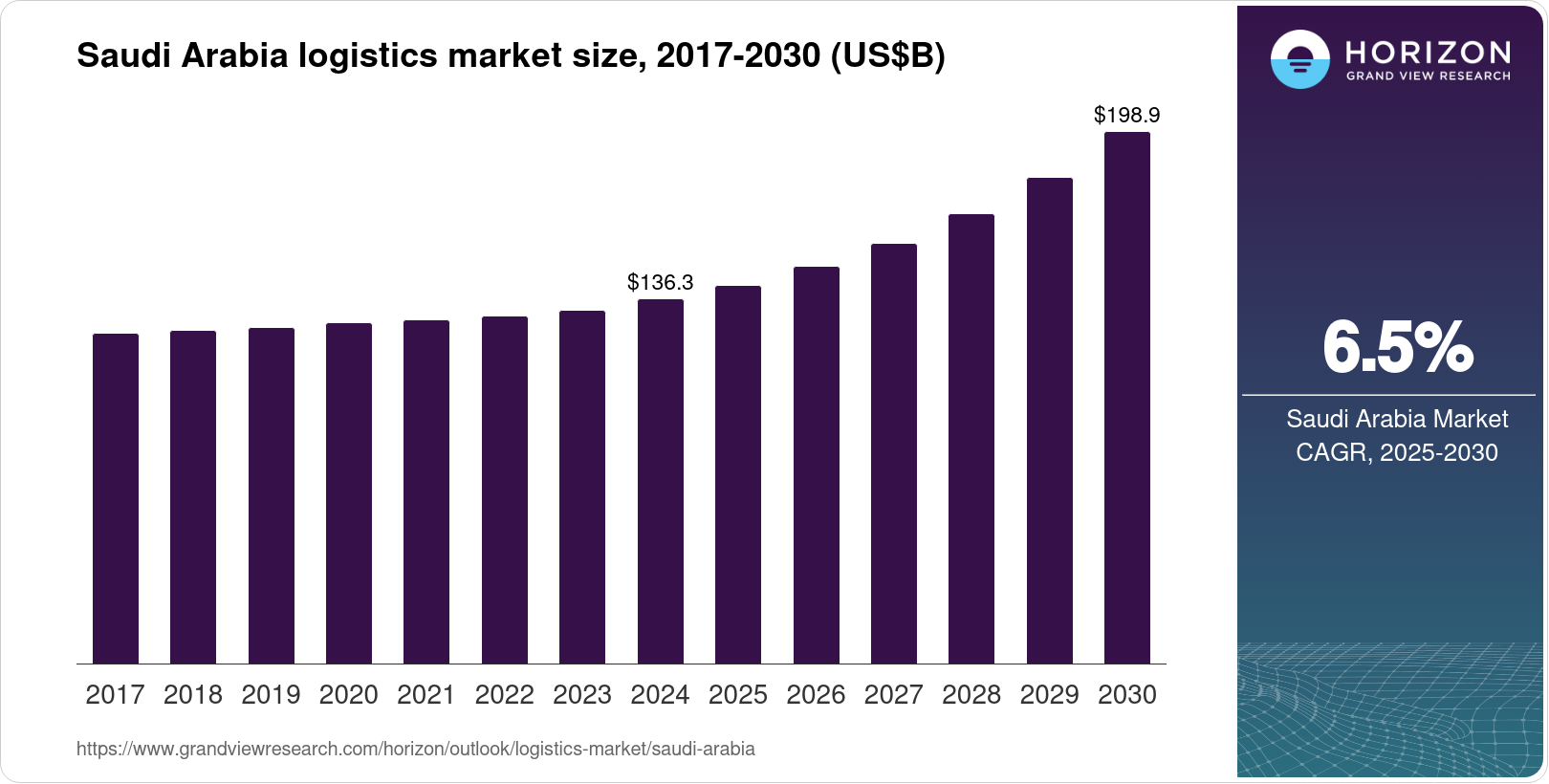
Market growth projections also highlight the sector’s potential. According to Mordor Intelligence, the logistics market in Saudi Arabia is expected to reach $16 billion by 2025. This growth is supported by infrastructure development, including new logistics zones, port expansions, and improved transport connectivity. These initiatives are designed to reduce dependency on oil revenues while strengthening trade capabilities.
Employment trends further demonstrate the resilience of the logistics industry. The Saudi Arabian General Investment Authority reports that the logistics sector currently employs more than 1.6 million people across transportation, warehousing, and distribution services. As new logistics hubs and infrastructure projects are developed, job opportunities are expected to expand. A GCC Economic Report estimates that the sector could create an additional 300,000 jobs by 2025, highlighting continued workforce demand even during periods of geopolitical uncertainty.
Security concerns around regional trade routes also influence logistics operations. One of the most strategically important routes is the Strait of Hormuz, through which approximately 20% of the world’s oil supply passes, according to the U.S. Energy Information Administration. Rising tensions in this region can significantly increase shipping costs. In some cases, shipping costs have risen by up to 50% when security risks escalate, reflecting the importance of maritime stability for global trade.
Insurance costs also rise during periods of regional instability. The International Maritime Organization reports that geopolitical tensions in the Gulf have led to a 30% increase in shipping insurance premiums. Higher insurance costs directly affect logistics companies and exporters, adding additional expenses to international shipments.
Read also: Saudia Cargo Expansion 2026: Skyward Shift
Overall, the Saudi Logistics Business Impact of geopolitical risks presents both challenges and opportunities. While trade disruptions and higher shipping costs create operational pressure, ongoing investment in infrastructure and logistics hubs helps strengthen the sector’s resilience. Strategic planning and continued investment will remain essential for maintaining Saudi Arabia’s position as a key logistics gateway in global trade.
Talk to us for your needs in:
- Identifying Suitable Warehouse Sites in Saudi Arabia
- Customized Logistics and Supply Chain Analytics
- Logistics Network Design and Optimization
- Green Supply Chain and Sustainable Logistics Solutions
- Supply Chain Risk Management and Compliance
- Advanced Supply Chain Resilience and Agility
- Logistics Market Research and Strategic Analysis
- In-Depth Market Survey for Logistics
- Market Intelligence and Insights in Logistics
- Feasibility Study and Assessment in Logistics
- Integrated Warehousing Management Solutions
- Smart Warehousing and Automation Systems
- Sustainable and Green Warehousing Practices
- Port and Airport Logistics Optimization
- Digital Logistics Solutions
- Saudi Logistics Benchmarking