Saudi Arabia wants AI to improve how goods move, how warehouses run, and how decisions are made. Vision 2030 is pushing digital transformation across industries, including logistics. At the same time, employers face a clear skills gap. MarketsandMarkets says there is a shortage of AI specialists and data scientists in Saudi Arabia, which can slow down AI implementation and scalability. This is why workforce upskilling is now a business need, not a nice-to-have.
The demand signal is strong. From 2018 to 2022, AI-related job postings grew by 54% annually, and demand continues to outpace supply. Saudi Arabia also ranks 14th globally in AI readiness in UNESCO’s 2024 report, and it ranks first in the Arab region. For logistics leaders, these signals point to one message: AI is advancing, but people capability must catch up.
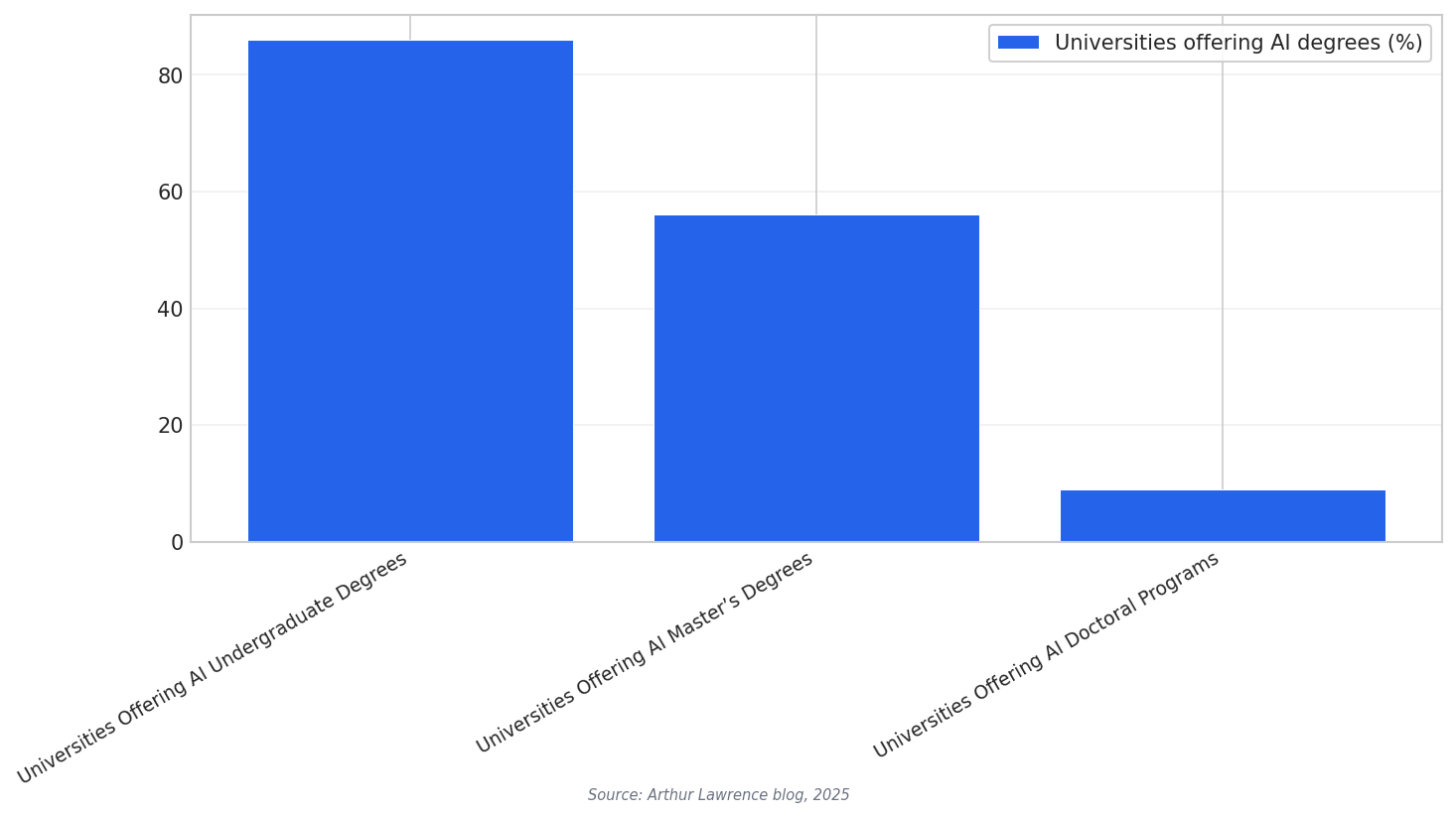
Education capacity is expanding, but it still needs to connect to real operations in supply chain and logistics. In KSA, 86% of universities offer undergraduate degrees in artificial intelligence. 56% offer master’s degrees, and 9% provide doctoral programs. Between 2022 and 2023, AI-related graduation numbers increased by 42%. Since 2019, over 38,000 students have completed AI-aligned programs, including 6,500 who studied internationally and returned to join the workforce.
How to Bridge the Gap Inside Logistics Teams
To close the gap faster, companies need upskilling that reaches existing employees, not only new graduates. Arab News quotes PwC’s Al-Sarraj saying talent mobility helps by “upskilling and cross-training existing employees.” It also notes AI-powered tools like Pymetrics, Fuel50, and Cornerstone OnDemand that help map career journeys and personalize upskilling. For logistics teams, this supports role moves from operations into data-focused work, without losing the worker’s domain knowledge.
National initiatives are also scaling training. SDAIA was established in 2019 and has a mandate to prepare 20,000 professionals by 2030. Kaplan MENA reports that more than 11,000 AI specialists have been trained, and the SAMAI national initiative has reached over 1 million participants. These efforts matter for logistics because AI tools in supply chains can be complex, and implementation costs are already a challenge for many organizations.
Logistics is also moving toward deeper AI use. MarketsandMarkets projects the Saudi Arabia AI in Supply Chain market will grow at a 26.10% CAGR by 2032. It also notes that IoT sensors combined with AI have reduced lost or damaged shipments by 15%. At the same time, the AI in warehousing segment alone is projected to grow at 22.5% CAGR. These trends raise the stakes for training planners: without enough skilled people, tools will not scale, and the AI talent shortage Saudi logistics teams face will continue.
What is driving the AI talent shortage Saudi logistics teams face?
How is Saudi Arabia expanding AI education capacity?
Which national programs can support AI upskilling for supply chain roles?
What results can AI deliver in logistics operations, based on the sources?
Talk to us for your needs in:
- Identifying Suitable Warehouse Sites in Saudi Arabia
- Customized Logistics and Supply Chain Analytics
- Logistics Network Design and Optimization
- Green Supply Chain and Sustainable Logistics Solutions
- Supply Chain Risk Management and Compliance
- Advanced Supply Chain Resilience and Agility
- Logistics Market Research and Strategic Analysis
- In-Depth Market Survey for Logistics
- Market Intelligence and Insights in Logistics
- Feasibility Study and Assessment in Logistics
- Integrated Warehousing Management Solutions
- Smart Warehousing and Automation Systems
- Sustainable and Green Warehousing Practices
- Port and Airport Logistics Optimization
- Digital Logistics Solutions
- Saudi Logistics Benchmarking