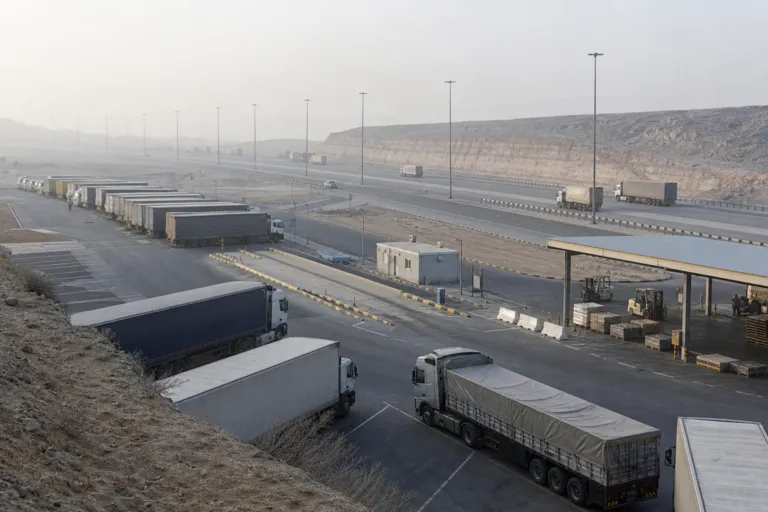
Spikes in Saudi east west trucking rates are easier to understand when you track where demand is concentrating and why capacity is not expanding evenly. Saudi Vision 2030 commits multibillion-dollar capital toward airports, highways, and logistics zones that permanently raise freight demand. Mordor Intelligence highlights that the 170 km linear city at NEOM alone requires continuous heavy-haul movements of cement, steel, and prefabricated modules over a decade-long build schedule. As new corridors such as the King Salman International Airport logistics zone anchor greenfield distribution hubs, fleets that can handle specialized project cargo become more sought after, tightening available trucks for routine line-haul movements.
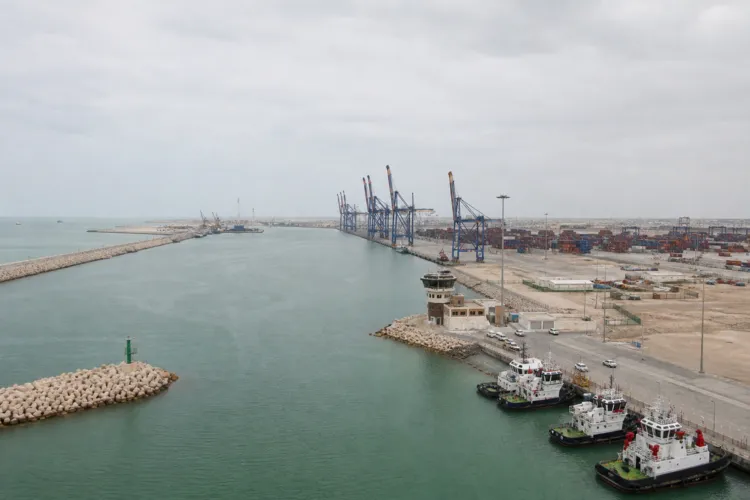
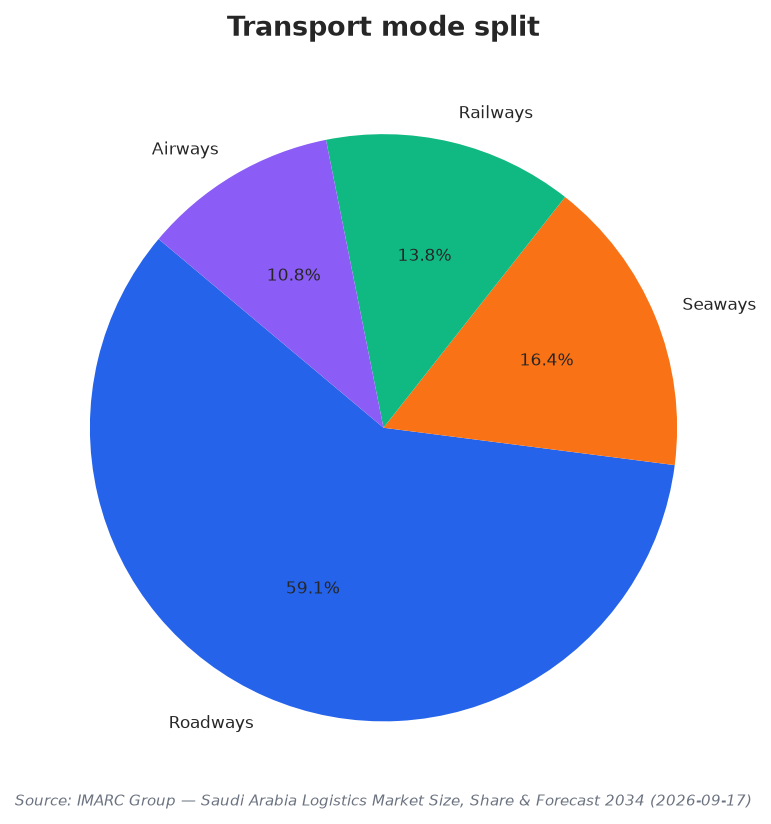
At a national level, road remains central to how goods move, so corridor stress quickly shows up in pricing. IMARC Group reports that roadways led transportation mode at 59.08% in 2025, supported by a 73,000-kilometer highway network. The same source states that the Western Region held 27.4% in 2025 and benefits from Jeddah Islamic Port, described as the Kingdom’s largest seaport and handling over 65% of imports. With import flows and distribution activity clustered around the west, and industrial and consumption pull extending inland, trucking availability can tighten fast on high-volume east–west movements that link gateways to demand centers.
What’s Tightening Road Freight Capacity on East–West Lanes
Capacity pressure is not only about freight volumes. It is also about labor rules, workforce mix, and compliance requirements that influence how many trucks can be deployed and at what cost. Mordor Intelligence points to a driver shortage and a high Saudization wage floor, stating that wage premiums for Saudi nationals raise unit costs by double-digit percentages versus expatriate drivers. It also notes reliance on an expatriate workforce amid stricter visa caps, where quota-based visa limits for South Asian drivers disrupt seasonal capacity spikes. In parallel, mandatory telematics on commercial vehicles from January 2025 creates data flows for predictive maintenance and drive-time compliance monitoring, improving reliability but also raising the bar for operators that must adapt quickly.
Shippers are also changing what they move and how they buy transport, which can intensify peak-lane competition. Mordor Intelligence reports that online retail is shifting loads from bulk B2B pallets to fragmented B2C parcels, stimulating less-than-truck-load growth at a 6.19% CAGR from 2025–2030. IMARC Group adds that digital freight-matching platforms connect shippers with trucking capacity through mobile apps, reducing empty miles and improving asset utilization. These tools can support dynamic pricing models, but they also make it easier for demand to bid up scarce capacity when multiple shippers chase trucks on the same east–west schedules.
Relief can come from rail and multimodal investment, but the transition takes time and can shift demand rather than eliminate it. IMARC Group notes that in November 2024, Alstom signed an SAR 300 million agreement with Saudi Railway Company to enhance the east–west freight corridor, and describes it as a five-year agreement focused on improving performance and reliability of freight locomotives. Mordor Intelligence also states the Landbridge cuts Red Sea-to-Gulf transit by 72 hours, encouraging reload from ship to rail to road within inland dry ports. In the near term, that still keeps trucks essential for drayage and distribution at both ends, which can sustain pressure on road capacity even as intermodal options expand.
Why are Saudi Arabia’s east–west trucking rates seeing spikes?
How important is road transport in Saudi logistics compared with other modes?
What role does Jeddah Islamic Port play in corridor pressure?
What labor factors can squeeze trucking capacity in Saudi Arabia?
How could rail and intermodal projects affect road freight on east–west routes?
Talk to us for your needs in:
- Identifying Suitable Warehouse Sites in Saudi Arabia
- Customized Logistics and Supply Chain Analytics
- Logistics Network Design and Optimization
- Green Supply Chain and Sustainable Logistics Solutions
- Supply Chain Risk Management and Compliance
- Advanced Supply Chain Resilience and Agility
- Logistics Market Research and Strategic Analysis
- In-Depth Market Survey for Logistics
- Market Intelligence and Insights in Logistics
- Feasibility Study and Assessment in Logistics
- Integrated Warehousing Management Solutions
- Smart Warehousing and Automation Systems
- Sustainable and Green Warehousing Practices
- Port and Airport Logistics Optimization
- Digital Logistics Solutions
- Saudi Logistics Benchmarking