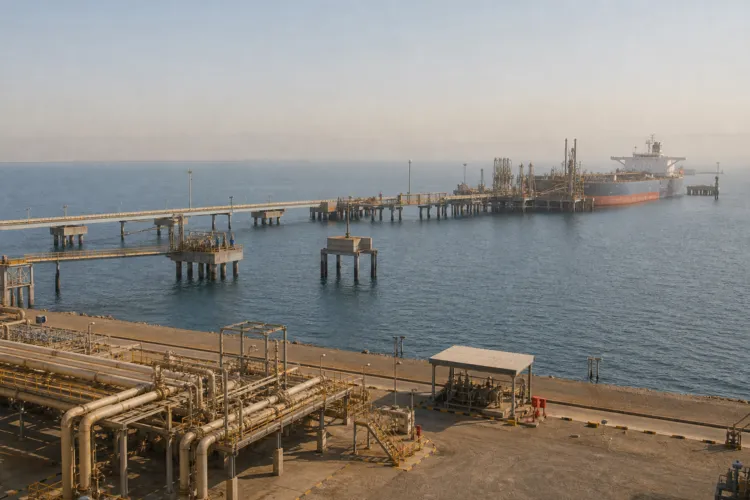
The 2026 Gulf crisis was a reminder that modern supply chains lean on buffers that are easy to ignore until they vanish. When the Strait of Hormuz was effectively closed after strikes beginning February 28, the disruption was physical, not merely financial. About 20% of global crude oil transits the Strait on a given day, and the closure cut off roughly 10 to 11 million barrels per day from global markets. In that environment, inventories became the balancing mechanism. The IEA estimated in May that cumulative supply losses from Gulf producers had already exceeded one billion barrels, and resilience debates quickly turned from price signals to stockpiles and storage capacity.
Those buffers were then depleted at speed. The US EIA reported a 7.2-million-barrel weekly fall in commercial crude stocks to 404.5 million barrels, which it said was 6% below the five-year seasonal average. The US Strategic Petroleum Reserve (SPR) was also drawn down. One July reading put the SPR at 307.7 million barrels after a 3.8-million-barrel decline, while a separate August market note described emergency releases draining the SPR to about 304.8 million barrels, the lowest level since February 1983. By early June, total US crude inventories, including the SPR, had fallen by 79 million barrels since the conflict began, underscoring how quickly “insurance” can be spent.
From Buying Inventory to Building Buffer-Stock Warehousing
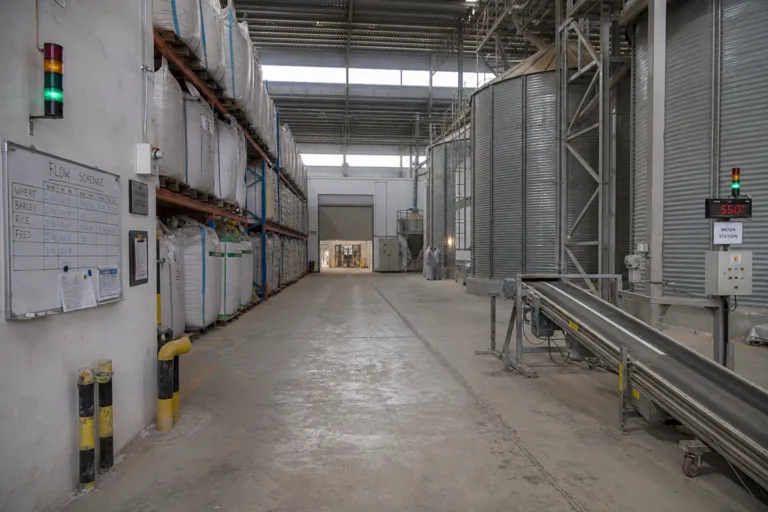
For Saudi Arabia, rebuilding resilience after the crisis puts new attention on Saudi strategic food reserves warehousing as a practical problem, not a slogan. The underlying lesson is that reserves “did more than any other temporary buffer” during the first closure, yet they are also described as the most depleted going into a second closure. Rebuilding is therefore not just procurement. It is also about where the buffer sits, how quickly it can be mobilized, and how storage constraints can force slowdowns when flows are disrupted. During the crisis, Gulf-based chemical exporters saw inventory pile up at regional ports as insurance rates stayed prohibitive and tankers avoided the Strait, creating storage pressure that can translate into wider food-system stress.
Food security pressures were amplified by fertilizer bottlenecks tied to the same corridor. One analysis argues the Persian Gulf is responsible for roughly one-third of all globally traded urea and over 40% of key agricultural inputs, while another explains why Gulf fertilizer exports are bottlenecked through a single passage just 33 kilometers wide at its narrowest point. That concentration risk matters for buffer-stock planning because planting deadlines do not move simply because shipping lanes do. In this context, resilience proposals include building fertilizer and processing capacity where import dependence is deepest, and expanding the reserve model to fuels and inputs that lacked coordinated buffers in 2026.
The post-crisis phase can be as complex as the shock itself because markets must rebuild inventories while meeting normal consumption. Forecasts cited during the recovery debate include the IEA projection from February of a 3.7-million-barrels-per-day surplus for 2026, and an EIA forecast of global inventory builds of 2.7 million barrels per day in the fourth quarter of 2026 and 5.0 million barrels per day in 2027 if production recovers faster than consumption. Another outlook said that if peace holds and Gulf exports recover, global oil supply could expand by 8 million barrels per day during 2027 while demand rises by 2 million barrels per day. Even then, replenishing strategic and commercial reserves would absorb part of any surplus, which is why warehousing and logistics capacity remain central to rebuilding credible buffers.
Why did the 2026 Hormuz disruption hit buffers so hard?
What inventory declines were reported in the United States during the crisis?
How does fertilizer chokepoint risk relate to reserve planning?
What does rebuilding Saudi Arabia’s strategic food-reserve warehousing need to prioritize after 2026?
Talk to us for your needs in:
- Identifying Suitable Warehouse Sites in Saudi Arabia
- Customized Logistics and Supply Chain Analytics
- Logistics Network Design and Optimization
- Green Supply Chain and Sustainable Logistics Solutions
- Supply Chain Risk Management and Compliance
- Advanced Supply Chain Resilience and Agility
- Logistics Market Research and Strategic Analysis
- In-Depth Market Survey for Logistics
- Market Intelligence and Insights in Logistics
- Feasibility Study and Assessment in Logistics
- Integrated Warehousing Management Solutions
- Smart Warehousing and Automation Systems
- Sustainable and Green Warehousing Practices
- Port and Airport Logistics Optimization
- Digital Logistics Solutions
- Saudi Logistics Benchmarking