Adrena’s launch at the Red Sea Destination arrives in a market that is scaling quickly, and that scale stresses supply chains. Saudi Arabia reported 122 million domestic and international visitors in 2025, a 5% increase year over year, with tourism spending nearing SAR 300 billion (about $81 billion). Another source also states Saudi Arabia welcomed 122 to 123 million domestic and international tourists in 2025, generating SAR 300 billion in spending. These demand levels raise the bar for logistics, staffing, and consistent service delivery as new Red Sea assets come online.
The broader build-out makes the Red Sea Adrena 2026 supply chain question practical, not theoretical. Saudi’s Vision 2030 goal is 150 million visitors, split into 80 million domestic and 70 million international. Tourism currently accounts for 5% of GDP, and the kingdom aims to reach a 10% contribution by 2030. At the same time, the country is poised to deliver 362,000 new hotel rooms by 2030, with roughly 23,600 rooms opening in 2025. This pipeline intensifies procurement and operating complexity, especially at luxury-heavy destinations.
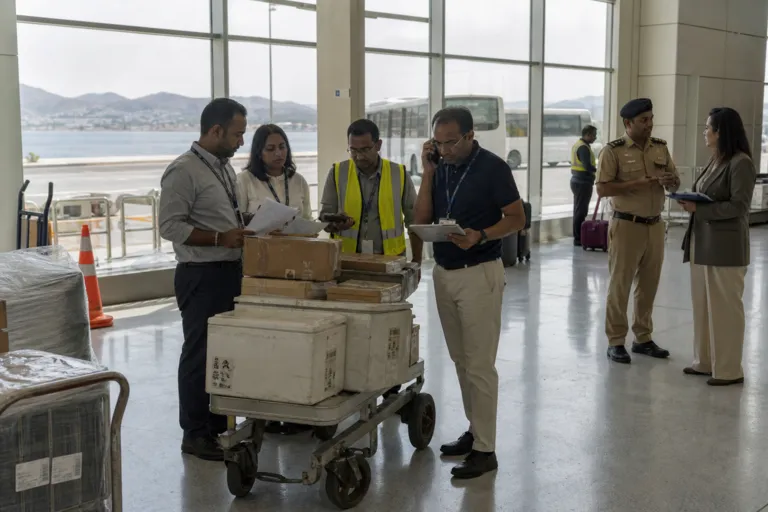
Supply chains at the Red Sea hinge on gateways and connectivity, and the Red Sea International Airport (RSI) is positioned as a primary access point. Skift reports RSI is targeting a 50:50 balance between domestic and international travelers by 2026, supported by expanded air connectivity and increasing hotel capacity. The airport is also emphasizing sustainability initiatives, including sustainable aviation fuel and operating on renewable energy, and it highlights private aviation as a key focus. Each operational choice has knock-on effects for scheduling, vendor readiness, and inventory planning across hotels and experiences.
Luxury Openings Raise the Operational Bar
New properties and concepts raise the operational bar, and that can expose weak links in the supply chain. HospitalityNet notes SLS The Red Sea will include a chic pre-function area and two flexible private rooms, plus destination dining that includes London’s Seabird entering the Kingdom, Floating World blending Japanese traditions with theatricality, and Fi’lia making its Saudi debut. HospitalityNet also states InterContinental, EDITION, SLS, Miraval, and others have already opened on Shura Island. More openings mean more simultaneous vendor onboarding, training needs, and standards to maintain across food, beverage, and guest experience.
Rules and coordination also shape the coastal tourism supply chain, especially when experiences extend beyond hotel walls. The Saudi Red Sea Authority launched an Introductory Guide to Coastal Tourism Activities, described as a first-of-its-kind digital gateway to eliminate information fragmentation and streamline multiple pathways into a single, centralized electronic reference. The guide is positioned as one comprehensive digital point of access to information, regulations, and procedures. For a launch like Adrena’s, that kind of unified reference can reduce friction for operators, investors, and practitioners trying to align compliance, safety, and service delivery.
Finally, the supply chain test is not only physical goods and transport. It is also revenue performance under volatility as luxury supply grows faster than other tiers. Skift cites that 78% of upcoming hotel supply is concentrated in luxury and upscale tiers, and another HospitalityNet opinion states around 61% of existing hotel inventory is still in luxury and upper-upscale segments, with nearly 78% of new rooms through 2030 planned at the higher end. With Adrena’s launch at the Red Sea Destination, the pressure increases to match demand, pricing discipline, and operational delivery without breaking service levels as the market expands.
What does “Red Sea Adrena 2026 supply chain” mean in this context?
How big is Saudi tourism demand right now, based on the sources?
What is Red Sea International Airport targeting by 2026?
Why does a centralized coastal tourism guide matter for operators?
How concentrated is Saudi’s upcoming hotel supply in luxury and upscale tiers?
Talk to us for your needs in:
- Identifying Suitable Warehouse Sites in Saudi Arabia
- Customized Logistics and Supply Chain Analytics
- Logistics Network Design and Optimization
- Green Supply Chain and Sustainable Logistics Solutions
- Supply Chain Risk Management and Compliance
- Advanced Supply Chain Resilience and Agility
- Logistics Market Research and Strategic Analysis
- In-Depth Market Survey for Logistics
- Market Intelligence and Insights in Logistics
- Feasibility Study and Assessment in Logistics
- Integrated Warehousing Management Solutions
- Smart Warehousing and Automation Systems
- Sustainable and Green Warehousing Practices
- Port and Airport Logistics Optimization
- Digital Logistics Solutions
- Saudi Logistics Benchmarking