NEOM’s green ammonia story is not only about production. It is also about how exports are allowed to move. In July 2026, Saudi Arabia announced an ACWA green hydrogen export mandate that designates a single national utility operator as the exclusive channel for exporting the Kingdom’s green hydrogen, green ammonia, green methanol, green fuels, and renewable electricity. That structure matters for contracting, nominations, shipping coordination, and how European buyers engage. It also frames Saudi green ammonia export logistics as a governance-led system, where market access is organized through one export route instead of many competing exporters.
On the supply side, the NEOM Green Hydrogen Complex is positioned as a major export anchor. Air Products & Chemicals Inc. is described as the project sponsor, technology integrator, and off-taker for the NEOM complex, which is characterized as the world’s largest planned green ammonia production facility at 1.2 MTPA, representing a USD 8.4 billion capital commitment with first production targeted for 2026. A related operational lens is hydrogen-to-ammonia conversion. One source notes that green ammonia requires approximately 0.18 tonnes of hydrogen per tonne of ammonia produced, and that at 600 tonnes of hydrogen per day the facility’s theoretical ammonia output capacity approaches 3,300 tonnes per day. These figures shape shipping cadence, storage needs, and buyer scheduling.
Why Europe Is Pulling on Green Ammonia Imports
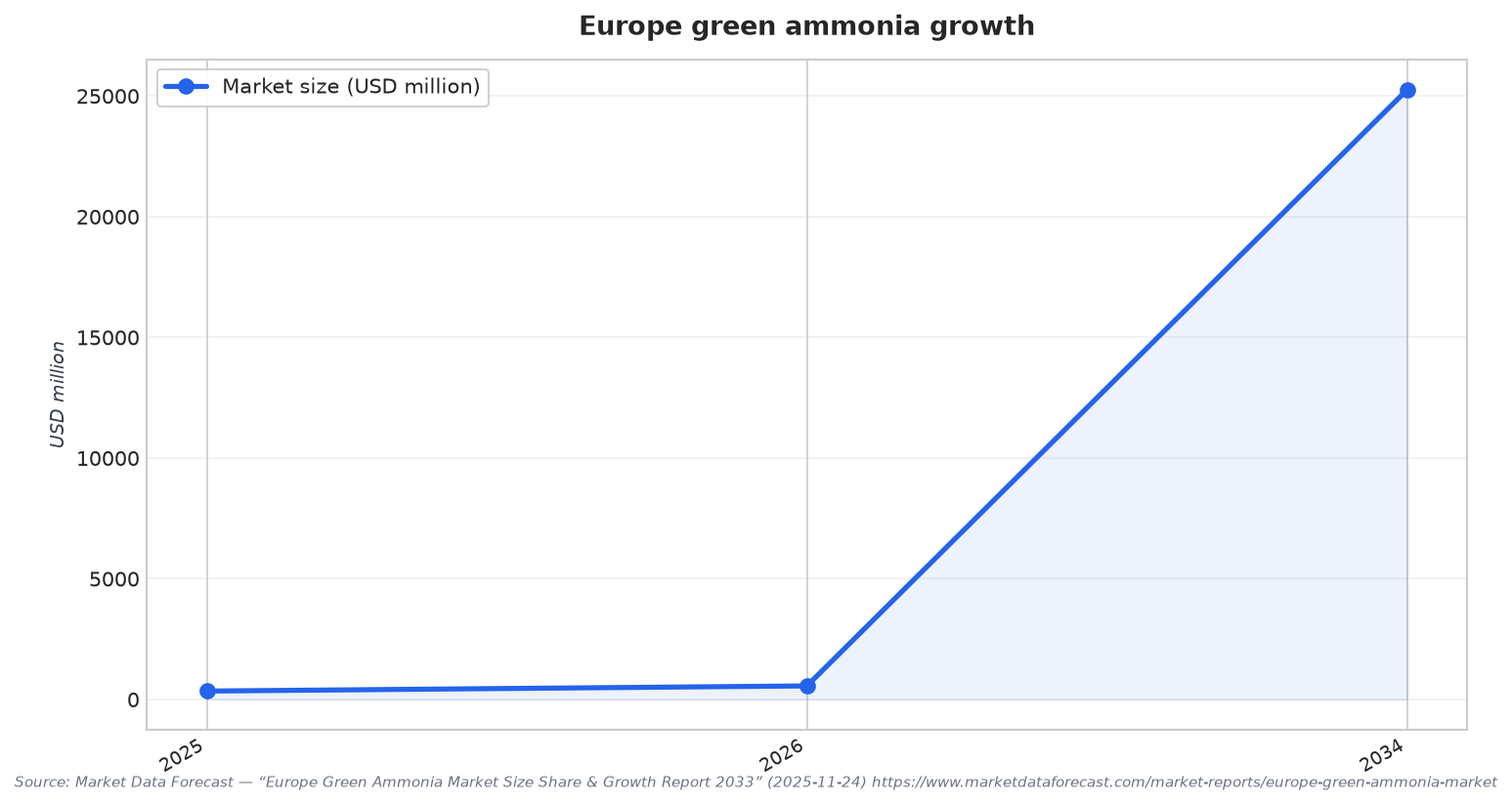
Europe’s demand signals are both policy-driven and market-sized. One Europe market report values the Europe green ammonia market at USD 350.04 million in 2025, estimates USD 563.11 million in 2026, and forecasts USD 25,257.67 million by 2034, at a 60.87% CAGR from 2026 to 2034. The same source describes the European Green Deal target of net zero emissions by 2050 and an interim target of reducing greenhouse gas emissions by at least 55% by 2030 compared with 1990 levels. It also notes that Europe accounted for about 12% of global hydrogen electrolyzer capacity additions in 2023. In parallel context, another source states that Europe held 35.91% of the green ammonia market share in 2025 and advances at an 87.20% CAGR to 2031, reinforcing why European offtake is central for exporters.
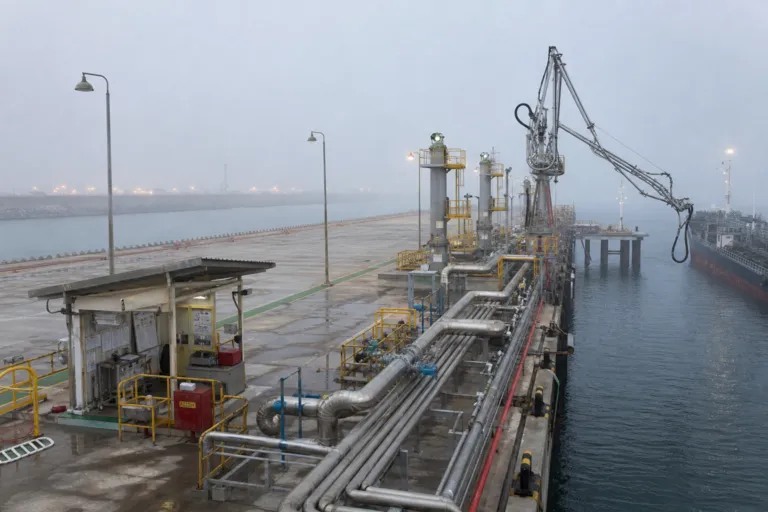
Shipping routes and port choices shape how NEOM-linked supply reaches Europe. A logistics comparison in the sources highlights Yanbu’s Red Sea access. Yanbu’s location provides direct maritime access to the Suez Canal route, described as the primary shipping corridor for energy commodities moving between the Gulf region and European ports. The same source adds that a Yanbu-based production hub could reduce reliance on overland transport from NEOM to port facilities and could offer logistics cost advantages for certain European destination markets. Another source also notes that the Green Ammonia Corridor agreement with EnBW references the Yanbu green hydrogen hub as a complementary production site beyond NEOM, which suggests routing flexibility even under a centralized export mandate.
For European buyers, import decisions are also shaped by the cost of emissions and certification. One Europe report states that conventional grey ammonia emits approximately 1.8 tons of carbon dioxide per ton of ammonia produced, while green ammonia is defined as ammonia synthesized from renewable hydrogen produced through water electrolysis powered by zero-carbon electricity, with nitrogen sourced via air separation. The same source notes the EU Emissions Trading System carbon price exceeded 80 euros per metric ton in early 2025, increasing pressure to shift away from higher-emitting inputs. In practice, the single-export-channel model in Saudi Arabia can simplify counterparties, while Europe’s accelerating market trajectory amplifies the need for reliable schedules, corridor planning, and consistent product definitions in the export chain.
What does Saudi Arabia’s single national utility export mandate change for green ammonia exports?
What is the NEOM green ammonia project scale and timeline in the sources?
How do the sources quantify hydrogen-to-ammonia conversion for export planning?
Why is the Suez Canal route relevant to Saudi-to-Europe ammonia shipping?
How fast is Europe’s green ammonia market growing according to the sources?
Talk to us for your needs in:
- Identifying Suitable Warehouse Sites in Saudi Arabia
- Customized Logistics and Supply Chain Analytics
- Logistics Network Design and Optimization
- Green Supply Chain and Sustainable Logistics Solutions
- Supply Chain Risk Management and Compliance
- Advanced Supply Chain Resilience and Agility
- Logistics Market Research and Strategic Analysis
- In-Depth Market Survey for Logistics
- Market Intelligence and Insights in Logistics
- Feasibility Study and Assessment in Logistics
- Integrated Warehousing Management Solutions
- Smart Warehousing and Automation Systems
- Sustainable and Green Warehousing Practices
- Port and Airport Logistics Optimization
- Digital Logistics Solutions
- Saudi Logistics Benchmarking