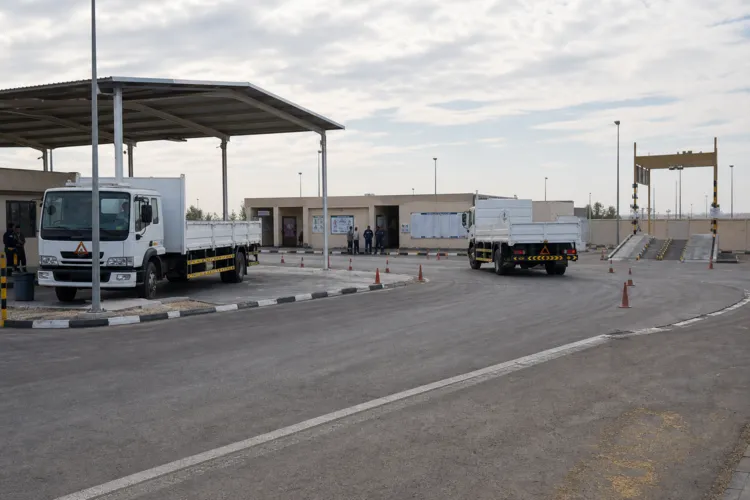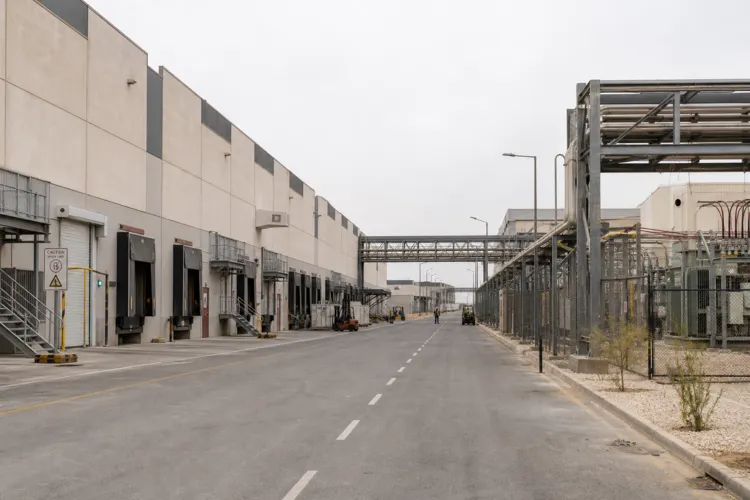
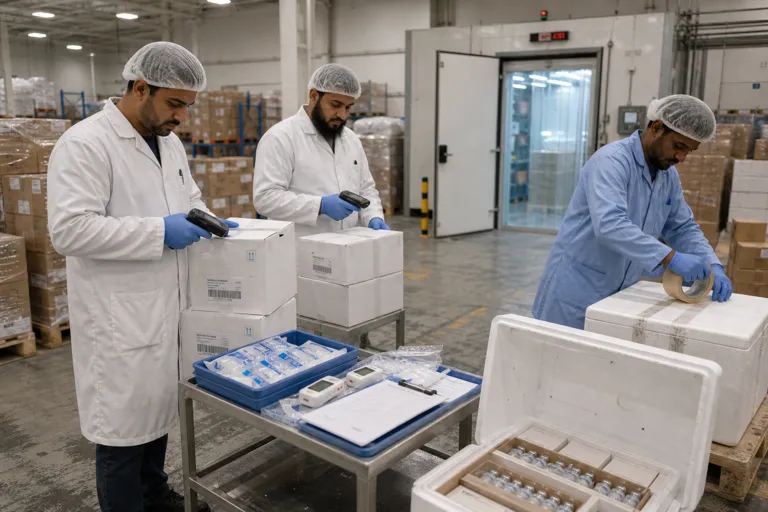
Meeting a large cold chain pharma requirement in Saudi Arabia depends on building end-to-end readiness, not isolated upgrades. Temperature-sensitive pharma Saudi Arabia plans must link manufacturing expansion, release quality systems, packaging decisions, and logistics execution. Vision 2030-linked initiatives are already shaping the enabling environment, with investments in the pharmaceutical sector alone exceeding SR7 billion. This matters because cold chain resilience is not only about trucks and warehouses. It is also about local production scale, predictable supply planning, and contracts that hold partners accountable for product condition.
Manufacturing depth is rising through contract development and manufacturing organizations. Industry reports expect the Saudi pharmaceutical CDMO market to grow from USD $1.62 billion in 2024 to USD $2.24 billion by 2030, at a CAGR of 5.45%. The broader Saudi pharmaceutical market is also described as growing, with an expected USD $12.4 billion in 2025 and a projected USD $18.1 billion by 2030 at a nearly 8% CAGR. For temperature-sensitive flows, this growth translates into more product moving through controlled environments and more handoffs that must remain compliant.
How to Design a Cold Chain That Scales
Planning work has to start well before launch. A GCC expansion guide recommends organizing a launch team across four key workstreams: supply planning, production readiness, logistics management, and distribution partnership. It also flags practical questions that directly affect temperature control and packaging format choices, including whether a dedicated Saudi Arabia pack will be created or a shared GCC pack with bilingual labeling. It further highlights country-specific shelf-life and stability requirements, and asks which temperature controls or packaging formats are required. These are early decisions that reduce delays later.
Advanced therapies increase the stakes for controlled production and controlled movement. King Faisal Specialist Hospital and Research Centre stated it will open Saudi Arabia’s first facility for manufacturing genetic and cellular therapies by late 2025. The facility spans more than 5,000 square meters and is designed around 16 modular clean-room clusters. Once fully operational, it is expected to manufacture about 2,400 treatment doses each year. It will operate under Good Manufacturing Practice standards, with monitoring across processes from air filtration to batch testing and artificial-intelligence systems managing quality control.
Cold chain logistics partners are scaling capabilities because pharma customers increasingly demand consistency across markets. Cencora’s global 3PL messaging emphasizes integrated support that helps ensure products are delivered on time and in the right condition. Packaging service networks are also expanding. Peli BioThermal opened an expanded service center in Allentown, Pennsylvania, relocating to a larger site and expanding from 63,000 sq. ft. to 90,100 sq. ft. to increase capacity. Even when such investments are outside Saudi, they signal the broader push toward durable, high-performance thermal packaging systems that support compliance expectations.
Warehousing capacity growth shows how fast temperature-controlled infrastructure demand is rising globally, which affects equipment availability, service models, and best practices that Saudi supply chains can benchmark. The Global Cold Chain Alliance reported that Global Top 25 cold storage capacity reached 7.76 billion cubic feet in 2026, up 6.3% year over year, with growth slowing from 8.3% in 2025. GCCA membership includes more than 1,500 temperature-controlled facilities operating across global supply chains. At the same time, inefficiencies remain a risk: one cold chain analysis notes that 20% of food and drugs—and up to 50% of vaccines—are lost annually despite billions of dollars invested in cold chain infrastructure.
What is the best starting point for temperature-sensitive pharma Saudi Arabia launch planning?
How fast is the Saudi pharmaceutical CDMO market expected to grow?
What new advanced-therapy manufacturing capability is being built in Saudi Arabia?
What do global cold storage numbers suggest about capacity demand?
Why do packaging and logistics partners matter for product condition?
Talk to us for your needs in:
- Identifying Suitable Warehouse Sites in Saudi Arabia
- Customized Logistics and Supply Chain Analytics
- Logistics Network Design and Optimization
- Green Supply Chain and Sustainable Logistics Solutions
- Supply Chain Risk Management and Compliance
- Advanced Supply Chain Resilience and Agility
- Logistics Market Research and Strategic Analysis
- In-Depth Market Survey for Logistics
- Market Intelligence and Insights in Logistics
- Feasibility Study and Assessment in Logistics
- Integrated Warehousing Management Solutions
- Smart Warehousing and Automation Systems
- Sustainable and Green Warehousing Practices
- Port and Airport Logistics Optimization
- Digital Logistics Solutions
- Saudi Logistics Benchmarking