Feeding pilgrims is no longer a seasonal sprint. It is a year-round operating model shaped by policy, capacity expansion, and a more flexible travel journey. Market.us frames Saudi Arabia’s Hajj tourism ecosystem as a broad hospitality and logistics stack that includes food services, crowd management, digital booking, and infrastructure aligned with Vision 2030. That wider system matters for catering because food demand rises when mobility improves, beds expand, and pilgrims move through the cities more smoothly. In 1445H (2024), Saudi Arabia recorded 1,833,164 total Hajj pilgrims, including 1,611,310 from abroad and 221,854 domestically, with 87.9% international participation. Each of those flows adds pressure on suppliers, kitchens, and last-mile delivery around key worship zones.
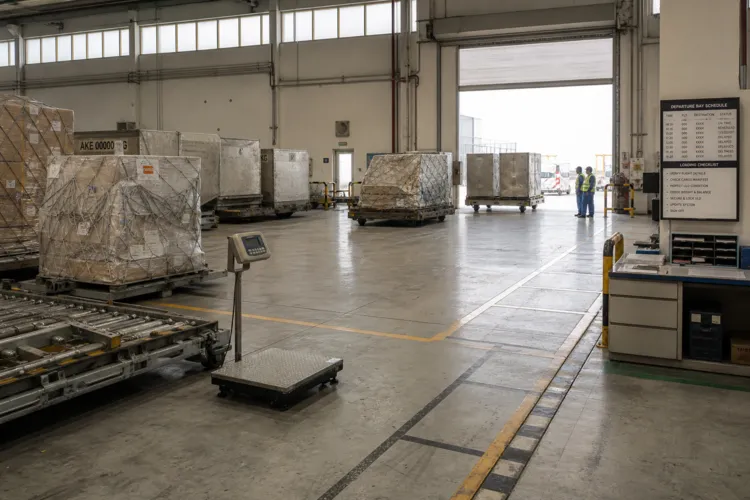
Umrah’s year-round nature changes how procurement and inventory are timed. Qoyod reports that 82.2% of Umrah performers from abroad arrived through airports, and that 10.7% growth in arrivals from abroad was recorded versus Q1 2024. It also notes that 24% of Q1 performers were Saudi citizens, signalling a blended demand pattern that can span weekdays, school breaks, and religious peaks. For an Umrah catering supply chain in Makkah, this air-led arrival profile supports more predictable inbound scheduling, but it also means faster turnarounds when flight waves hit. Qoyod highlights that behind each smooth guest experience is a chain of small and medium enterprises across hospitality, catering, transport, retail, and logistics, where readiness depends on tight inventory and cash-flow control during seasonal surges.
From Beds to Buffets: Why Hospitality Growth Reshapes Food Logistics
Hotel growth and performance directly influence catering volumes and service formats. Knight Frank reports that Makkah remained the strongest-performing hospitality market, recording an ADR of SAR 775 and RevPAR growth of 4.7% year-on-year, supported by sustained demand from pilgrims. Madinah also showed resilience, with occupancy averaging 76% and ADR increasing 2.7% year-on-year. On the pipeline side, Knight Frank adds that more than 218,000 hotel rooms, branded residences, and serviced apartments are planned across major developments in Makkah and Madinah. More keys in the market tend to multiply breakfast counts, group meal plans, and room-service loads, which pushes caterers to secure consistent suppliers and scalable cold-chain and dry-goods replenishment that can flex by neighborhood and hotel class.
Digital journey planning is also changing how food demand is forecast and coordinated. Hajj Reporters states that the Nusuk platform has unified visa issuance, accommodation booking, and ritual planning, reaching 30 million users from 190 countries. When bookings and itineraries consolidate into a single planning flow, hotels, operators, and caterers can synchronize staffing and purchasing to the same arrival windows. Hajj Reporters also notes that Saudi Arabia abolished the dedicated Umrah visa requirement for many nationalities, and that any valid Saudi visa—tourist, business, or transit—now permits Umrah. That shift can broaden the mix of traveler profiles, making menu planning and service styles more varied while keeping the operational need the same: reliable sourcing, traceable deliveries, and rapid replenishment close to the Haram districts.
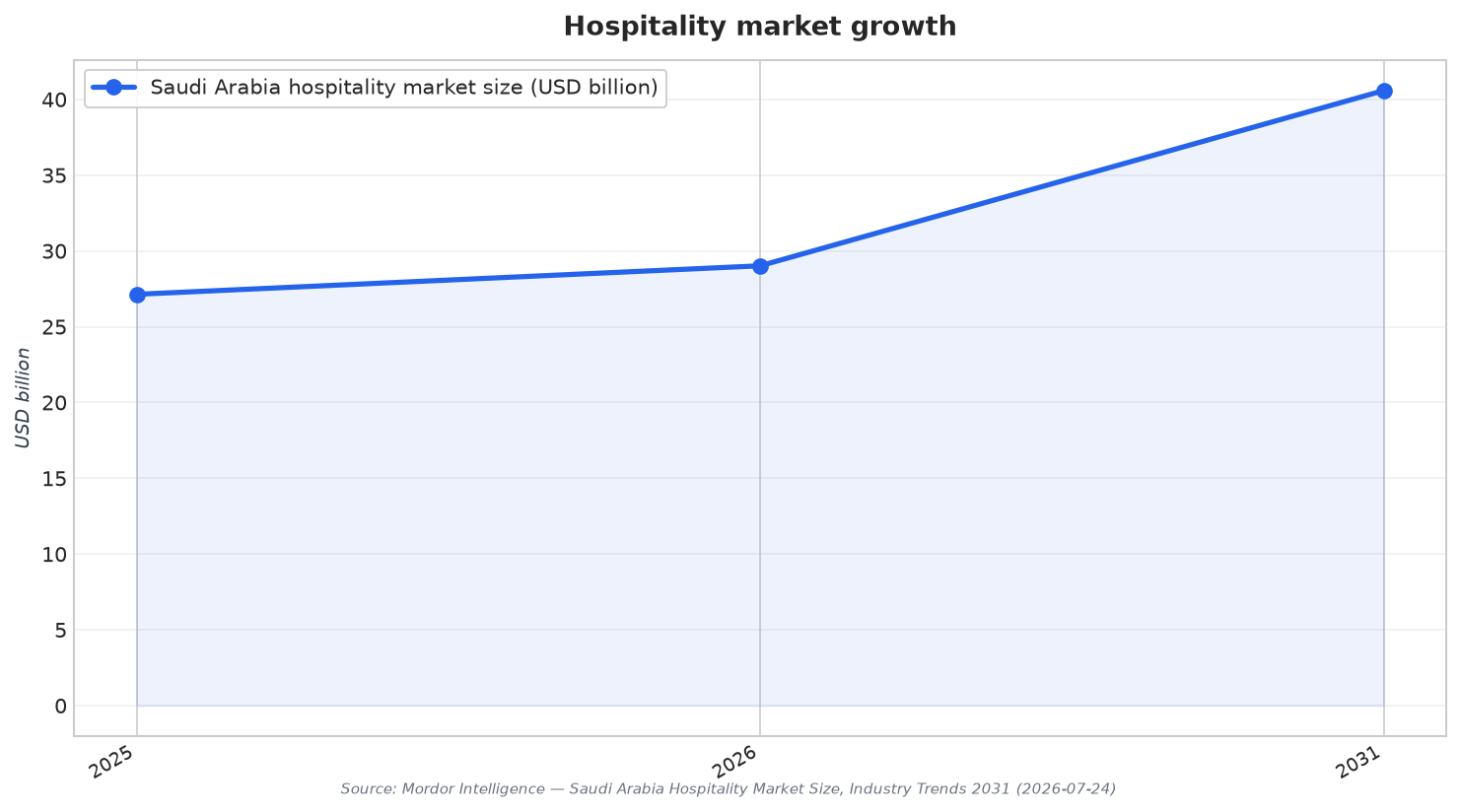
These pressures sit inside a larger growth narrative for religious tourism and hospitality. Mordor Intelligence estimates the Saudi Arabia hospitality market size at USD 29.02 billion in 2026, with projections reaching USD 40.58 billion by 2031, and notes that the Makkah–Jeddah corridor held 26.62% of the hospitality market size in 2025. In the same report, Umrah pilgrims totalled 18 million in 2025 and were expected to exceed 20 million in 2026, while the Vision 2030 ambition is 30 million Hajj and Umrah pilgrims annually by 2030. For catering and supply partners in Makkah and Madinah, the operational message is clear: year-round demand requires contracts that hold up through peaks, procurement that anticipates travel-driven spikes, and partnerships that can scale across both cities without losing service consistency.
What is driving year-round pressure on catering in Makkah and Madinah?
How do airports influence meal planning and delivery schedules for Umrah groups?
How is hotel expansion linked to catering supply needs in the Holy Cities?
What role does Nusuk play in coordinating the Umrah catering supply chain in Makkah?
What hospitality performance signals matter most for food service operators in Makkah and Madinah?
Talk to us for your needs in:
- Identifying Suitable Warehouse Sites in Saudi Arabia
- Customized Logistics and Supply Chain Analytics
- Logistics Network Design and Optimization
- Green Supply Chain and Sustainable Logistics Solutions
- Supply Chain Risk Management and Compliance
- Advanced Supply Chain Resilience and Agility
- Logistics Market Research and Strategic Analysis
- In-Depth Market Survey for Logistics
- Market Intelligence and Insights in Logistics
- Feasibility Study and Assessment in Logistics
- Integrated Warehousing Management Solutions
- Smart Warehousing and Automation Systems
- Sustainable and Green Warehousing Practices
- Port and Airport Logistics Optimization
- Digital Logistics Solutions
- Saudi Logistics Benchmarking