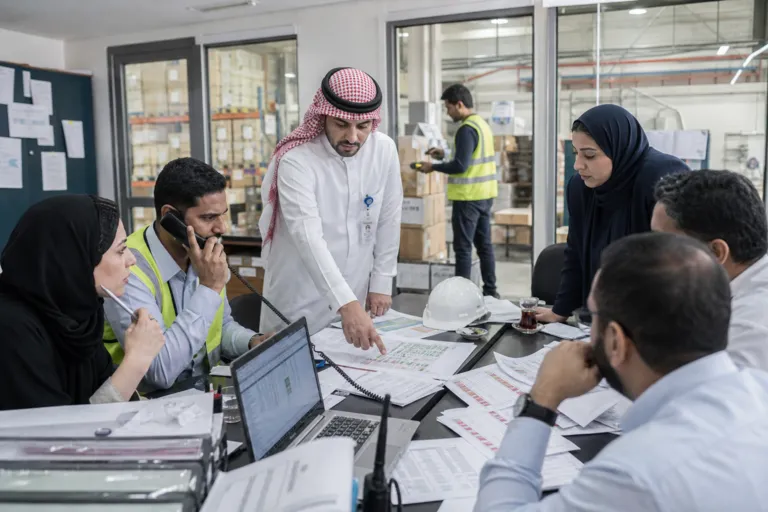
Saudi procurement Saudization 2026 is forcing operators to treat procurement and logistics localisation as a core operating constraint, not an HR side project. The sources show an environment where companies are expected to meet regulatory standards and compliance obligations tied to Saudization policies under the Nitaqat program, including sector-specific quotas, and to manage interactions with platforms such as Qiwa and GOSI. This is not only about hiring. It is also about resilience and continuity when roles shift, projects recalibrate, and supply chains keep moving under changing conditions.
Start with workforce planning that is built for mobility and skills gaps. One source highlights that AI-led workforce planning, demand forecasting, and personalized career pathways will increasingly inform mobility decisions. Another notes that modern mobility is now about mapping skills, identifying gaps, and supporting long-term workforce evolution, supported by internal talent marketplaces that align employee skills and interests with internal opportunities. For procurement and logistics operators, that means building role maps, identifying scarce capabilities, and creating clear internal pathways for Saudi nationals into buyer, planner, and logistics coordination tracks.
What Operators Must Do Now to Stay Compliant and Ready
Operational readiness also depends on how fast you can execute compliant transitions. A source explains that mobility providers help businesses navigate regulatory frameworks such as Saudization policies under the Nitaqat program, sector-specific quotas, and compliance obligations set by the Ministry of Human Resources and Social Development. It adds that these services often manage interactions with Qiwa and GOSI, reducing administrative friction and helping ensure continuity. If you are running procurement and logistics at scale, you should pressure-test your onboarding, transfers, and offboarding steps against these systems and define who owns each compliance checkpoint.
Local content delivery has to be embedded in procurement, not handled as an afterthought. In healthcare, Saudi Arabia’s Ministry of Health signed an MoU with Efficio to advance supply chain, procurement, and local content excellence. The source defines local content as the extent to which goods, services, workforce, and technologies are sourced, produced, or delivered locally rather than imported. Even if you are not in healthcare, the lesson is transferable: procurement policies should explicitly connect supplier decisions to local content objectives and to the operational need for smoother, more controllable supply chains.
Digitisation and skills development in logistics infrastructure are moving forward, and operators must align talent plans accordingly. A source reports an MoU between Ericsson and the Saudi Railway Company to introduce 5G and FRMCS technologies, including 5G-based infrastructure, real-time video, train control, IoT connectivity, and an innovation centre for testing solutions. It also focuses on training SAR’s workforce in advanced communication systems. Procurement and logistics leaders should translate this into requirements for vendor management, data literacy, and technology-enabled operations roles, then ensure training plans keep pace.
Finally, plan for broader labour and competitiveness shifts that influence hiring pools and cost structures. One source states female workforce participation rose to 34.5% from 23% in 2019, and that overall private-sector employment among Saudi nationals reached around 2.5 million. It also reports the unemployment rate among Saudis fell to 6.8% in the second quarter of that year, while more than 30 localisation decisions expanded opportunities and increased employment in some specialised roles by as much as 300%. At the same time, industrial firms previously saved an estimated $1.3 billion in cumulative costs from an expatriate labor levy waiver that ended in December 2025. Together, these signals point to tighter competition for skilled nationals and a need to lock in retention, progression, and capability-building now.
What is the core risk of delaying Saudi procurement Saudization 2026 preparation?
How should operators restructure procurement and logistics workforce planning?
What does “local content” mean in procurement terms in the sources?
What technology trends in logistics should procurement teams anticipate?
What labour market signals in the sources affect procurement and logistics hiring?
Talk to us for your needs in:
- Identifying Suitable Warehouse Sites in Saudi Arabia
- Customized Logistics and Supply Chain Analytics
- Logistics Network Design and Optimization
- Green Supply Chain and Sustainable Logistics Solutions
- Supply Chain Risk Management and Compliance
- Advanced Supply Chain Resilience and Agility
- Logistics Market Research and Strategic Analysis
- In-Depth Market Survey for Logistics
- Market Intelligence and Insights in Logistics
- Feasibility Study and Assessment in Logistics
- Integrated Warehousing Management Solutions
- Smart Warehousing and Automation Systems
- Sustainable and Green Warehousing Practices
- Port and Airport Logistics Optimization
- Digital Logistics Solutions
- Saudi Logistics Benchmarking