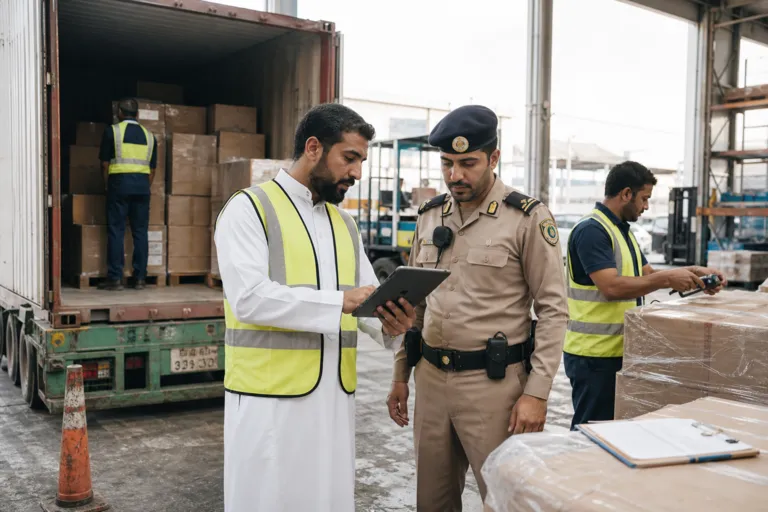
Customs clearance time is a practical constraint for importers. Research cited in the literature on customs operations links simplifying customs procedures for goods transit with multiple benefits, including increased trade activity, reduced bureaucratic border hindrances, and decreased administrative costs. The same research stream highlights that advanced technologies can improve accuracy and reduce customs clearance times. That is the operating logic behind trusted-operator and facilitation models: reduce friction by making processes simpler and more predictable, and by shifting work into digital and data-led routines that reduce rework at the border.
The ZATCA AEO program 2026 sits in that broader trade-facilitation playbook. In practice, the clearance-time impact comes from how customs is run, not just from a label. The literature points to digitalization of customs formalities as a lever for reducing clearance time, and it also notes the role of data-driven sampling techniques that have been explored in multiple jurisdictions. For Saudi importers, the core idea is that a relaunch can emphasize process simplification and technology-enabled decisioning so shipments face fewer procedural loops and less back-and-forth documentation work.
Why Clearance Time Falls When Procedures and Data Improve
Clearance time drops when customs interactions become simpler and more unified. A comparable example outside Saudi Arabia illustrates the mechanism: Nigeria Customs described a “One-Stop-Shop” trade platform intended to simplify interactions with customs and other regulatory agencies and to drastically reduce bureaucracy, enabling businesses to process documentation, resolve bottlenecks, and clear goods faster. While this is not Saudi data, it is a clear, source-backed description of how consolidation and simplification are expected to compress time to release by reducing handoffs and unresolved exceptions that keep cargo waiting.
Another external illustration shows what electronic processing can do when it is fully deployed. In Brazil, a New Import Process on a Single Foreign Trade Portal was described as aiming to reduce delivery times and costs, with an industry estimate that it could nearly halve delivery times from nine days to five days through increased electronic processing, and could save companies R$40bn annually when fully implemented. This is not a promise about Saudi performance. It is evidence, from the provided sources, that digitized customs workflows can be associated with large time reductions when the scope is end-to-end and widely adopted.
Program relaunches also tend to tighten standards and reduce avoidable rejection and rework. A US example in a different context shows how streamlined portals can still face exceptions: CBP reported a rough 15% rejection rate across submitted claims, with most rejected submissions stemming from ineligible entries being included rather than outright system failures. For importers, the operational takeaway is that “clean entry data” matters because poor data quality creates delays even when systems are fast. For ZATCA AEO program 2026 participants, the clearance-time advantage depends on disciplined documentation and eligibility checks that prevent preventable stops.
Finally, clearance time is also shaped by the broader business environment in which trade transactions occur. A Saudi-focused trade finance source notes that reforms have improved the speed and predictability of dispute resolution and that the regulatory environment is increasingly aligned with global standards, with institutions playing a more active role in promoting transparency and legal certainty. Importers still face practical challenges in executing transactions efficiently and cost-effectively, but a relaunch that emphasizes clearer processes, better data, and predictable outcomes can reduce delays that originate outside the inspection lane, such as incomplete paperwork, unclear responsibilities, or uncertainty about required steps.
What is the main clearance-time logic behind the ZATCA AEO program 2026?
What source-backed examples show that digital customs can reduce time?
Why does data quality matter even with streamlined systems?
Does this article claim specific time savings for Saudi importers?
Talk to us for your needs in:
- Identifying Suitable Warehouse Sites in Saudi Arabia
- Customized Logistics and Supply Chain Analytics
- Logistics Network Design and Optimization
- Green Supply Chain and Sustainable Logistics Solutions
- Supply Chain Risk Management and Compliance
- Advanced Supply Chain Resilience and Agility
- Logistics Market Research and Strategic Analysis
- In-Depth Market Survey for Logistics
- Market Intelligence and Insights in Logistics
- Feasibility Study and Assessment in Logistics
- Integrated Warehousing Management Solutions
- Smart Warehousing and Automation Systems
- Sustainable and Green Warehousing Practices
- Port and Airport Logistics Optimization
- Digital Logistics Solutions
- Saudi Logistics Benchmarking