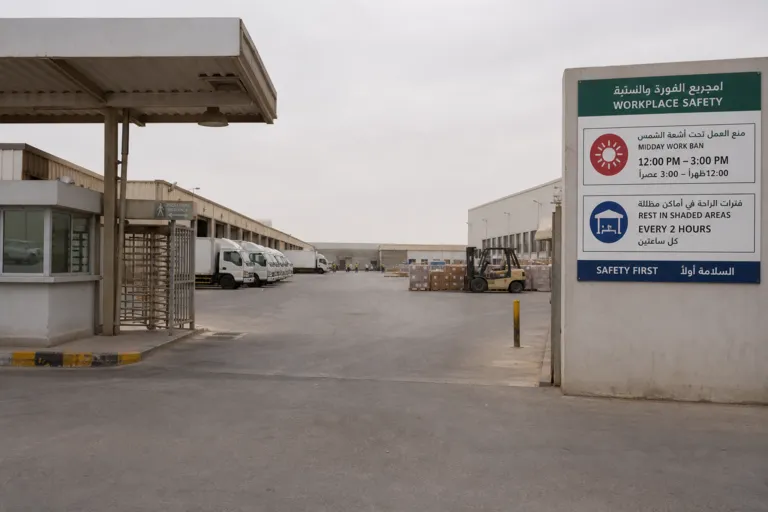
Midday Work Ban Season forces a reset for Saudi Arabia’s logistics operators. The Ministry of Human Resources and Social Development (MHRSD) applies an annual ban on outdoor work under direct sunlight from 12:00 p.m. to 3:00 p.m., with the 2026 implementation running from 15 June to 15 September 2026 and remaining in effect until September 15, 2026. The stated purpose is worker protection from heat-related risks such as heat exhaustion and heatstroke, while encouraging employers to keep operations efficient through preventive measures. Official data cited by The Saudi Times said compliance reached 94% during 2025, showing the rule is broadly enforced and cannot be treated as optional in day-to-day planning.
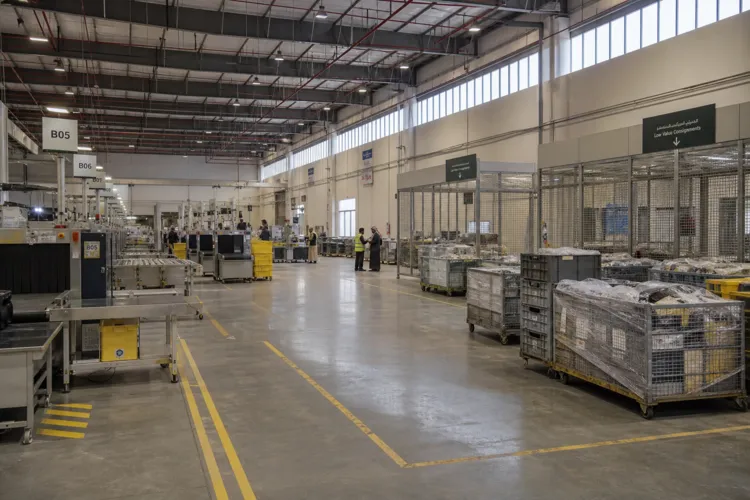
For warehouses, the restriction most visibly affects yard activity, loading and unloading, and any task that pushes staff into exposed outdoor zones during the restricted hours. The need to maintain flow is rising because logistics demand is expanding. IMARC Group valued the Saudi Arabia logistics market at USD 55.29 billion in 2025 and projected USD 83.41 billion by 2034. Mordor Intelligence also reported that the warehousing and storage component of Saudi Arabia’s freight and logistics market surpassed USD 8.23 billion in 2025, with non-temperature-controlled warehouses holding a 77.25% share that year. These figures point to large-scale assets that must keep turning, even when outdoor work must pause in the middle of the day.
Shift Design and Route Planning That Preserve Throughput
Scheduling discipline is the core operational lever during the ban. Guidance on managing field teams recommends pushing outdoor-heavy activity into cooler windows before noon and after 3:00 p.m. One example schedule is 6:00 a.m. to 12:00 p.m., then a break or move to an indoor or shaded location, followed by a post-3:00 p.m. restart. A split-shift pattern can extend service coverage without violating the rule, such as 6:00 a.m.–12:00 p.m., 12:00 p.m.–3:00 p.m., and 3:00 p.m.–7:00 p.m., adapted to contractual hours and labor rules. The same guidance suggests using location-based scheduling across Saudi Arabia cities to avoid a single rigid plan and to account for travel time, job type, and which tasks are truly outdoor.
To reduce lost productivity, the 12:00 p.m. to 3:00 p.m. window can be turned into an indoor productivity block. Examples include completing service reports, reviewing work orders, training and safety briefings, inventory administration, route planning, digital documentation, and team meetings. For logistics operations, that translates into dispatch planning, wave planning for pick/pack, exception handling, reverse-logistics triage, and safety refreshers. MHRSD also urges employers to provide drinking water, shaded rest areas, personal protective equipment, and awareness programs, and to monitor workers’ physical conditions. SmartQHSE notes that heat-stress procedures can include WBGT monitoring and acclimatisation planning aligned to the MHRSD midday-ban dates, helping safety teams build repeatable controls into daily execution.
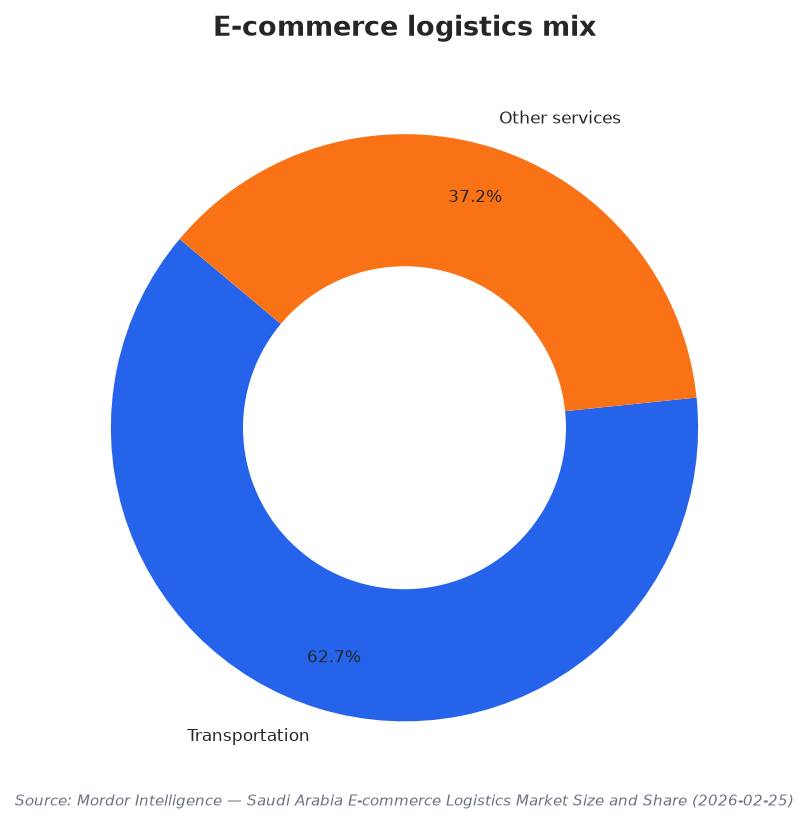
These changes matter because e-commerce and parcel demand is also evolving toward faster service, which pressures last-mile schedules. Mordor Intelligence estimated Saudi Arabia’s e-commerce logistics market would grow from USD 2.20 billion in 2025 to USD 2.38 billion in 2026, and forecast USD 3.66 billion by 2031, with transportation taking a 62.75% share in 2025. The same source reported standard 3-to-5-day delivery held a 57.43% share in 2025, while same-day fulfillment is advancing at a 19.70% CAGR between 2026 and 2031. In that context, Saudi midday work ban logistics becomes a design problem: plan earlier dispatch waves, protect midday indoor work for control-tower decisions, and execute the second delivery push after 3:00 p.m. without exposing teams to prohibited conditions.
What are the 2026 dates and hours for Saudi Arabia’s midday outdoor work ban?
How can delivery operators schedule routes around the 12:00 p.m. to 3:00 p.m. restriction?
What compliance level was reported for the midday work ban in 2025?
Which preventive measures does MHRSD emphasize for heat risk management?
How does Saudi midday work ban logistics connect to market growth pressures?
Talk to us for your needs in:
- Identifying Suitable Warehouse Sites in Saudi Arabia
- Customized Logistics and Supply Chain Analytics
- Logistics Network Design and Optimization
- Green Supply Chain and Sustainable Logistics Solutions
- Supply Chain Risk Management and Compliance
- Advanced Supply Chain Resilience and Agility
- Logistics Market Research and Strategic Analysis
- In-Depth Market Survey for Logistics
- Market Intelligence and Insights in Logistics
- Feasibility Study and Assessment in Logistics
- Integrated Warehousing Management Solutions
- Smart Warehousing and Automation Systems
- Sustainable and Green Warehousing Practices
- Port and Airport Logistics Optimization
- Digital Logistics Solutions
- Saudi Logistics Benchmarking