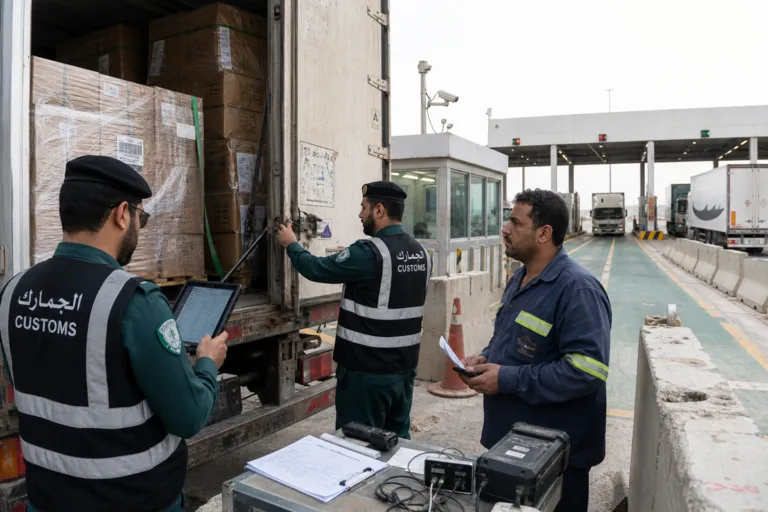
“Saudi 24-hour customs clearance” sits inside a wider push to keep cargo moving across the Gulf. A clear signal is the way shippers are choosing routes that avoid bottlenecks. One example is Highway 95, a corridor running from the Saudi-Qatari border crossing at Salwa through the Empty Quarter and into Oman at the Ramlet Khelah border crossing point. That crossing point opened in January 2023. The route has been popular because it is shorter and because it cuts out often 24-hour delays at UAE-Saudi border crossings that no longer need to be traversed.
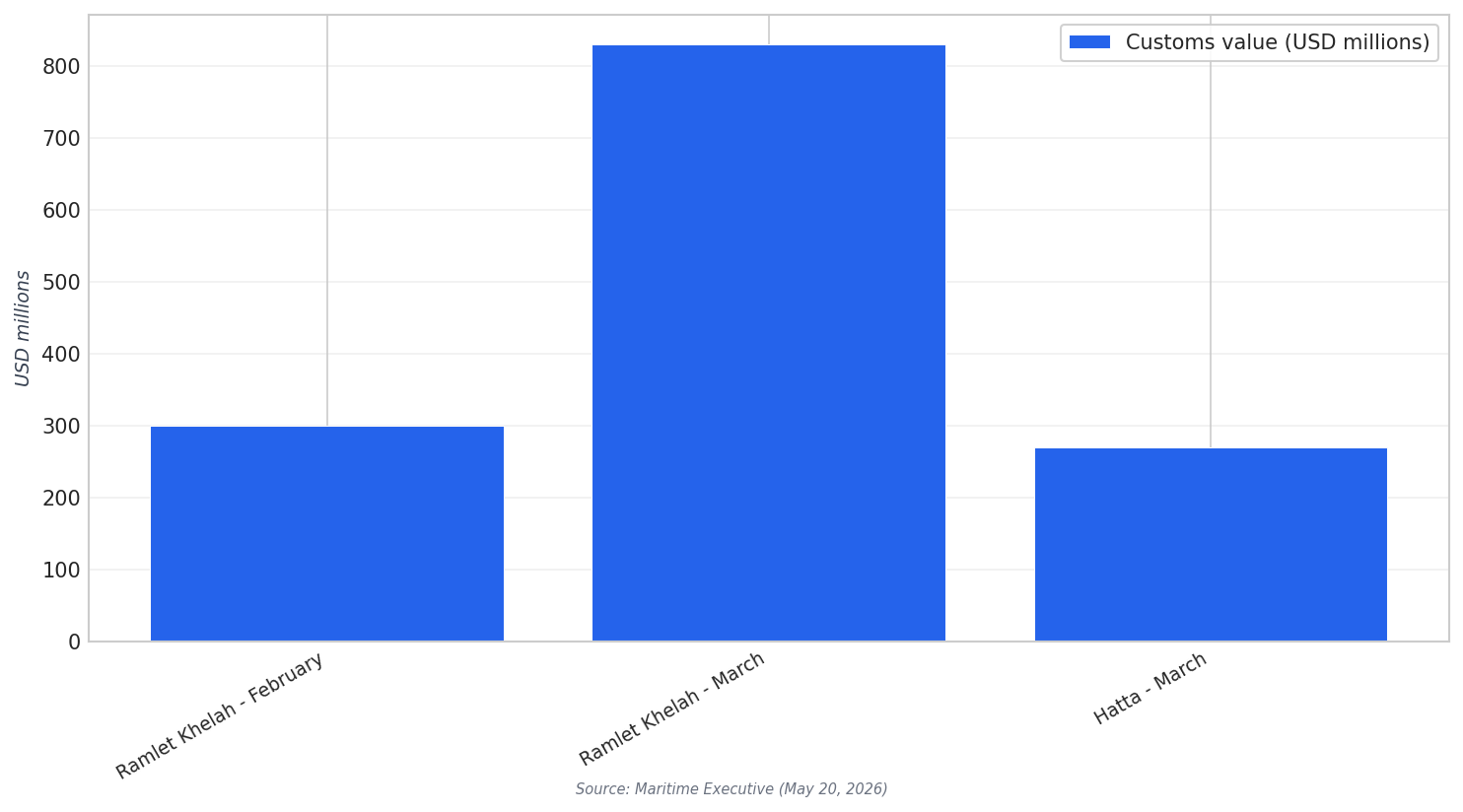
The trade volumes on that alternative corridor underline why border speed matters to supply chains. The value of goods crossing through Ramlet Khelah nearly trebled to $830m in March, from $300m in February. These figures show how quickly cargo can swing toward a border setup that shaves time and uncertainty. In the same regional context, customs friction is being treated as a solvable process issue, not a permanent constraint. That is the operating mindset behind efforts that aim at predictable, fast clearance targets.
The Speed Stack: Corridors, One-Stop Systems, and Data Flow
Saudi Arabia’s new border playbook also depends on logistics geometry inside and around the Kingdom. The Northern International Highway 85 stretches from Bahrain and Dammam through Riyadh to Al Hadithah on the Jordanian border. Highway 40 is 850 miles long and runs from Jeddah through Riyadh to Bahrain and Dammam. Highway 10 branches off from Riyadh direct to the UAE. These named corridors matter because they concentrate flows, making it easier to standardize inspection, pre-advice, and release routines that support time-based clearance expectations.
Alongside roads, the region is explicitly tying faster movement to new customs procedures and “one-stop” concepts. Dubai and Sharjah agreed new customs procedures with Oman to speed movement through the Hatta, Khatmat Malaha and Al Madam checkpoints by loads originating in Omani ports. Through Dubai’s Hatta checkpoint alone, the value of customs declarations rose from $270 million in March to $2.16 billion in April. Separately, the Hafeet Rail route from Sohar into the Emirati network is now 40% complete and due to come into service in 2028, and it will feature a one-stop customs system for containers with no delays at the border.
Digital systems are the final layer that makes faster border outcomes repeatable. Saudi authorities have announced a Self-Deportation Platform and an AI-driven Smart Track system designed to speed up passenger processing at airports and other entry points, and officials also said they are working to establish a unified international data gateway to facilitate secure exchange of passenger information with partner countries. In transport infrastructure, the Kingdom has also approved its first virtual air traffic control tower at AlUla International Airport, managed remotely from Jeddah’s King Abdulaziz International Airport more than 600 km away, using 360-degree cameras, sensors, and AI to boost efficiency and support smoother flows. Taken together, these steps reinforce a simple operational logic: the less paper, re-keying, and stop-start handling at control points, the easier it is to manage toward a 24-hour clearance-style target.
What does “Saudi 24-hour customs clearance” depend on in practice?
Which route is cited as cutting out “often 24-hour delays” at UAE-Saudi border crossings?
What change was reported at Oman’s Ramlet Khelah crossing after it opened?
What does the Hafeet Rail project promise for containers at the border?
What data-related border initiative did Saudi authorities say they are working on?
Talk to us for your needs in:
- Identifying Suitable Warehouse Sites in Saudi Arabia
- Customized Logistics and Supply Chain Analytics
- Logistics Network Design and Optimization
- Green Supply Chain and Sustainable Logistics Solutions
- Supply Chain Risk Management and Compliance
- Advanced Supply Chain Resilience and Agility
- Logistics Market Research and Strategic Analysis
- In-Depth Market Survey for Logistics
- Market Intelligence and Insights in Logistics
- Feasibility Study and Assessment in Logistics
- Integrated Warehousing Management Solutions
- Smart Warehousing and Automation Systems
- Sustainable and Green Warehousing Practices
- Port and Airport Logistics Optimization
- Digital Logistics Solutions
- Saudi Logistics Benchmarking