For Saudi exporters, the push toward integrated GCC corridors is happening alongside strong logistics market growth. Saudi Arabia’s freight and logistics market was valued at USD 27.14 billion in 2025 and is estimated to grow from USD 28.68 billion in 2026 to USD 37.82 billion by 2031, at a CAGR of 5.69% (2026–2031). In parallel, the GCC freight and logistics market is projected to expand from USD 83.24 billion in 2025 and USD 89.32 billion in 2026 to USD 120.21 billion by 2031, at a CAGR of 6.12% (2026–2031). This matters because exporters do not win with one mode. They win with predictable cross-border execution across road, ports, air, and rail-aligned nodes.
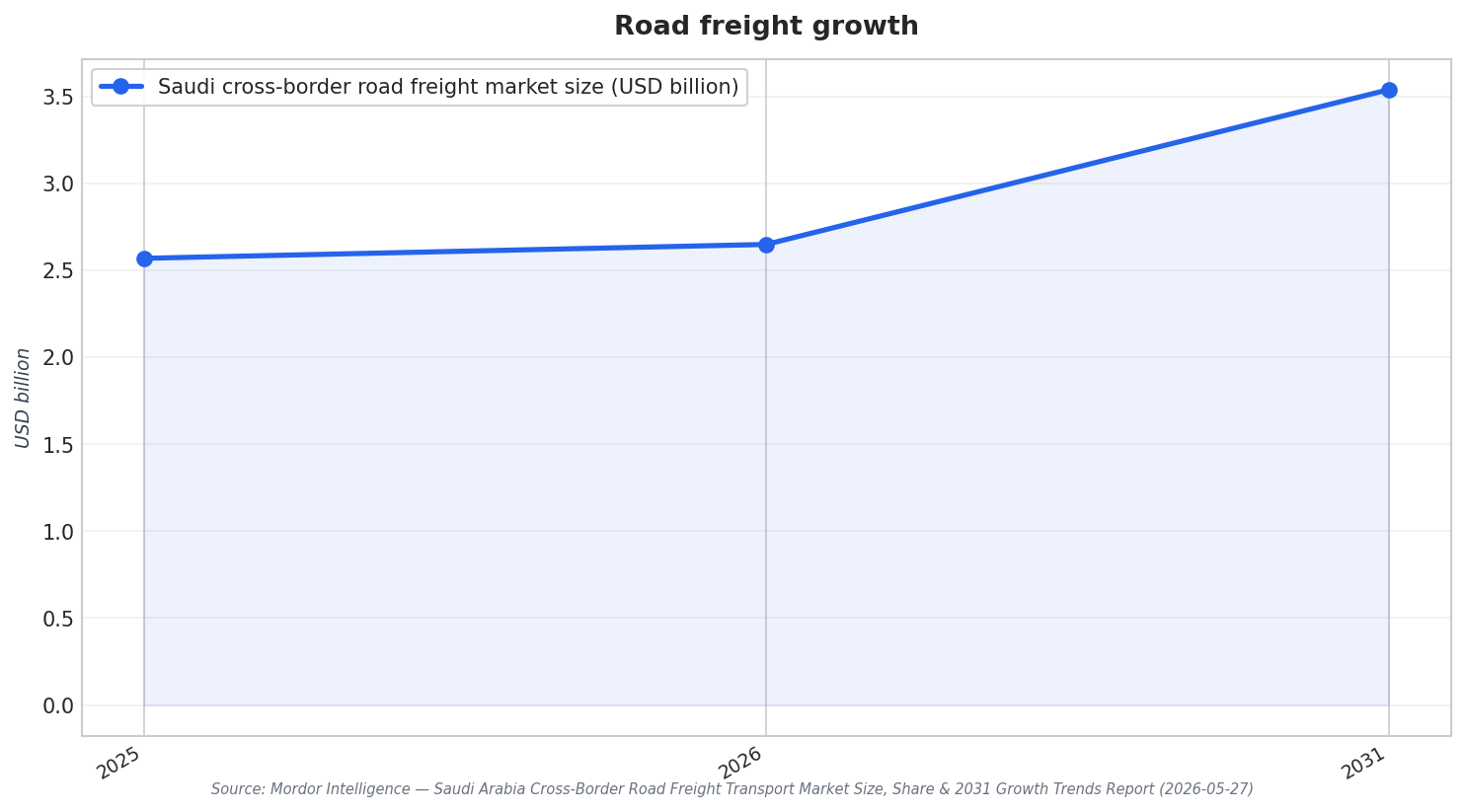
Road remains the day-to-day backbone, and that sets the baseline for cross-border integration. Saudi Arabia’s cross-border road freight transport market was valued at USD 2.57 billion in 2025 and is estimated to grow from USD 2.65 billion in 2026 to reach USD 3.54 billion by 2031, at a CAGR of 5.96% (2026–2031). In that market, the UAE held 47.47% share in 2025, which highlights how concentrated some trade lanes already are. Operationally, faster procedures are part of the story: the same source notes near-universal two-hour electronic customs clearance via the FASAH system. That kind of digital consistency is what exporters need when they are planning production cutoffs, booking windows, and customer delivery promises.
Where Rail-Ready Corridors Change Export Planning
GCC rail integration is often discussed as new infrastructure, but exporters feel it most as better multimodal handoffs. Mordor Intelligence notes multimodal rail links launched by Saudi Arabia Railways in 2026, and it ties these links to capacity and reliability improvements. In the broader Saudi freight and logistics outlook, Vision 2030’s infrastructure drive is described as being anchored by USD 133.3 billion of approved airport, rail, and port outlays. Exporters can translate that into tactics: design routings that can shift between truck and rail-supported corridors when congestion, peak demand, or service-level requirements change, while keeping customs and documentation consistent across borders.
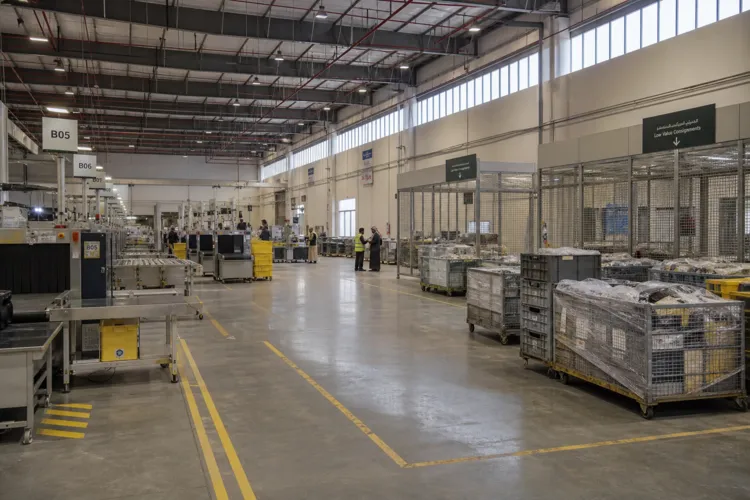
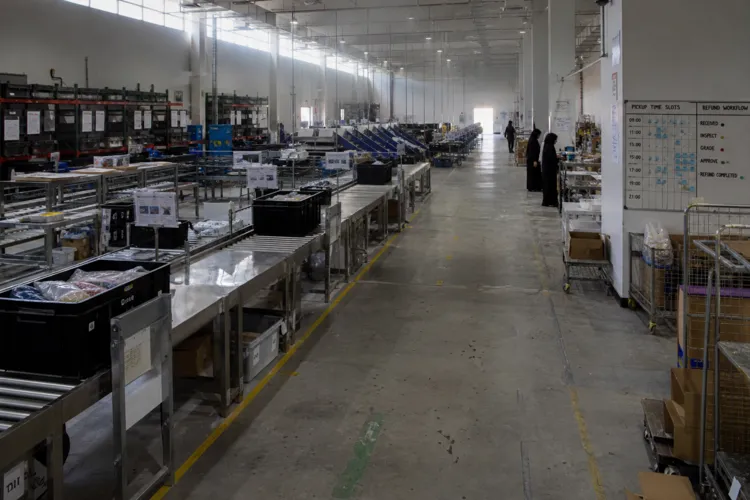
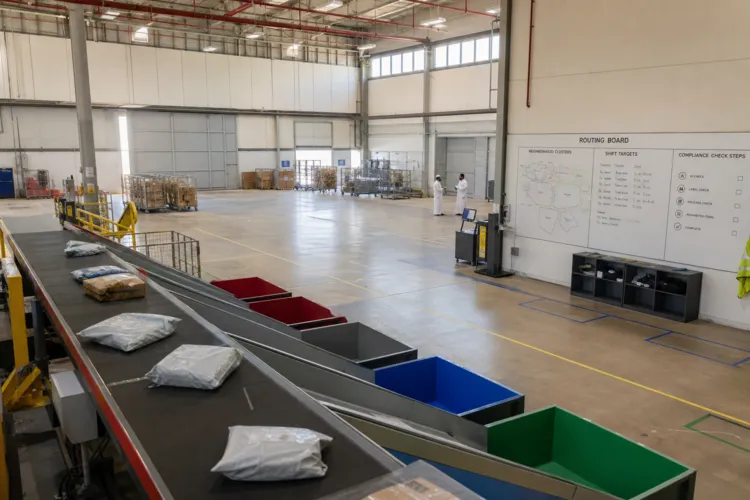
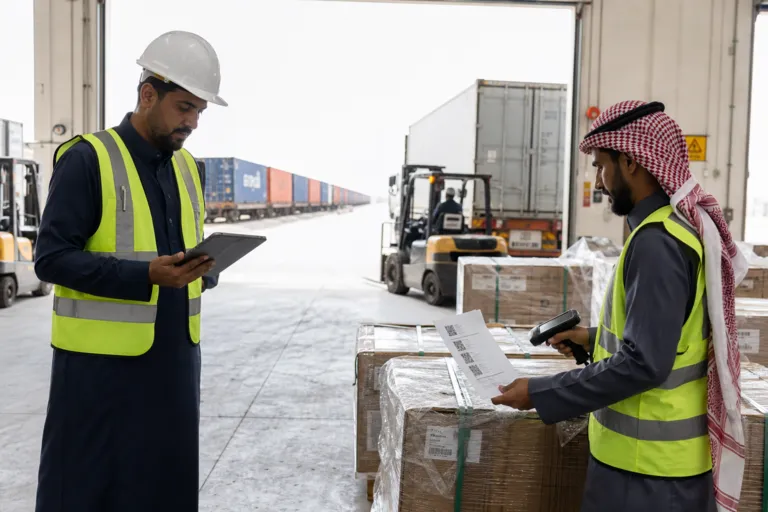
Cross-border performance also depends on what happens at borders and in warehouses, not just on tracks and highways. In GCC contract logistics, providers are described as adopting hub-and-spoke models yet still facing double handling at borders, and regulatory harmonization is said to lag physical links such as the Gulf Railway. That gap is not abstract. It affects packaging decisions, pallet and container unitization, and where you stage inventory. In Saudi Arabia specifically, logistics assets under management total 3.5 million sq ft, and expansion to USD 2 billion of assets is planned by 2025 to narrow the warehousing gap. For exporters, more capable 3PL footprints can support consolidation, labeling, and cross-docking that reduce border rework.
To make GCC Railway cross-border freight strategies practical, Saudi exporters can align with the segments that are already scaling. In Saudi cross-border road freight, full-truck-load captured 73.11% share in 2025, while non-containerized cargo dominated with 74.3% share in 2025; yet containerized freight is forecast as the fastest-growing segment at a 7.89% CAGR over 2026–2031. Temperature-controlled freight is also advancing at a 9.57% CAGR, the steepest among the report’s segments. These signals support a simple playbook: use digitally cleared corridors, choose 3PL partners that can reduce border handling, and prepare shipments for smoother modal transfers as rail-linked nodes expand.
How fast is Saudi Arabia’s cross-border road freight market growing?
What does the FASAH system change for exporters at the border?
How can Saudi exporters approach GCC Railway cross-border freight integration without relying on a single transport mode?
Which shipment formats are gaining momentum for Saudi cross-border moves?
Why do contract logistics limits still matter even with new physical links?
Talk to us for your needs in:
- Identifying Suitable Warehouse Sites in Saudi Arabia
- Customized Logistics and Supply Chain Analytics
- Logistics Network Design and Optimization
- Green Supply Chain and Sustainable Logistics Solutions
- Supply Chain Risk Management and Compliance
- Advanced Supply Chain Resilience and Agility
- Logistics Market Research and Strategic Analysis
- In-Depth Market Survey for Logistics
- Market Intelligence and Insights in Logistics
- Feasibility Study and Assessment in Logistics
- Integrated Warehousing Management Solutions
- Smart Warehousing and Automation Systems
- Sustainable and Green Warehousing Practices
- Port and Airport Logistics Optimization
- Digital Logistics Solutions
- Saudi Logistics Benchmarking