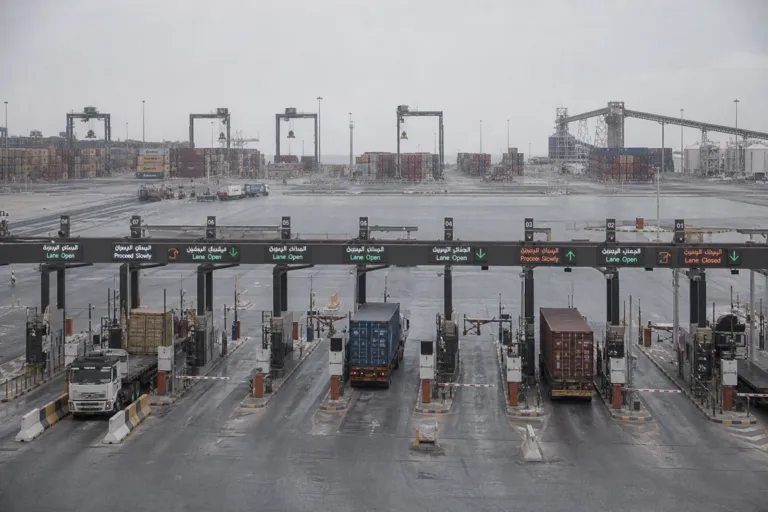
Saudi Ports Authority (Mawani) has earmarked USD 4.5 billion to modernize container yards, digital gates, and bulk terminals, with an explicit goal of reducing vessel dwell times and lifting throughput reliability. This modernization effort matters because Saudi Arabia’s main gateways sit on two coasts with different trade lanes and congestion risks. Jeddah Islamic Port is a key Red Sea counterweight to Gulf-facing gateways, while Dammam (King Abdulaziz Port) anchors the Arabian Gulf coast and connects into national road and rail networks. Against a backdrop of Vision 2030-driven investment in port capacity and connectivity, Mawani’s operational focus is increasingly about faster turnarounds, smoother gate moves, and more resilient port-to-inland flow.
At Jeddah Islamic Port, Mawani has been pairing terminal-side upgrades with added storage and inland capacity, which can directly influence dwell time by preventing yard and gate bottlenecks. Mawani signed seven agreements worth a combined SAR 1 bn to build and expand logistics centers at Jeddah Islamic Port and the Al Khumrah zone. The seven centers span more than 44k sqm of storage, consolidation, and re-export activities. This sits within a wider footprint of 34 port-based logistics centers across the Kingdom, including 17 at Jeddah alone, with cumulative investment exceeding SAR 14 bn. By expanding places to store, consolidate, and re-export cargo, the port can absorb surges and reduce the risk of containers lingering longer than planned.
Why Jeddah’s Connectivity and Gate Capacity Matter for Dwell Time
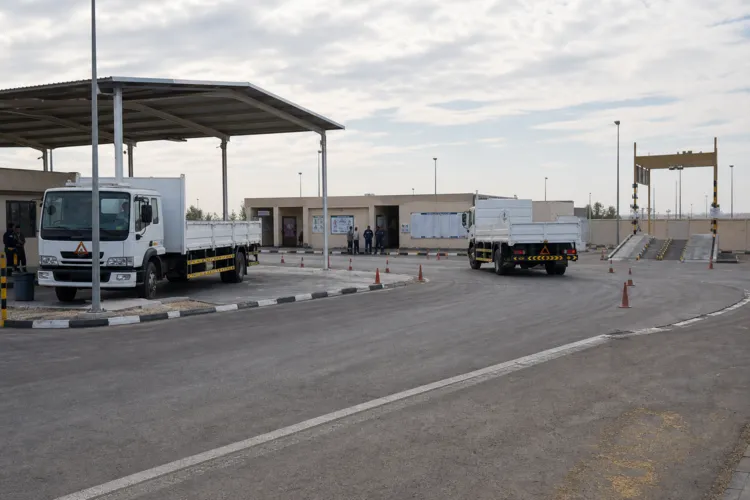
Jeddah’s investments also target the handoff between port operations and inland movement, a common source of delays. Saudi Arabia is developing an SAR 689 mn, 17-km truck corridor linking the port directly to Al Khumrah, with two lanes in each direction and 12 bridges, and Mawani expects this corridor to lift handling capacity by 10%. The Kingdom also opened a 1 mn sqm truck marshalling zone that can handle over 40k trucks a day and raised port gates from 10 to 18. Alongside these flow improvements, SAR 641 mn went into new cranes, terminal equipment, and 200k sqm of additional container yards. Together, these measures are designed to keep cargo moving out of the terminal, easing congestion that can extend vessel time at berth.
The operational logic shows up in the numbers being reported for container activity. Mawani reported a 12.19% rise in container throughput to 709,393 TEU in October 2025, while transshipment volumes surged 38.68% year-on-year. Rising volumes can increase pressure on berth windows and yards, which is why investments in digital gates, container yards, and equipment are often framed around reliability as much as capacity. Jeddah’s role is also amplified by its position outside the Strait of Hormuz, making it an important option when shipping routes are uncertain and displaced cargo risks causing longer terminal dwell. Additional re-export and consolidation capacity is meant to provide buffer space and operational flexibility during those periods.
Dammam’s role in the same modernization story is about keeping the eastern gateway synchronized with inland distribution. Geographically, Dammam (King Abdulaziz Port) is described as the principal Gulf gateway and is connected to the national rail and road network. Dantful also describes Dammam Port as a vital eastern gateway, servicing the energy, construction, and petrochemical sectors, and linking to Riyadh via a direct rail connection through Riyadh Dry Port. When yard and gate modernization reduces vessel dwell times at coastal terminals, the benefit is multiplied if inland links can clear boxes quickly. In that sense, the Saudi Port Authority modernization investment is not just about quay-side performance, but about a port-to-inland system that can prevent backups that keep vessels waiting.
What is Mawani trying to achieve with its terminal modernization?
What new logistics capacity is being added at Jeddah Islamic Port?
Which connectivity upgrades around Jeddah are meant to keep freight moving?
How do recent container-volume figures support the case for upgrades?
How does the Saudi Port Authority modernization investment relate to Dammam’s role?
Talk to us for your needs in:
- Identifying Suitable Warehouse Sites in Saudi Arabia
- Customized Logistics and Supply Chain Analytics
- Logistics Network Design and Optimization
- Green Supply Chain and Sustainable Logistics Solutions
- Supply Chain Risk Management and Compliance
- Advanced Supply Chain Resilience and Agility
- Logistics Market Research and Strategic Analysis
- In-Depth Market Survey for Logistics
- Market Intelligence and Insights in Logistics
- Feasibility Study and Assessment in Logistics
- Integrated Warehousing Management Solutions
- Smart Warehousing and Automation Systems
- Sustainable and Green Warehousing Practices
- Port and Airport Logistics Optimization
- Digital Logistics Solutions
- Saudi Logistics Benchmarking