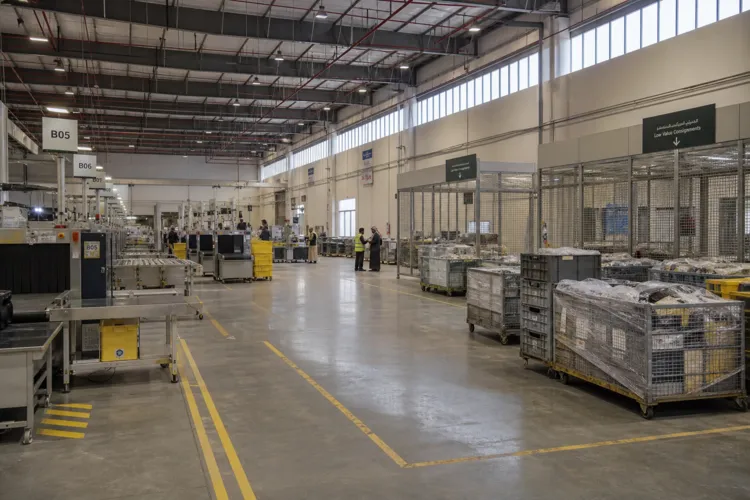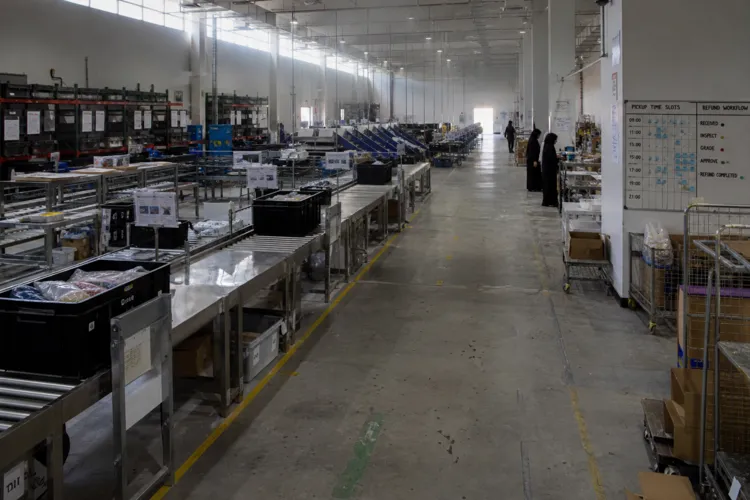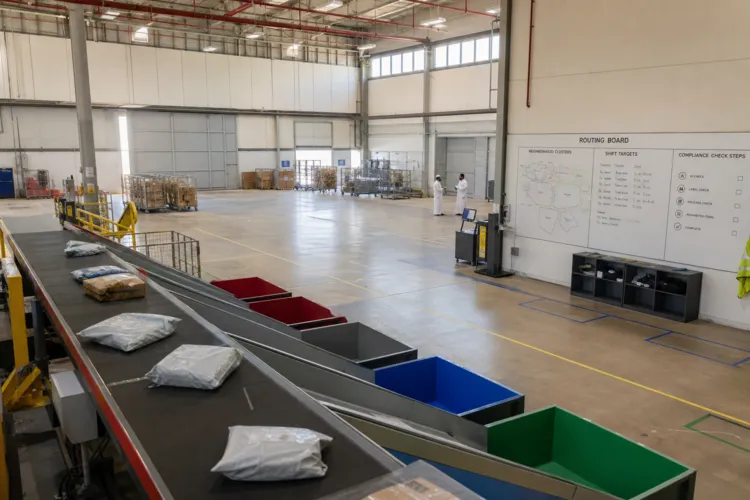
When warehouse teams talk about SAL warehouse robotics efficiency, they usually mean one thing: measurable gains that justify automation in day-to-day operations. In Saudi Arabia, that conversation is happening alongside rapid AI adoption across supply chains, supported by government-backed initiatives such as Vision 2030. MarketsandMarkets projects Saudi Arabia’s AI in supply chain market at a 26.10% CAGR by 2032, spanning logistics, procurement, warehousing, and distribution. In the same outlook, the AI in warehousing and automation segment is projected to grow at a 22.5% CAGR, signaling that robotics and AI-led decision tools are becoming strategic priorities, not experiments.
Saudi market signals also show that robotics value is being sought through software, not only hardware. IMARC Group research cited by Vocal Media puts the Saudi industrial robotics software market at USD 238.8 million in 2025, with an expectation of USD 1,254.1 million by 2034 and a 20.24% CAGR during 2026–2034. The same source describes AI-enabled operational effects in the Kingdom, including throughput improvements of 40% in logistics warehouses and assembly lines, plus predictive maintenance benefits such as extending equipment lifespan by 30% in petrochemical and metals manufacturing operations. These figures matter for warehouses because they point to a recurring theme: optimization comes from orchestrating workflows, maintenance, and performance analytics together.
What the Broader Benchmarks Say About Warehouse Robotics Results
Several benchmarks help frame what “efficiency” can look like once robotics and AI are deployed, but the scope of each statistic matters. In Saudi Arabia, an IMARC press release on the logistics automation market notes that predictive maintenance powered by AI cuts equipment downtime by around 20%, supporting smoother warehouse and transport operations. The same release reports that smart warehouses in Saudi Arabia can boost storage capacity by up to 70% within the same floor space using automated storage and retrieval systems, while reducing workforce needs from 20–25 employees to 1–2 and enabling 24/7 operations. Separately, it notes an Aramex AI-driven robotic hub in Jeddah that processes thousands of shipments daily using guided vehicles, framed as improving speed while reducing waste and emissions.
Global context can also help set expectations, as long as it is not mistaken for Saudi-specific outcomes. SellersCommerce reports that warehouses adopting automation have seen a 35% increase in productivity, and that facilities using robotics experience efficiency increases of approximately 30%, with some seeing a 25–30% increase in operational efficiency within their first year. The same source also cites 25–30% reductions in labor costs and accuracy rates approaching 99% for companies embracing automation, and lists U.S.-specific labor context such as wages accounting for 44.2% of costs in the U.S. Public Storage & Warehousing industry and a 36% turnover rate for warehouse workers. These comparisons underscore why Saudi operators may focus on robotics to stabilize performance when labor and service demands tighten.
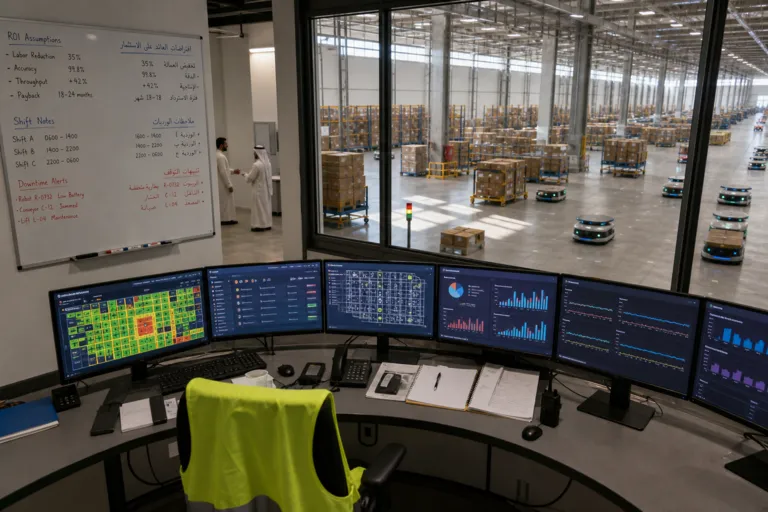
The final takeaway is that “efficiency gains” are increasingly evaluated through payback time and operating cost levers. Worldmetrics reports ROI on AI robots achieved in 12–18 months, along with AI inventory optimization saving 15% on holding costs and predictive maintenance with AI cutting repair costs by 25%. MarketsandMarkets also highlights that IoT sensors combined with AI reduced lost or damaged shipments by 15% (as presented in its Saudi supply chain context), reinforcing that AI value often appears in fewer errors and exceptions, not only faster picks. At the same time, MarketsandMarkets flags constraints that can slow deployments in Saudi Arabia, including high implementation costs, a shortage of AI specialists and data scientists, and data privacy and security concerns that require robust cybersecurity measures.
What does SAL warehouse robotics efficiency imply for Saudi warehouse strategy?
Which Saudi benchmarks show how automation changes warehouse operations?
How much can AI predictive maintenance improve warehouse uptime in Saudi Arabia?
What ROI timeline is commonly cited for AI robots in warehouses?
What can global warehouse automation data suggest as a comparison point?
Talk to us for your needs in:
- Identifying Suitable Warehouse Sites in Saudi Arabia
- Customized Logistics and Supply Chain Analytics
- Logistics Network Design and Optimization
- Green Supply Chain and Sustainable Logistics Solutions
- Supply Chain Risk Management and Compliance
- Advanced Supply Chain Resilience and Agility
- Logistics Market Research and Strategic Analysis
- In-Depth Market Survey for Logistics
- Market Intelligence and Insights in Logistics
- Feasibility Study and Assessment in Logistics
- Integrated Warehousing Management Solutions
- Smart Warehousing and Automation Systems
- Sustainable and Green Warehousing Practices
- Port and Airport Logistics Optimization
- Digital Logistics Solutions
- Saudi Logistics Benchmarking