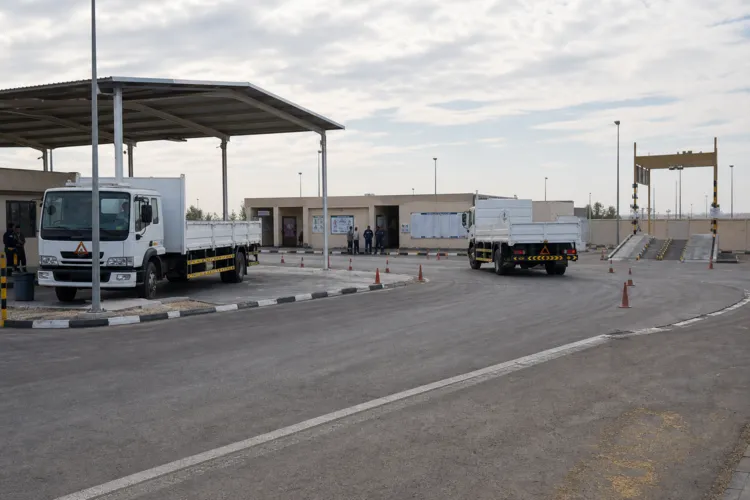
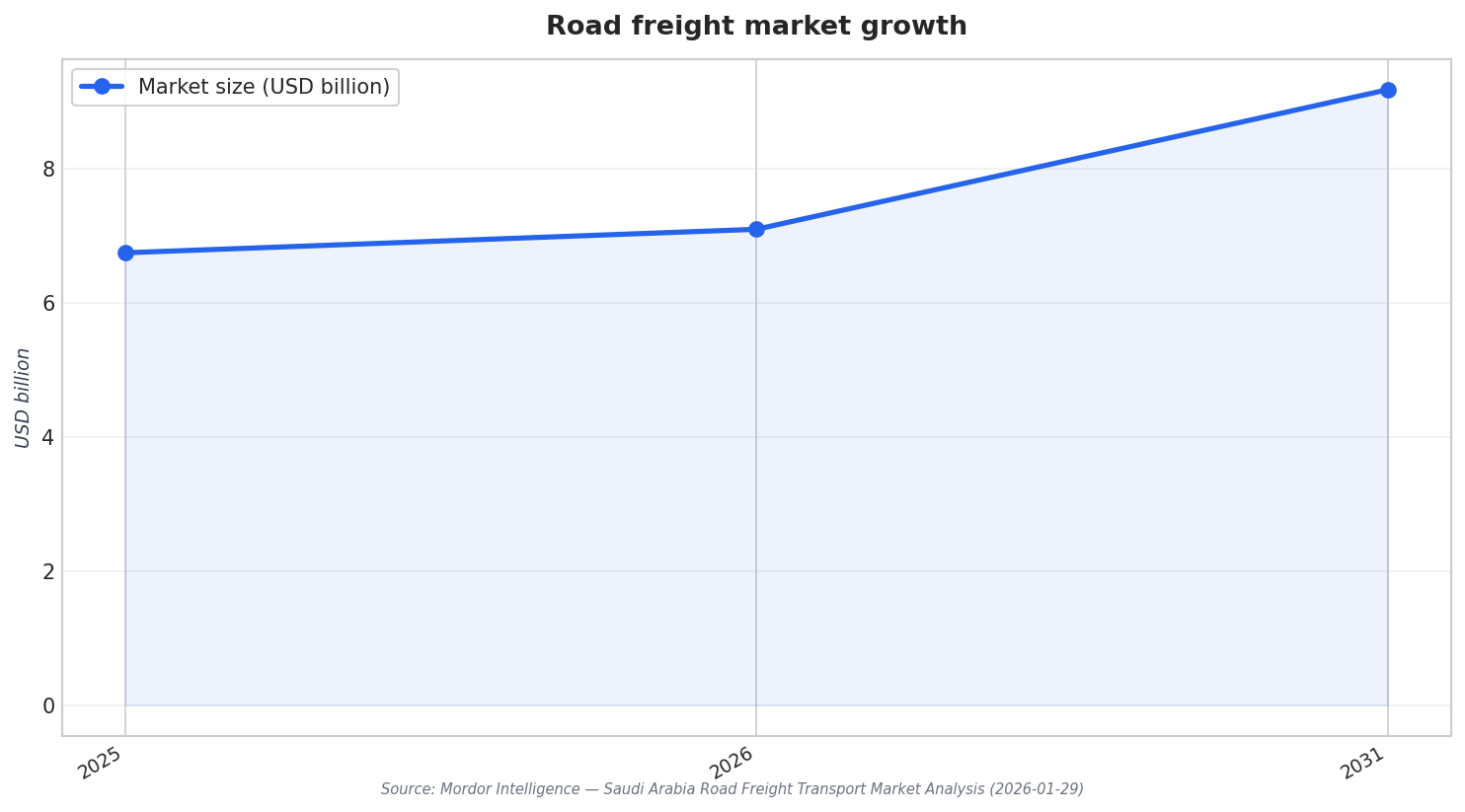
Saudi Arabia’s road freight system is growing and getting more complex at the same time that operators report a shortage of drivers. Mordor Intelligence expects the Saudi Arabia road freight transport market to rise from USD 6.74 billion in 2025 to USD 7.09 billion in 2026, and to reach USD 9.17 billion by 2031, a 5.27% CAGR over 2026–2031. The same source notes that Saudization wage floors, driver shortages, and congestion on the Riyadh–Dammam–Jeddah triangle elevate operating costs. This combination makes a practical case for nationalized training that creates job-ready Saudi drivers with consistent standards, not just more hiring pressure.
The demand signal is also visible in truck markets that depend directly on long-haul and project logistics. Mordor Intelligence values Saudi Arabia’s heavy-duty truck market at USD 8.76 billion in 2025 and forecasts USD 13.74 billion by 2030, implying a 9.57% CAGR. It ties demand to Vision 2030 spending, long-haul logistics expansion, and specialized equipment needs linked to giga-projects such as NEOM and Qiddiya and mining activity. When equipment supply and freight volumes rise together, the workforce constraint becomes operational: the fleet may be available, but utilization and service levels depend on having enough trained, safety-ready drivers.
Why Nationalized Academies Fit the Freight Mix Saudi Arabia Is Building
Saudi Arabia’s freight mix increasingly rewards structured, standardized training. Domestic movements represented 61.25% of the road freight market in 2025, while long-haul captured 71.66% share, reflecting the Kingdom’s 73,000 km highway grid, according to Mordor Intelligence. Full-truck-load dominated at 78.42% share in 2025, while less-than-truck-load is expected to expand at a 5.78% CAGR between 2026 and 2031 as shipment fragmentation rises. A national academy model can align curricula to these realities—long-haul fatigue management, route discipline, and load handling—while embedding technology use as digital freight-matching platforms and fleet modernization policies reshape dispatch and asset utilization.
National academies can also target the segments where skill requirements are most demanding and where shortages are repeatedly noted. Mobility Foresights states that many regions in Saudi Arabia face shortages of skilled truck drivers, in the context of a heavy commercial vehicle market projected to grow from USD 209.5 billion in 2025 to USD 296.4 billion by 2032, at around 5.0% CAGR. Mordor Intelligence adds that the above-40 t truck segment is projected to record a 10.29% CAGR through 2030, reflecting high-capacity haulage needs. Training pipelines designed around heavy and specialized operations—plus consistent assessment—help raise readiness for the exact vehicle classes and applications expanding fastest.
Finally, academies should be built to improve retention and compliance, not only initial recruitment. A 2026 industry note from FinditParts argues that driver shortage dynamics are often linked to retention, working conditions, and an aging workforce, and it highlights that in many markets more than half of companies report “severe” difficulty filling driver positions; it also points to licensing, safety mandates, and compliance requirements as time-and-cost barriers. While that evidence is not Saudi-specific, it is a useful design cue: Saudi truck driver Saudization academies can reduce friction by standardizing instruction, emphasizing safety and compliance from day one, and preparing trainees for modern fleet practices such as telematics and tracking that are increasingly common in heavy trucks across Saudi Arabia.
Why is Saudi Arabia focusing on national driver training academies now?
What freight patterns should academy curricula prioritize?
How do heavy-duty truck trends affect training needs in the Kingdom?
How can Saudi truck driver Saudization academies help beyond recruitment?
Talk to us for your needs in:
- Identifying Suitable Warehouse Sites in Saudi Arabia
- Customized Logistics and Supply Chain Analytics
- Logistics Network Design and Optimization
- Green Supply Chain and Sustainable Logistics Solutions
- Supply Chain Risk Management and Compliance
- Advanced Supply Chain Resilience and Agility
- Logistics Market Research and Strategic Analysis
- In-Depth Market Survey for Logistics
- Market Intelligence and Insights in Logistics
- Feasibility Study and Assessment in Logistics
- Integrated Warehousing Management Solutions
- Smart Warehousing and Automation Systems
- Sustainable and Green Warehousing Practices
- Port and Airport Logistics Optimization
- Digital Logistics Solutions
- Saudi Logistics Benchmarking