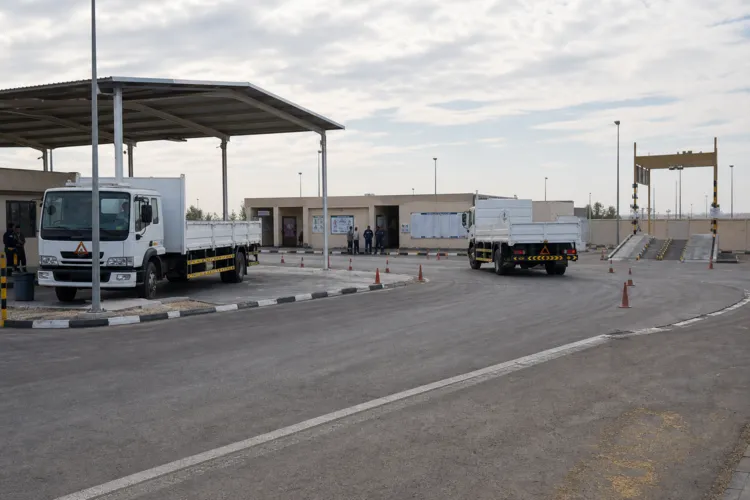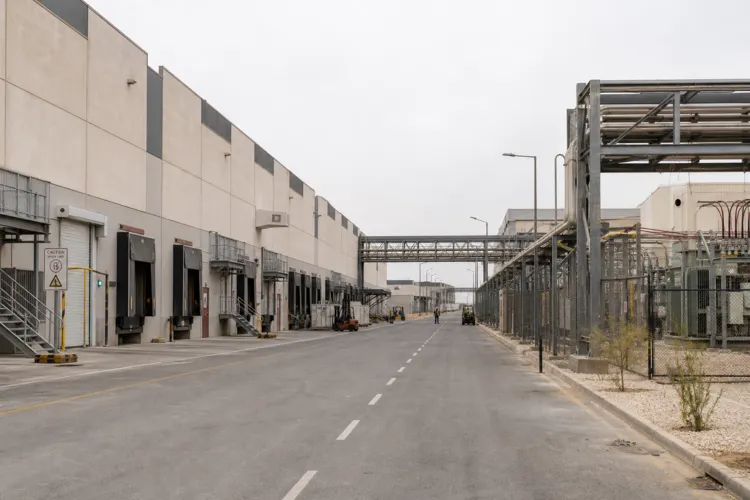
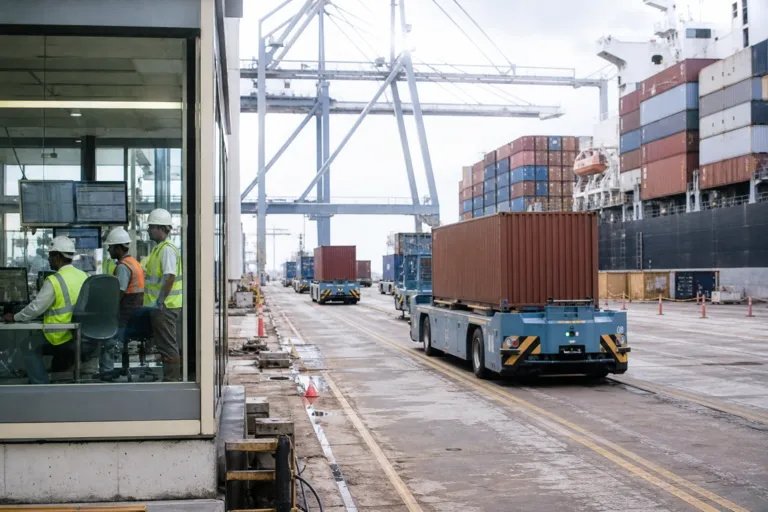
Oxagon is NEOM’s industrial and logistics arm on the Red Sea coast, in northwest Saudi Arabia. It is positioned as a gateway between Asia, Africa, Europe, and the Middle East, but it is not described as a finished city. The confirmed reality is that the Port of NEOM is already operating, receiving cargo and handling containers alongside bulk, RoPax, and warehousing. In that context, an Oxagon automated container terminal going live ahead of 2030 targets is best understood as a practical logistics step inside an industrial activation plan, not as a symbolic milestone alone.
Several timelines in the available reporting converge on 2026 as the operational pivot year for container capabilities. One analysis describes a Terminal 1 container expansion framed for 2026, while another notes that full container terminal operations are targeted for 2026. That same reporting ties the port’s longer runway to a 1.5 million TEU capacity target by 2030, with the Port of Oxagon described as having 7 berths. The combination of an operating port now and a 2026 target for full container terminal operations explains why an “early” go-live narrative can align with the 2030 capacity goal.
Why Automation Matters More as the Port Scales
Automation in container terminals is already a material part of global port activity, which is why an industrial-city port like Oxagon would prioritize it as throughput scales. One market source states that automated container terminals process approximately 40% of global container traffic in major ports, and that operational efficiency improvements can reach up to 30% with technologies such as automated stacking cranes and remote-controlled gantry cranes. The same source also reports a 68% increase in container throughput handled by automated terminals globally since 2018. These are global figures, but they help explain the operational logic behind pushing automation earlier in Oxagon’s ramp-up.
Software, integration, and terminal operating systems (TOS) sit behind the visible equipment. A TOS market projection cited in the sources expects a CAGR of 6% from 2025 to 2030, linked to rising trade, automation, and technology upgrades that enable real-time tracking and yard management. Separately, an automated container terminal market report projects software and integration services reaching a 55.7% share over 2026–2035, reflecting how complex automated operations depend on integration work as much as cranes or vehicles. For Oxagon, this makes “going live” as much about systems readiness as it is about berth-side activity.
On the infrastructure side, the port build-out is also framed as an electrification and investment story. One source states that SR7.5 billion ($2 billion) has been invested in sustainable all-electric port operations. It also describes an active Trieste–Damietta–Safaga–NEOM multimodal corridor used by importers in Italy, the United Kingdom, Germany, and Poland, positioning Oxagon as a node on a working route rather than a purely planned one. Alongside the stated 7 berths and 1.5 million TEU capacity target by 2030, these details anchor the near-term operational story in tangible commitments and active flows.
Where is Oxagon located, and what is already operating today?
What is the 2030 capacity target for Oxagon’s container port operations?
When are full container terminal operations expected to be in place at Oxagon?
How does an Oxagon automated container terminal fit the global automation trend?
What investment has been reported for all-electric port operations tied to Oxagon?
Talk to us for your needs in:
- Identifying Suitable Warehouse Sites in Saudi Arabia
- Customized Logistics and Supply Chain Analytics
- Logistics Network Design and Optimization
- Green Supply Chain and Sustainable Logistics Solutions
- Supply Chain Risk Management and Compliance
- Advanced Supply Chain Resilience and Agility
- Logistics Market Research and Strategic Analysis
- In-Depth Market Survey for Logistics
- Market Intelligence and Insights in Logistics
- Feasibility Study and Assessment in Logistics
- Integrated Warehousing Management Solutions
- Smart Warehousing and Automation Systems
- Sustainable and Green Warehousing Practices
- Port and Airport Logistics Optimization
- Digital Logistics Solutions
- Saudi Logistics Benchmarking