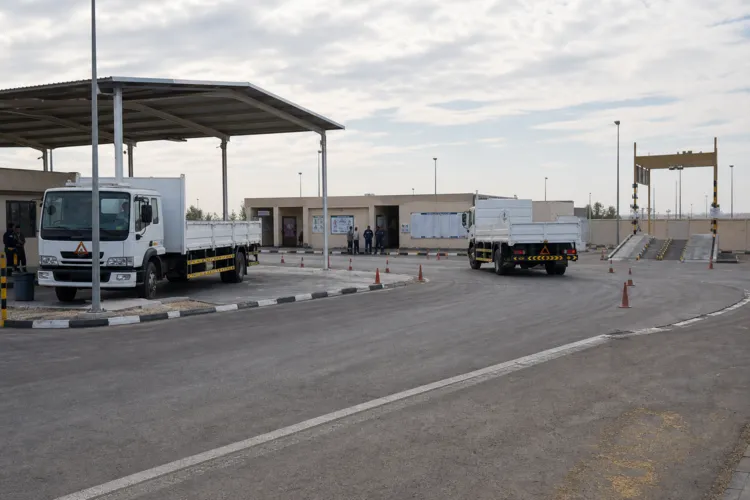
Hajj 2026 smart transport logistics is now live, with Saudi authorities moving from planning to real operations across air, rail, and road networks. The goal is simple: keep pilgrim movement smooth and safe during the busiest days. The approach links airports, rail stations, buses, and on-the-ground logistics under one movement plan. It is designed to manage end-to-end journeys, from arrival at designated airports to return flights after the rituals.
Several transport capacity figures show the scale of the plan. Aviation readiness includes more than 3.1 million seats across 12,000 flights. Rail plans include more than 2 million riders on the Al-Mashaer Al-Mugaddasah Metro and seating capacity surpassing 2.2 million on the Haramain High-Speed Railway. On the roads, public transport is reinforced with more than 33,000 buses and 5,000 taxis.
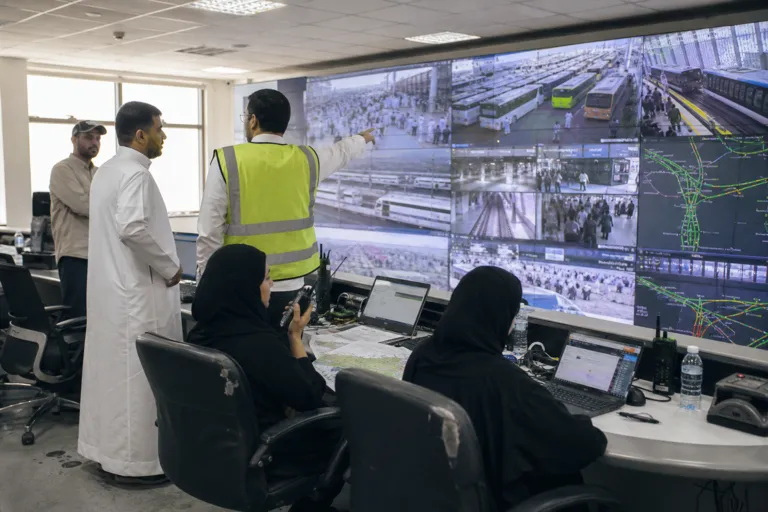
This integrated model is coordinated through central control centers that monitor traffic flows in real time. The system can adjust routes, departures, and fleet allocations as demand peaks. It also relies heavily on registered bus fleets and scheduled rail services. Authorities have increasingly discouraged informal or unlicensed vehicles, pairing traditional patrols with digital monitoring tools to identify unauthorized operations and redirect passengers to approved services.
How Air, Rail, and Roads Connect Under One Movement Plan
Air travel is organized through six designated hub airports, staffed by more than 22,000 personnel. Measures include off-site baggage check-in and expanded pre-shipment of Zamzam water to ease congestion. Airport operators have also released operating plans that guide Hajj passengers through a limited number of main gateways, with dedicated terminal flows separating Hajj traffic from regular travelers.
Rail is a core pillar. The Haramain High-Speed Railway connects Makkah, Madinah, Jeddah, King Abdullah Economic City, and King Abdulaziz International Airport. It has been programmed to operate 5,308 journeys with seating capacity surpassing 2.2 million across the Hajj period. The Al-Mashaer Al-Mugaddasah Metro is expected to carry more than 2 million riders as it moves pilgrims between specific holy sites over a few days.
Road readiness work supports the final connections to Makkah and the holy sites. Authorities reported clearing more than 56 million cubic metres of sand dunes, servicing 178,000 lighting units, and installing over 4,000 directional and warning signs. The Roads General Authority also said it is deploying what it described as the world’s largest fleet of advanced road surveying and assessment equipment. This fleet uses high-resolution cameras and laser sensors capable of detecting surface defects with precision of up to 0.05 millimeters, to speed maintenance decisions and improve readiness during peak periods.
What does “Hajj 2026 smart transport logistics” mean in practice?
How many flights and airline seats are allocated for Hajj 2026?
What rail services are highlighted in the Hajj 2026 movement plan?
How many buses and taxis are planned for ground transport?
What road upgrades support safer movement during Hajj 2026?
Talk to us for your needs in:
- Identifying Suitable Warehouse Sites in Saudi Arabia
- Customized Logistics and Supply Chain Analytics
- Logistics Network Design and Optimization
- Green Supply Chain and Sustainable Logistics Solutions
- Supply Chain Risk Management and Compliance
- Advanced Supply Chain Resilience and Agility
- Logistics Market Research and Strategic Analysis
- In-Depth Market Survey for Logistics
- Market Intelligence and Insights in Logistics
- Feasibility Study and Assessment in Logistics
- Integrated Warehousing Management Solutions
- Smart Warehousing and Automation Systems
- Sustainable and Green Warehousing Practices
- Port and Airport Logistics Optimization
- Digital Logistics Solutions
- Saudi Logistics Benchmarking