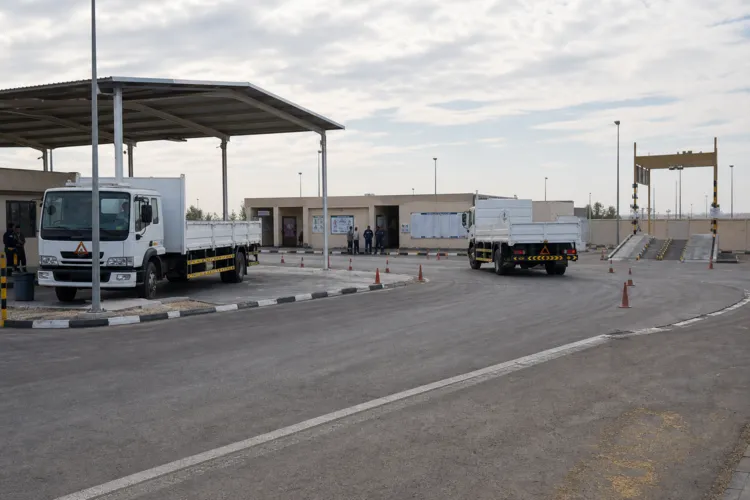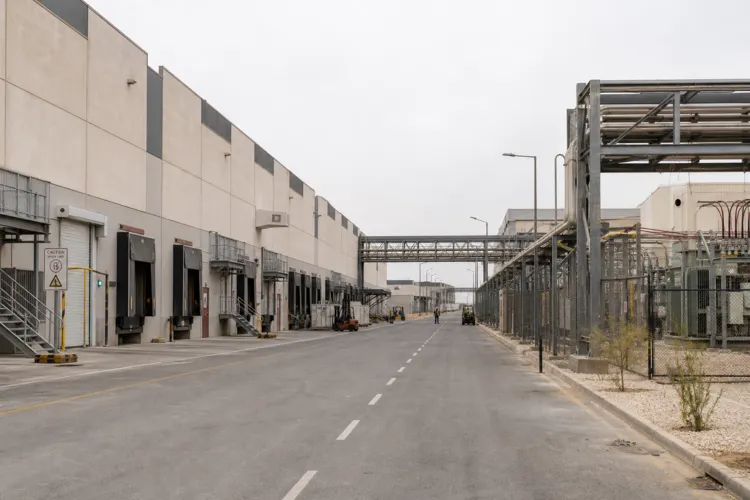
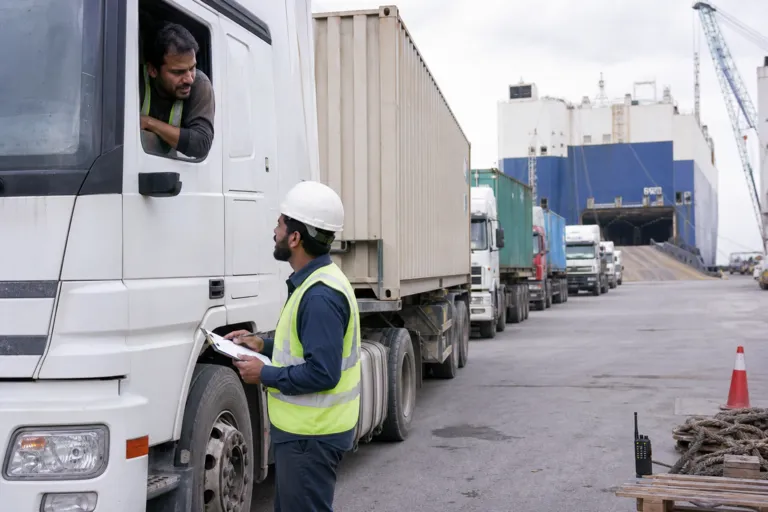
The NEOM Oxagon multimodal corridor is moving from idea to active trade lane. NEOM says it has enabled a European multimodal land bridge that lets truck-carried freight move directly from Europe to Egypt and into the Gulf via the Port of NEOM. It adds a new option beyond “only container flows” and supports critical goods, including FMCG and other time-sensitive cargo.
Several details show what makes this corridor feel “global.” NEOM stated that 13% of global trade is in close proximity to the region, and that 40% of the world is less than 6 hours away. NEOM also highlights that 3 continents converge near to NEOM. Together, these figures explain why the Port of NEOM is being positioned as a gateway for trade routes that link multiple markets.
Operationally, the corridor is being built through partnerships. Pan Marine Group launched a RoPax service between Egypt’s Port of Safaga and the Port of NEOM at the end of 2025. NEOM says European connectivity was then activated at the end of March 2026 through Pan Marine’s partnership with DFDS, a Danish international shipping and logistics company.
How the Corridor Changes Cargo Movement
The corridor is already in active use. NEOM reports importers from several European countries, including Italy, the UK, Germany, and Poland, are using the route. From NEOM, the pathway provides direct access into the UAE, Kuwait, Oman, the wider GCC, and Iraq. Another report also traced the corridor through Egypt’s ports of Damietta and Safaga, onward to NEOM Port, then overland to Kuwait, Iraq, Bahrain, Qatar, the United Arab Emirates, and Oman.
The idea builds on earlier testing. NEOM says the new pathway builds on a successful intermodal pilot in 2025 that connected Safaga to northern Saudi Arabia via Port of NEOM, then onward to Iraq via the Arar border. NEOM stated the pilot demonstrated significant reductions in transit time compared with conventional routes, supporting the case for coordinated sea and inland routing for time-sensitive shipments.
NEOM’s wider message is about reliable capacity and a stable hub. One report said NEOM stated the port is already operating at full capacity as a Red Sea hub, handling multiple cargo types with advanced infrastructure and high operational standards. Another report noted SR7.5 billion ($2 billion) invested in sustainable, all-electric operations. In NEOM’s own description, the Port of NEOM operates 24/7 and is expanding with an advanced container terminal and deeper integration with Oxagon’s industrial ecosystem.
What is the NEOM Oxagon multimodal corridor?
Which companies helped enable European connectivity on the route?
Which European countries are already using the corridor?
Which destinations can be reached after Port of NEOM on this corridor?
What investment was reported for Port of Neom’s operations?
Talk to us for your needs in:
- Identifying Suitable Warehouse Sites in Saudi Arabia
- Customized Logistics and Supply Chain Analytics
- Logistics Network Design and Optimization
- Green Supply Chain and Sustainable Logistics Solutions
- Supply Chain Risk Management and Compliance
- Advanced Supply Chain Resilience and Agility
- Logistics Market Research and Strategic Analysis
- In-Depth Market Survey for Logistics
- Market Intelligence and Insights in Logistics
- Feasibility Study and Assessment in Logistics
- Integrated Warehousing Management Solutions
- Smart Warehousing and Automation Systems
- Sustainable and Green Warehousing Practices
- Port and Airport Logistics Optimization
- Digital Logistics Solutions
- Saudi Logistics Benchmarking