Saudi Arabia is reshaping how it pursues critical minerals, and the change is visible in how Maaden and Manara Minerals are being positioned. At the Future Minerals Forum in Riyadh in January 2026, the minister of industry and mineral resources, Bandar Al-Khorayef, said the Public Investment Fund (PIF) plans to spin off Manara Minerals. Manara is PIF’s arm for buying mineral assets abroad, and it is also a joint venture in which Maaden holds 51% and PIF holds the remainder. The stated intent of the spin-off is to give Manara real technical and operational skill, rather than operating with a purely financial-investor mindset, while talks over new shareholders were underway in early 2026 with no timeline set.
The record so far helps explain the pivot. Manara was set up in 2023 to buy stakes in foreign mines and lock in supply, aiming for exposure to copper, nickel, lithium, and other metals used in electric vehicles and renewable energy. Yet within three years it had closed just one major deal: in 2024 it paid USD 2.5 billion for a 10% stake in Vale Base Metals. Other routes did not land. A planned stake in the Reko Diq copper and gold project in Pakistan stalled, and regional media reporting about talks for minority stakes in Zambian copper and nickel mines has not translated into a completed deal. In this context, the emerging focus is not simply “buy more mines,” but to build a workable Saudi-centered chain of processing and movement.
From Overseas Stakes to Saudi Processing and Export Logistics
The centerpiece of the shift is domestic processing, which changes the logistics question from moving ore ownership on paper to moving material through Saudi-based industrial nodes. Under a deal reached in Washington in November 2025, Saudi Arabia agreed to a rare earth refining and separation plant with the American producer MP Materials and the United States Department of War. Maaden will hold at least 51% of the venture, while MP Materials and the US government will hold a targeted 49%, with the Department of War financing the US share on a non-recourse basis. MP Materials is described as the only fully integrated rare earth producer in the United States and is expected to supply technical and marketing know-how. The partners are also discussing possible magnet manufacturing in the kingdom, extending the idea of local capability beyond a single processing step.
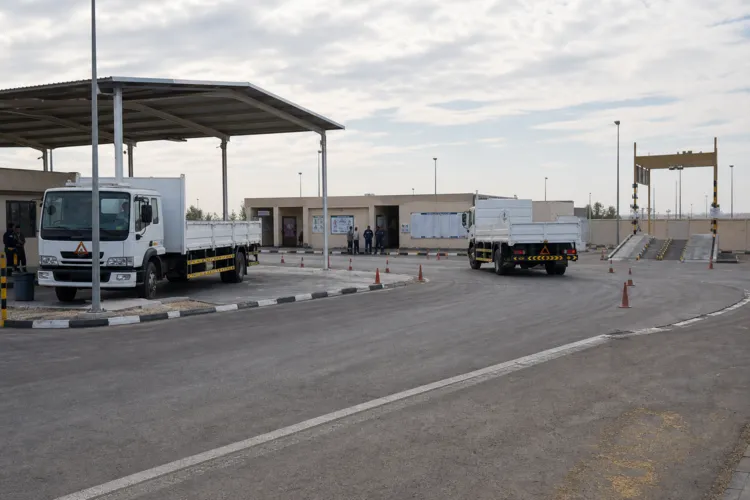
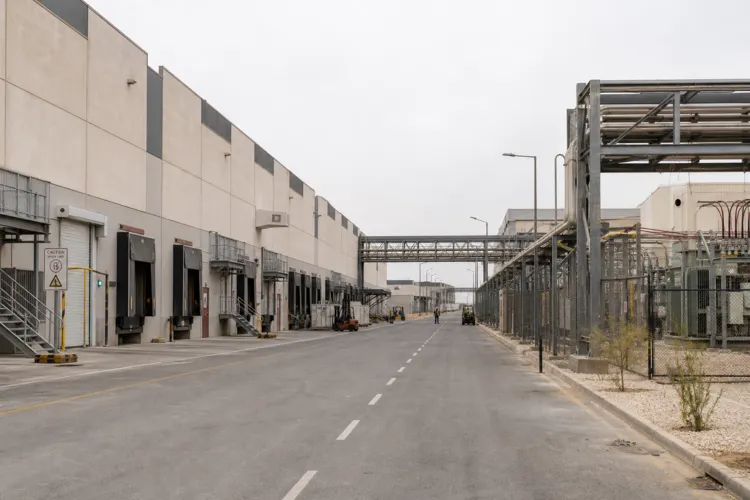
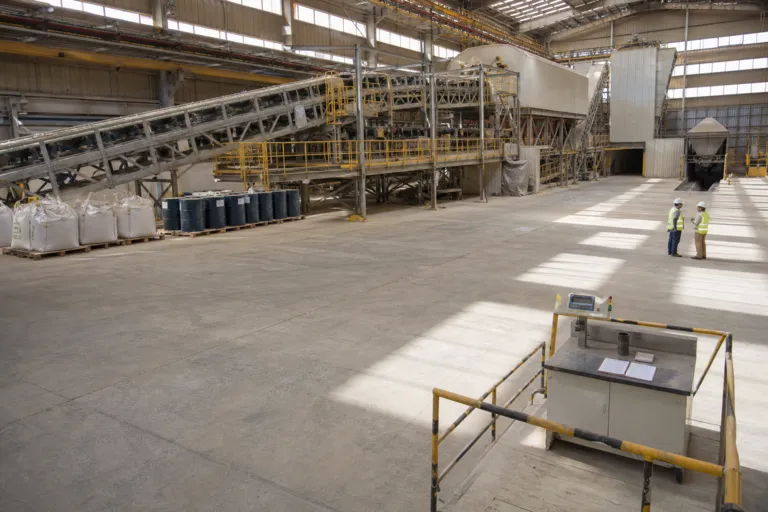
Maaden’s operating model provides the template for how a new mining logistics network can be assembled around processing hubs. Company profiles describe Maaden as a portfolio of integrated mining-to-processing systems rather than a collection of stand-alone mines, built on mine-to-processing integration, export logistics, and a partnership model that shares risk and technical capability on capital-intensive projects. In phosphate, for example, phosphate rock is mined in northern Saudi Arabia and transported through major logistics infrastructure to processing hubs where it is converted into a chain of products including phosphoric acid, sulfuric acid, ammonia-based intermediates, and finished fertilizer products. Separate commentary on Maaden highlights dedicated rail and port, integrated logistics, and offtake agreements that reduce time-to-market—elements that become even more central when processing ambitions expand into energy-transition materials.
Put together, Maaden’s integrated systems and Manara’s international mandate form the outline of a Manara Minerals supply chain that is being rebalanced around Saudi industrial conversion and outbound routes. PIF’s scale also frames the governance backdrop: it manages about USD 925 billion in assets, and Maaden is itself 67% owned by the fund. Meanwhile, Saudi Arabia has signaled wider cooperation channels, including memorandums of understanding signed at the Future Minerals Forum in 2024 with the DRC, Egypt, and Morocco to explore cooperation in “the field of mineral wealth.” The practical implication is a network logic: use partnerships to bring know-how into Saudi processing, use integrated logistics to move inputs to hubs, and use export logistics to reach global buyers, rather than relying mainly on minority stakes in distant mines.
How is Saudi Arabia changing its critical minerals strategy?
What major overseas deal has Manara Minerals completed so far?
Who owns Manara Minerals, and why does the planned spin-off matter?
What does the rare earth project’s ownership structure look like?
How does the Manara Minerals supply chain connect to Maaden’s logistics model?
Talk to us for your needs in:
- Identifying Suitable Warehouse Sites in Saudi Arabia
- Customized Logistics and Supply Chain Analytics
- Logistics Network Design and Optimization
- Green Supply Chain and Sustainable Logistics Solutions
- Supply Chain Risk Management and Compliance
- Advanced Supply Chain Resilience and Agility
- Logistics Market Research and Strategic Analysis
- In-Depth Market Survey for Logistics
- Market Intelligence and Insights in Logistics
- Feasibility Study and Assessment in Logistics
- Integrated Warehousing Management Solutions
- Smart Warehousing and Automation Systems
- Sustainable and Green Warehousing Practices
- Port and Airport Logistics Optimization
- Digital Logistics Solutions
- Saudi Logistics Benchmarking