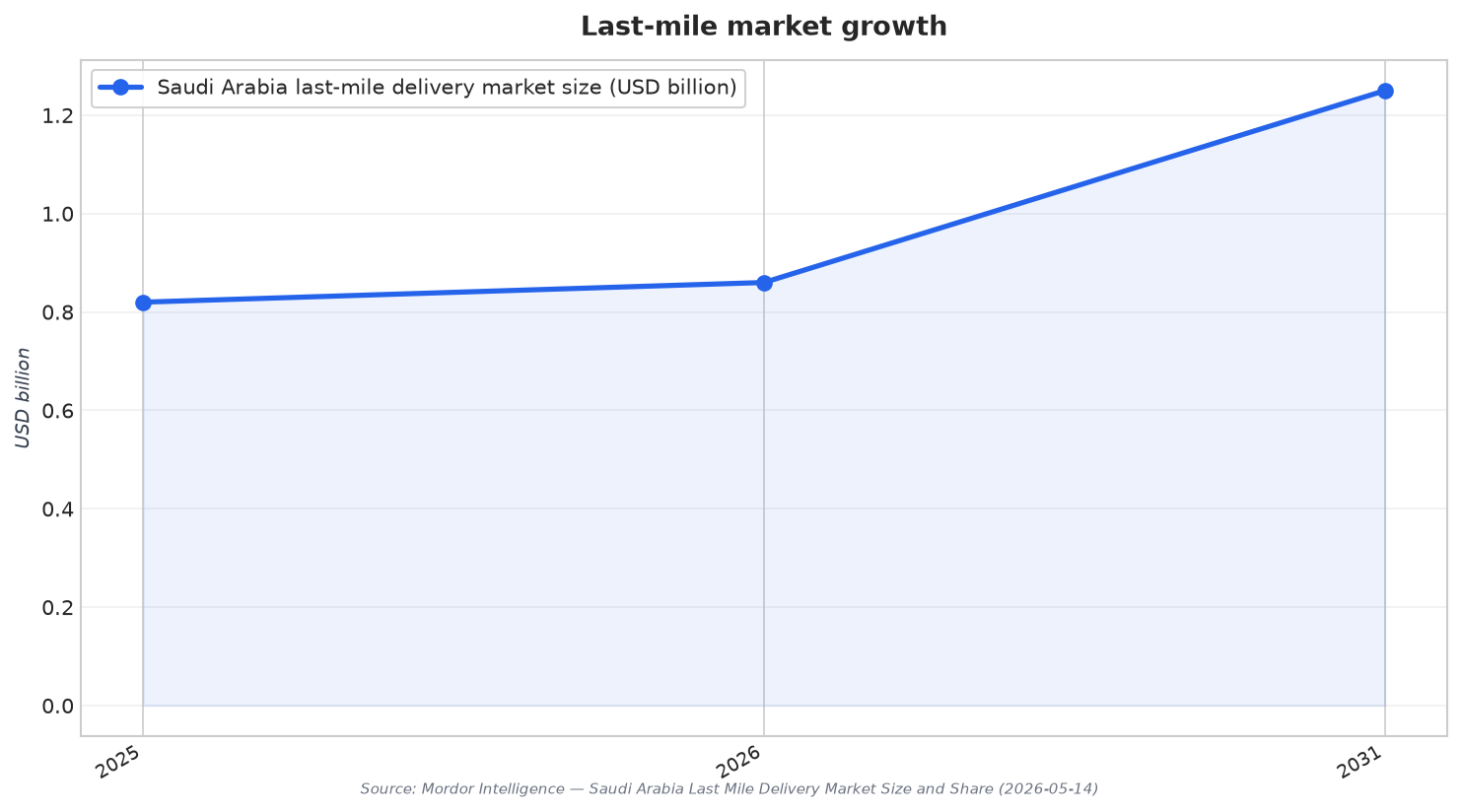
Electrifying last-mile fleets in Riyadh is moving from pilot thinking to operational planning, especially as e-commerce volumes reshape route density. Saudi Arabia’s last-mile delivery market is projected at USD 0.86 billion in 2026 and is forecast to reach USD 1.25 billion by 2031, growing at a CAGR of 7.81% from 2026 to 2031. The demand shock is visible in transaction counts: e-commerce orders climbed 49% year-on-year to 118 million transactions in Q1 2026, and Riyadh alone generated 44% of orders. That concentration favors short, repeatable routes where electric light commercial vehicles (eLCVs) can be scheduled precisely.
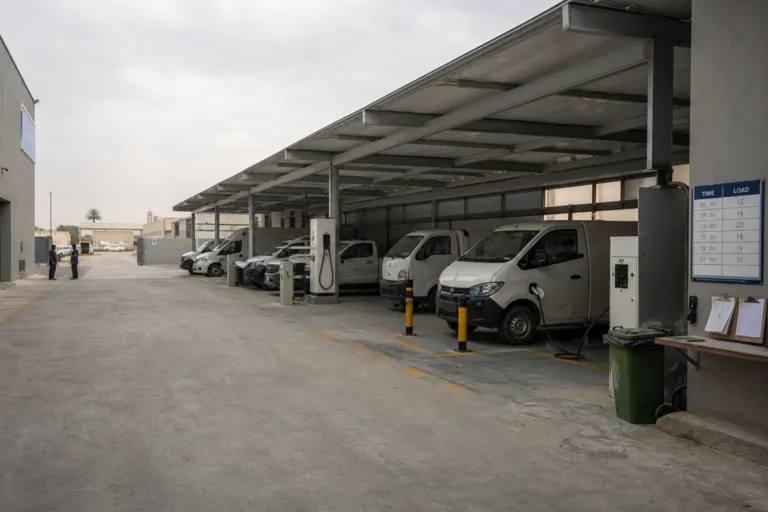
On the vehicle side, the Saudi Arabia eLCV market is projected to grow from an estimated 1,200–1,800 units in 2026 to 18,000–25,000 units annually by 2035, implying a 30–35% CAGR. IndexBox also estimates last-mile delivery and parcel logistics account for about 55–65% of total eLCV demand in 2026, with panel vans and light chassis cabs as dominant segments for dense routes in Riyadh, Jeddah, and Dammam. This aligns with a Saudi electric delivery fleet strategy that prioritizes predictable urban loops, tighter stop spacing, and depot-based charging patterns over intercity utilization.
What Will Make or Break Riyadh’s Fleet Electrification Plans
Infrastructure and operating conditions are the main gating factors. IndexBox notes fewer than 600 publicly accessible DC fast-charging points suitable for eLCVs across the Kingdom in early 2026, constraining operational range and adoption beyond core urban routes. Other market research cites “only 1,200 public stations” as a charging constraint for commercial electrification, underscoring that infrastructure figures vary by definition and scope. Meanwhile, ambient conditions matter in Riyadh operations: summer temperatures can exceed 50°C, and high heat is estimated to degrade battery cycle life by 15–25% versus temperate markets. That pushes thermal-management requirements that add 8–12% to purchase costs.
Fleet economics are also shaped by financing friction and supply structure. IndexBox reports import dependence remains above 90% in 2026, with China and Europe supplying most fully built eLCVs, while local assembly initiatives under Saudi Vision 2030 are expected to shift 25–35% of supply to domestic CKD/SKD operations by 2030. For operators, leasing terms can be a barrier: higher upfront lease rates are cited at a 20–30% premium over diesel equivalents due to financing and residual value uncertainty. At the same time, battery pack costs for eLCVs are declining by 8–12% year-on-year, and LFP chemistries are gaining preference for fleet applications because of total cost of ownership and improved thermal performance in high ambient temperatures.
Supporting ecosystems are scaling in parallel, which matters after procurement announcements and vehicle rollouts because uptime becomes the new differentiator. The Saudi Arabia electric commercial vehicle MRO market is forecast to expand from USD 45–65 million in 2026 to USD 450–650 million by 2035, tracking growth in an electric commercial vehicle fleet projected at 80,000–120,000 units by 2035. In 2026, electric light commercial vehicles and vans represent about 20–25% of MRO demand, linked to last-mile delivery operators and municipal service fleets. This is reinforced by broader momentum in electrification: electric vehicle registrations increased 425% between 2021 and 2023, rising from 375 vehicles in 2021 to over 12,000 by end-2023, alongside charging expansion reported as growing from 150 public charging stations in 2022 to over 1,000 by early 2024.
How fast is Saudi Arabia’s eLCV market expected to grow for last-mile use?
What do the latest e-commerce figures imply for Riyadh delivery routing?
What are the biggest operational constraints on a Saudi electric delivery fleet in Riyadh?
How do financing and supply-chain factors affect electrification decisions?
Is the aftermarket ready to support more electric commercial vehicles?
Talk to us for your needs in:
- Identifying Suitable Warehouse Sites in Saudi Arabia
- Customized Logistics and Supply Chain Analytics
- Logistics Network Design and Optimization
- Green Supply Chain and Sustainable Logistics Solutions
- Supply Chain Risk Management and Compliance
- Advanced Supply Chain Resilience and Agility
- Logistics Market Research and Strategic Analysis
- In-Depth Market Survey for Logistics
- Market Intelligence and Insights in Logistics
- Feasibility Study and Assessment in Logistics
- Integrated Warehousing Management Solutions
- Smart Warehousing and Automation Systems
- Sustainable and Green Warehousing Practices
- Port and Airport Logistics Optimization
- Digital Logistics Solutions
- Saudi Logistics Benchmarking