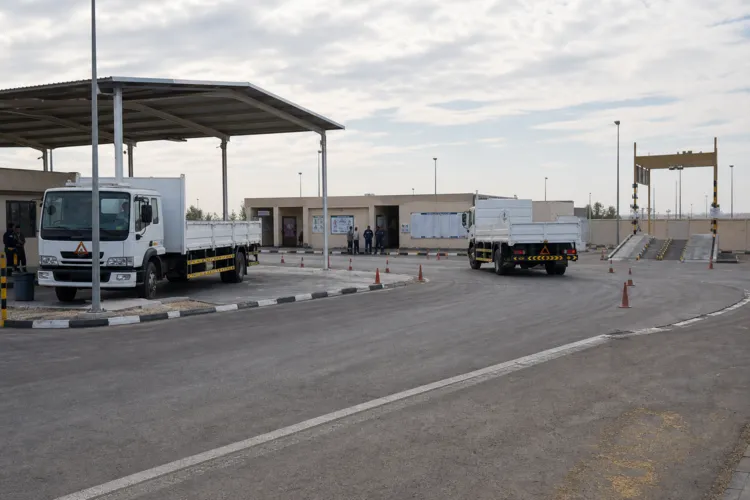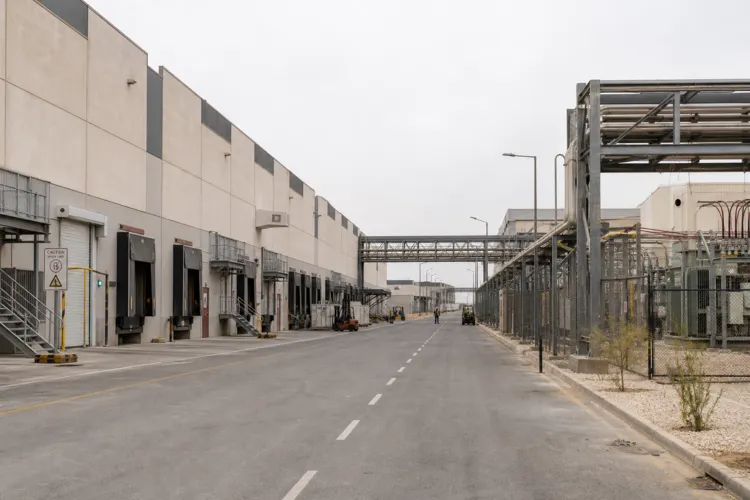
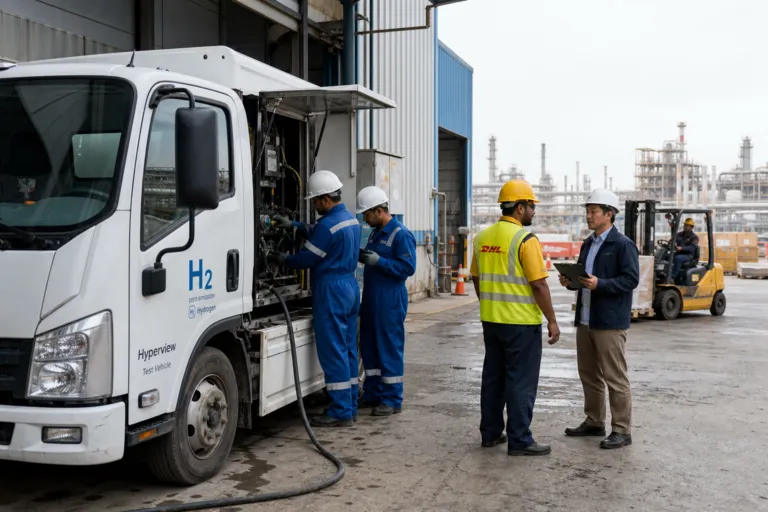
The phrase “DHL hydrogen truck Saudi Arabia” sits inside a bigger story about how DHL approaches freight decarbonization across modes. DHL’s GoGreen Plus products are positioned as “true value chain decarbonization” and are enabled by a “book & claim” approach. Book & claim is described as a way for DHL to replace fossil fuels with sustainable fuels within its network and allocate environmental benefits to paying customers, even when a customer’s own shipment is not physically moved using those fuels. In road freight, pilots matter because they create operational proof points that can later sit alongside mechanisms like GoGreen Plus. A Hyperview pilot of hydrogen trucks in Jubail fits that pattern: test a lower-carbon technology in real operations, then integrate learnings into a scalable decarbonization offer.
DHL’s publicly described decarbonization actions show why a hydrogen-truck pilot can be framed as part of an end-to-end strategy. In ocean freight, DHL Global Forwarding and CMA CGM agreed to jointly use 8,990 metric tons of UCOME second-generation biofuel. The same source estimates this enables a 25,000 metric tons of CO2e well-to-wake emission reduction for ocean freight transported under DHL’s GoGreen Plus service. In another ocean-freight collaboration, DHL and Henkel expanded sustainable marine fuel via GoGreen Plus and book & claim, covering 9,000 TEUs in 2025. DHL and Henkel stated that this volume of freight is projected to reduce GHG emissions by approximately 4,700 tonnes of CO2e, described as an estimated 85% reduction in GHG emissions on the main haul versus conventional marine fuel.
Why a Jubail Hydrogen Pilot Fits DHL’s Road-Freight Trajectory
Road freight is a critical part of the emissions picture that logistics teams have to manage alongside air and ocean. A DHL Supply Chain update in North America stated that most of DHL’s emissions are due to air transport, while ground freight comes second at 22%, according to a 2024 report cited in the same coverage. That context helps explain the strategic role of a Jubail hydrogen pilot with Hyperview: decarbonizing road freight can materially influence the second-largest emissions bucket cited there. DHL also reports progress and targets on fleet transition. It planned to make two-thirds of its fleet EVs by 2030, and those vehicles already make up over 41% of that breakdown. It also reported the use of renewable energy sources among ground freight increased from 12.7% to 18.4% from 2023 to 2024.
Hydrogen truck pilots are often positioned around heavy-duty use cases where range and refuelling characteristics matter. A case study describing a hydrogen fuel-cell truck used for internal logistics operations at a Bosch plant in Nuremberg, Germany, outlines the type of performance parameters operators track. That vehicle uses hydrogen stored in five onboard tanks at 700 bar, has a gross weight rating of 44 metric tons, and is described with a range of up to 800 kilometres with refuelling times comparable to diesel vehicles. The same source notes a Bosch fuel-cell power module with total output exceeding 200 kW and a total system output around 400 kW due to batteries acting as energy buffers. For a Jubail pilot, these are the kinds of real-world attributes—range, load, and refuelling practicality—that can define whether hydrogen can complement electrification on specific routes.
DHL also appears in hydrogen-focused trials in Europe, which reinforces the idea that a Jubail pilot is not an isolated experiment. Daimler Truck began a second phase of customer trials for the Mercedes-Benz GenH2 Truck, and DHL Supply Chain is named as one of five additional partner companies, with deployments planned for about one year. In parallel, other reporting describes hydrogen progress and scale-up pathways: Daimler Truck said a prototype GenH2 Truck completed a 1,047km journey across Germany on a single tank of liquid hydrogen under real-world conditions, and initial customer trials with a fleet of five GenH2 Trucks collectively covered more than 225,000km in actual operations. Those kinds of trial structures and operational results create a practical template for what a Jubail “Hyperview pilot” needs to measure and prove, even while the accounting and customer-facing programs sit under GoGreen Plus and book & claim.
What does “DHL hydrogen truck Saudi Arabia” imply in the Jubail context?
What is DHL’s book & claim approach in GoGreen Plus?
How big is ground freight in DHL’s emissions profile in the cited reporting?
What measurable decarbonization results has DHL reported in ocean freight?
What operational metrics are highlighted for a hydrogen fuel-cell truck in the provided sources?
Talk to us for your needs in:
- Identifying Suitable Warehouse Sites in Saudi Arabia
- Customized Logistics and Supply Chain Analytics
- Logistics Network Design and Optimization
- Green Supply Chain and Sustainable Logistics Solutions
- Supply Chain Risk Management and Compliance
- Advanced Supply Chain Resilience and Agility
- Logistics Market Research and Strategic Analysis
- In-Depth Market Survey for Logistics
- Market Intelligence and Insights in Logistics
- Feasibility Study and Assessment in Logistics
- Integrated Warehousing Management Solutions
- Smart Warehousing and Automation Systems
- Sustainable and Green Warehousing Practices
- Port and Airport Logistics Optimization
- Digital Logistics Solutions
- Saudi Logistics Benchmarking