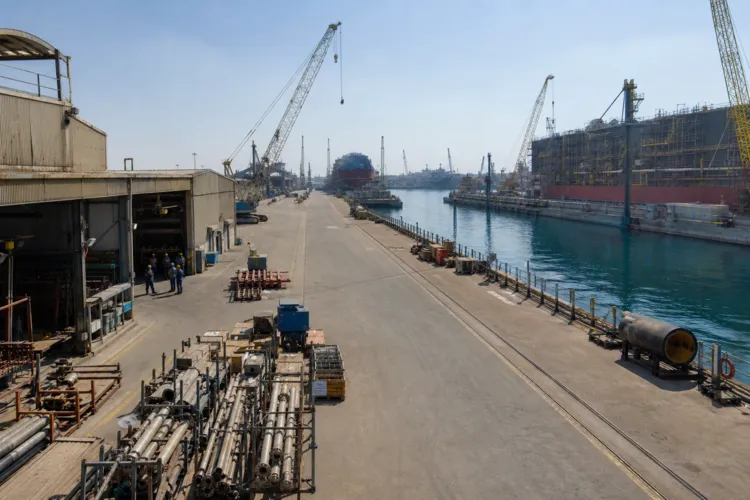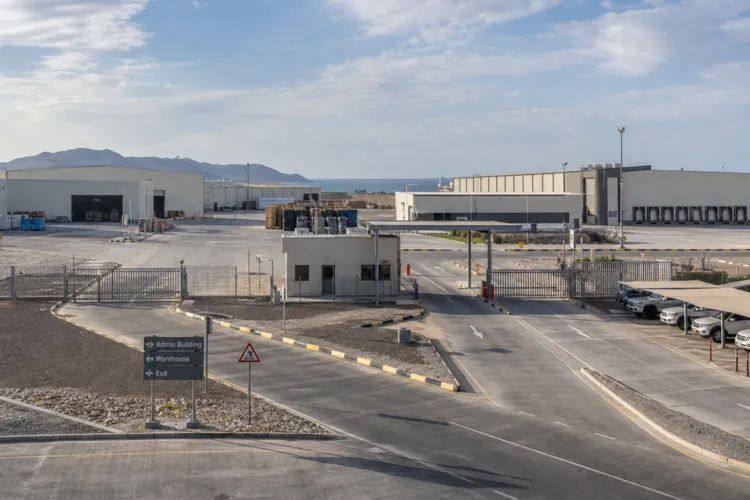

Managing Saudi Red Sea port congestion in 2026 starts with accepting that network volatility is the core problem. After more than two years of disruption, carriers are only gradually returning to Red Sea and Suez transits, and many services remain cautious. At the same time, the Strait of Hormuz crisis that began on February 28, 2026 has kept the strait effectively closed as of April 12, 2026, with disruption expected to persist through the remainder of 2026. When routing options narrow, cargo concentrates at accessible entry points, and the operational consequence is simple: more waiting time, more missed appointments, and more exposure to demurrage and detention.
For Red Sea-side Saudi logistics, the stakes rise because diversion patterns are pushing demand toward ports that can still be reached. One market update noted that Jeddah on Saudi Arabia’s Red Sea coast is currently among the most accessible Middle East ports for cargo coming via the Cape of Good Hope. The same update warned that congestion is building at accessible alternatives as rerouted cargo concentrates on a smaller number of entry points. That is the backdrop for demurrage control: many ports offer only day five to seven of free time before demurrage and detention charges begin accumulating, so even a short delay can flip a routine move into a cost event.
How to Reduce Demurrage Risk When Routes and Schedules Shift
Start by planning for longer and less predictable ocean cycles rather than chasing theoretical speed. Multiple 2026 advisories emphasize that reliability is more valuable than speed, because “fast delivery” can disrupt inland transport, demurrage and detention management, and warehousing if the whole chain is not coordinated. This matters even more because the Cape of Good Hope rerouting adds 10–14 days per voyage on Asia–Europe and Asia–U.S. East Coast lanes. Shippers should build buffers and avoid immediately resetting lead times to match theoretical Suez transits, since early-stage network reconfigurations can hurt schedule reliability even when the route is shorter.
Next, align staffing, trucking, and terminal workflows to the “bunching” risk that comes with phased Red Sea reopening. One supply chain briefing warned that as vessels shift back to the faster Suez route, they can arrive in Europe at the same time as vessels that took the longer Cape route, creating massive congestion for 2–3 weeks. While that specific congestion window was described for Europe, the operational lesson applies to any connected network: synchronized arrivals strain equipment and drayage capacity. Use granular tracking and appointment discipline so containers do not sit past free time, especially when ports offer only five to seven days before charges accrue.
Finally, treat the Middle East as a multi-port risk map and decide routing earlier. The Hormuz disruption directly impacts 10.7% of the global container fleet by TEU capacity, and up to 470,000 TEUs of capacity were initially trapped in the Persian Gulf. Some Gulf-linked corridors also saw emergency surcharges of up to $3,000 per FEU. With Gulf ports still affected, the pressure on alternatives can rise quickly. If your flows can route via Saudi Red Sea gateways, set decision points before cargo departs origin, because once freight is in motion, congestion and rolling can push container dwell beyond the five-to-seven-day free time window that triggers demurrage and detention.
What is driving Saudi Red Sea port congestion in 2026?
When do demurrage and detention charges typically start accumulating?
How much extra transit time does Cape of Good Hope rerouting add in 2026?
Why should shippers avoid resetting lead times to theoretical Suez transit times right away?
Talk to us for your needs in:
- Identifying Suitable Warehouse Sites in Saudi Arabia
- Customized Logistics and Supply Chain Analytics
- Logistics Network Design and Optimization
- Green Supply Chain and Sustainable Logistics Solutions
- Supply Chain Risk Management and Compliance
- Advanced Supply Chain Resilience and Agility
- Logistics Market Research and Strategic Analysis
- In-Depth Market Survey for Logistics
- Market Intelligence and Insights in Logistics
- Feasibility Study and Assessment in Logistics
- Integrated Warehousing Management Solutions
- Smart Warehousing and Automation Systems
- Sustainable and Green Warehousing Practices
- Port and Airport Logistics Optimization
- Digital Logistics Solutions
- Saudi Logistics Benchmarking