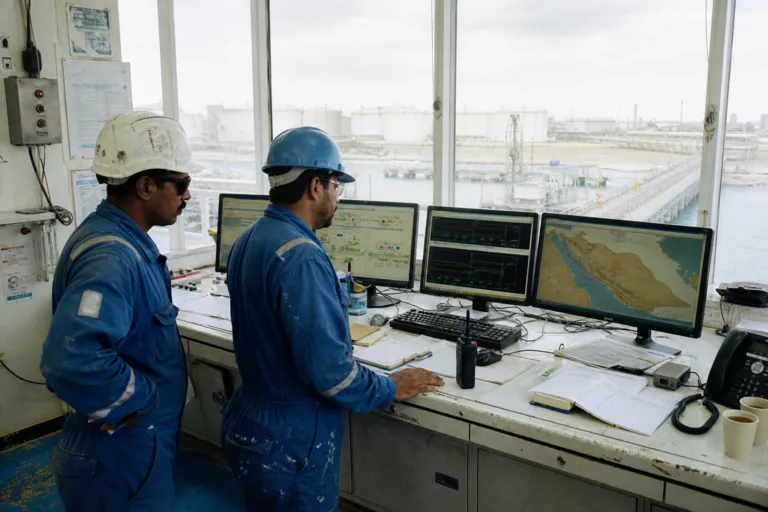
The effective closure of the Strait of Hormuz has pushed Saudi Arabia to rely on a route it built for a worst-case day. The strait has been blocked since Feb. 28, after U.S. and Israeli strikes against Iran, and Iran has targeted ships trying to pass through. This disruption has shifted attention to Strait of Hormuz alternative routes Saudi exporters can use without entering the chokepoint.
The key Saudi bypass is the East-West pipeline network, also called Petroline. CNBC describes it as a roughly 750-mile system that carries crude from Abqaiq on the eastern Gulf coast to the Red Sea port of Yanbu. Other reports describe the line as about 1,200 kilometers long. Its role is simple: move crude across Saudi Arabia so exports can leave from the west.
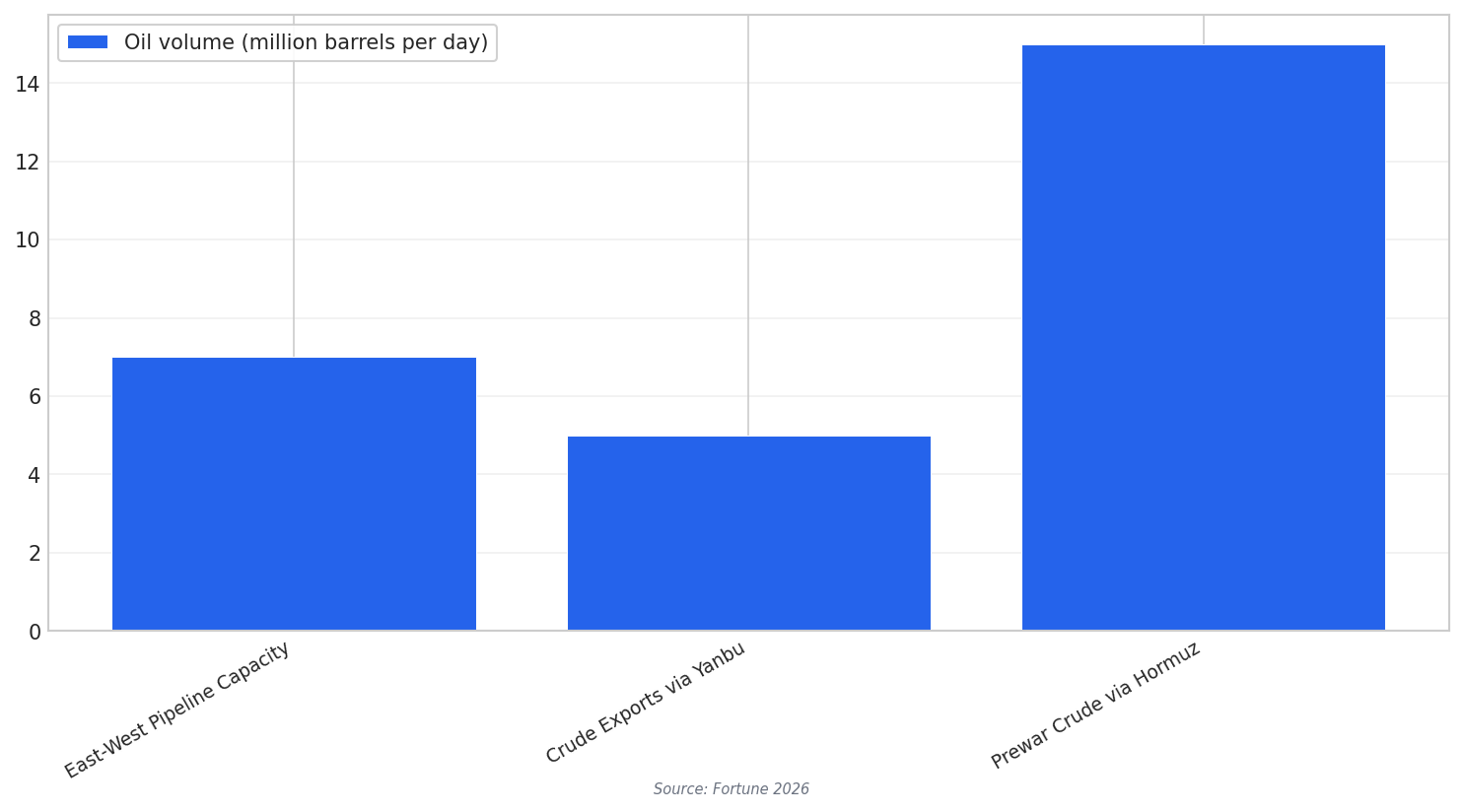
Three numbers show why the line matters right now. The East-West pipeline is pumping at full capacity of 7 million barrels per day. Crude exports via Yanbu have reached about 5 million barrels per day. Before the war, about 15 million barrels per day of crude shipments passed through the Strait of Hormuz.
Why Yanbu Became the Center of Gravity
Pipeline Technology Journal says Saudi Aramco has reoriented its logistics toward the west as the threat around Hormuz continues. Ship-tracking data showed crude exports from Yanbu reached a five-day average of 3.66 million barrels per day through a Friday, described as a fourfold increase from normal levels. Fortune also reported flotillas of tankers redirected to Yanbu, and said at least 25 supertankers were stationed there.
Saudi Arabia is not alone. The UAE has the Abu Dhabi Crude Oil Pipeline (ADCOP), also called the Habshan–Fujairah pipeline. CNBC says it spans around 248 miles and is estimated to handle 1.5 million barrels per day, with reported total capacity close to 1.8 million barrels per day. A Kpler analyst estimated it was operating at 71% utilization, leaving around 440,000 barrels per day of spare capacity, and said ADNOC can temporarily raise throughput to 1.8 million barrels per day if required.
Even these bypasses only partially replace what is lost. CNBC notes that nearly 20 million barrels per day typically transit the Strait of Hormuz, and analysts said the Saudi and UAE pipelines can only partially offset that volume. Risks also remain on the new routes. Pipeline Technology Journal reported an Iranian strike on the Samref refinery in Yanbu briefly halted loadings, and warned that tankers must still navigate the Bab el-Mandeb Strait, where Houthi militants hold a potential “veto” over Red Sea traffic.
What is the main Strait of Hormuz alternative routes Saudi Arabia is using?
How much oil can Saudi Arabia’s East-West pipeline move per day?
How much crude is being exported via Yanbu during the crisis?
What is the UAE’s pipeline alternative, and what capacity does it have?
What risks still threaten exports even when Hormuz is bypassed?
Talk to us for your needs in:
- Identifying Suitable Warehouse Sites in Saudi Arabia
- Customized Logistics and Supply Chain Analytics
- Logistics Network Design and Optimization
- Green Supply Chain and Sustainable Logistics Solutions
- Supply Chain Risk Management and Compliance
- Advanced Supply Chain Resilience and Agility
- Logistics Market Research and Strategic Analysis
- In-Depth Market Survey for Logistics
- Market Intelligence and Insights in Logistics
- Feasibility Study and Assessment in Logistics
- Integrated Warehousing Management Solutions
- Smart Warehousing and Automation Systems
- Sustainable and Green Warehousing Practices
- Port and Airport Logistics Optimization
- Digital Logistics Solutions
- Saudi Logistics Benchmarking