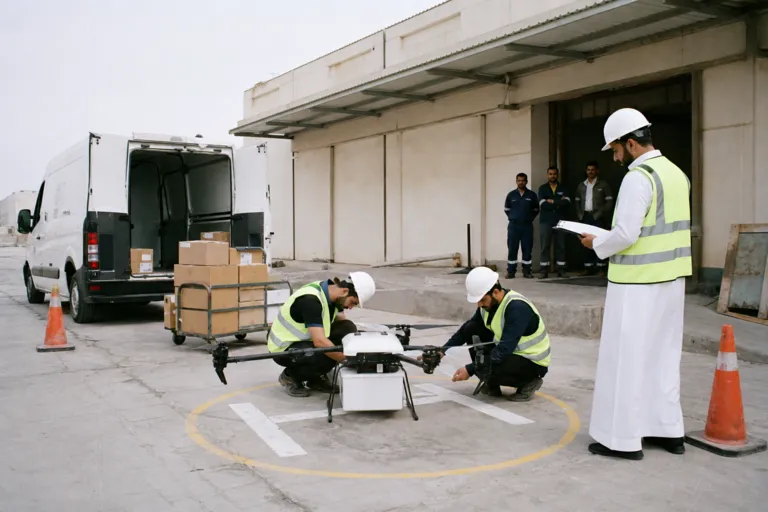
Saudi Arabia has started to turn drone cargo delivery from an idea into practice. The Kingdom launched its first drone parcel delivery trial in Jeddah. The trial was announced by the General Authority of Civil Aviation (GACA) and the Transport General Authority (TGA). Officials described it as a key milestone to transform the logistics sector and provide faster, safer, and more sustainable services. This matters for Saudi drone cargo delivery 2026 because the hardest part of delivery is still the last mile.
In retail logistics, the last mile is widely known for high cost and low efficiency. One source says last-mile delivery accounts for over 50% of total shipping costs in the retail sector. Another source says up to 53% of total shipping costs are attributed to the final delivery step. Drones aim to avoid common problems like road congestion, fuel costs, and human labor limits by flying direct-to-door routes.
Global market signals also show why companies are pushing ahead. The delivery drone market was valued at USD 528.4 million in 2024. It is projected to reach USD 10.5 billion by 2034, reflecting a CAGR of 33.9%. These figures are global, but they help explain why Saudi e-commerce and logistics players are piloting drone delivery systems to reduce last-mile delivery times and enhance service efficiency.
What Changes When Drones Take the Last Mile
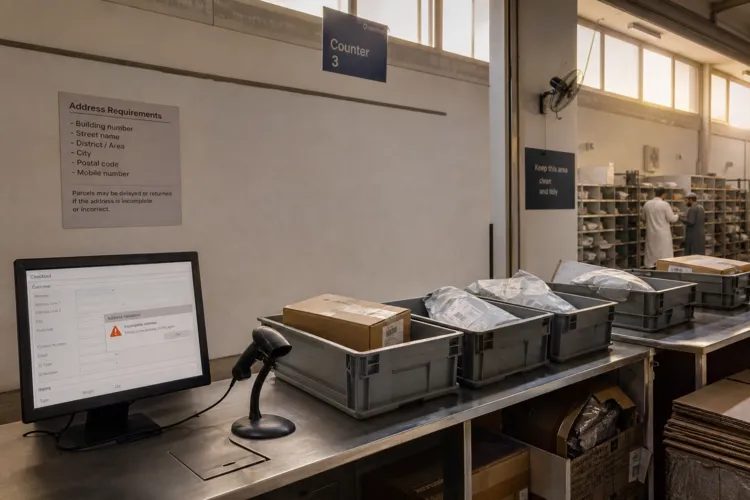
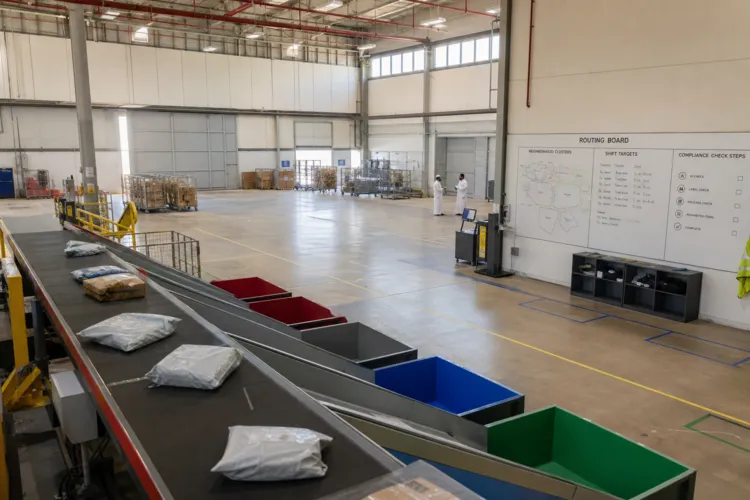
Drone delivery operations are more than a drone in the air. In retail workflows, eligible items are scanned, weighed, and packed in lightweight containers designed for drone payload bays. Then cloud-based fleet management software can send flight instructions and connect to a retailer’s e-commerce platform. Once airborne, the drone can navigate using GPS, RTK positioning, and onboard AI systems.
Routing is a key reason drones can be faster. The drone can calculate a flight path while accounting for airspace regulations, no-fly zones, weather conditions, and obstacle avoidance such as trees and buildings. Advanced UTM systems can coordinate drone traffic in real time to support safe, collision-free operations. For delivery, many retail drones use a tethered system, where the drone can hover and lower the package.
Saudi Arabia is not alone in preparing for autonomous delivery. In the Gulf, aviation authorities in the UAE, Saudi Arabia, and Qatar have issued clearer guidance on where drones can operate, how they must be registered, and the safety requirements. The region’s leaders include Saudi Arabia, the UAE, and Qatar, and the shift is described as no longer just experimental. For Saudi drone cargo delivery 2026, this mix of trials and clearer rules is what can turn pilots into repeatable delivery networks.
What is the Saudi drone cargo delivery 2026 story mainly about?
Why is last-mile delivery a big problem for retailers?
How do retail drone deliveries work in simple terms?
What do the sources say about the global delivery drone market?
Talk to us for your needs in:
- Identifying Suitable Warehouse Sites in Saudi Arabia
- Customized Logistics and Supply Chain Analytics
- Logistics Network Design and Optimization
- Green Supply Chain and Sustainable Logistics Solutions
- Supply Chain Risk Management and Compliance
- Advanced Supply Chain Resilience and Agility
- Logistics Market Research and Strategic Analysis
- In-Depth Market Survey for Logistics
- Market Intelligence and Insights in Logistics
- Feasibility Study and Assessment in Logistics
- Integrated Warehousing Management Solutions
- Smart Warehousing and Automation Systems
- Sustainable and Green Warehousing Practices
- Port and Airport Logistics Optimization
- Digital Logistics Solutions
- Saudi Logistics Benchmarking