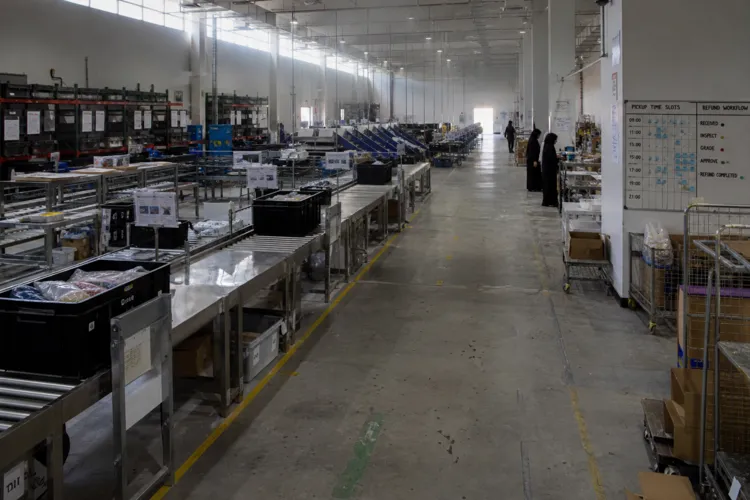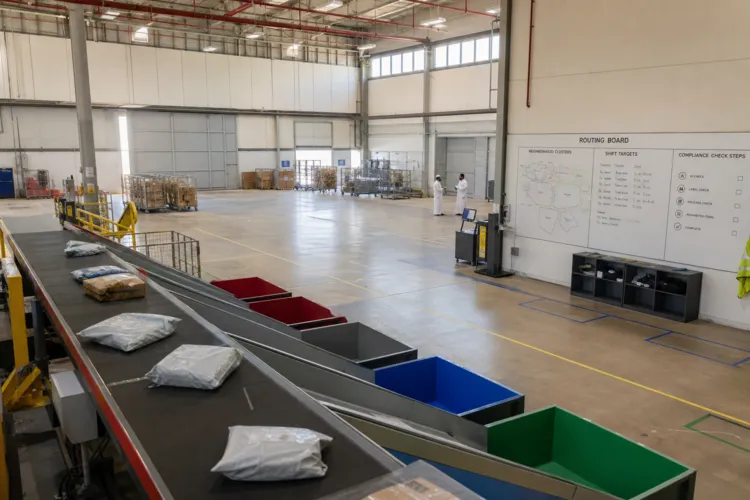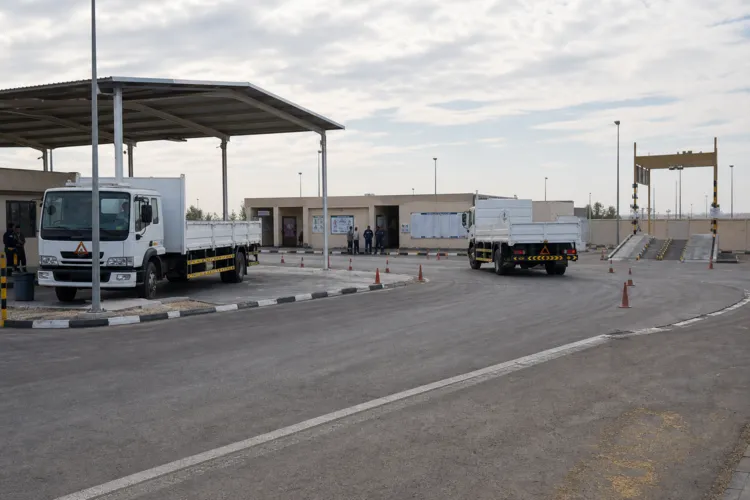
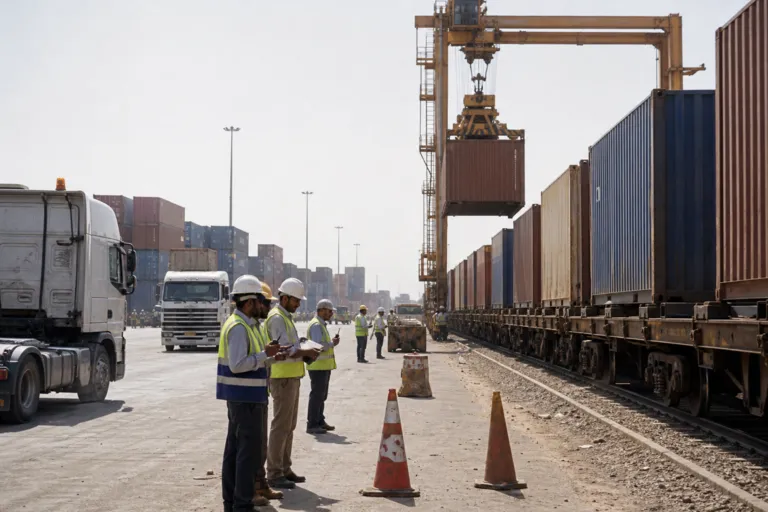
Saudi Arabia Railways has announced five new logistics corridors in the freight sector as part of efforts to enhance supply chain efficiency and deepen integration across transport modes. SAR described the corridors as an integrated logistics system that links Arabian Gulf ports with central and northern Saudi Arabia, and extends connectivity to Red Sea ports and the northern regions through a multimodal network combining rail and road. Operations are managed through an integrated system that includes the Riyadh Dry Port and freight yards in Dammam, Jubail, Ras Al-Khair, Al-Kharj, Hail, and Qurayyat. SAR said this structure is designed to improve cargo flow efficiency across routes and support regional and international trade movement aligned with the National Transport and Logistics Strategy and Saudi Vision 2030.
The practical supply-chain change is less about adding track in isolation and more about reshaping how freight enters and exits key nodes. Reporting around the rollout highlights a focus on improving access from rail hubs at Dammam, Jubail, Ras Al Khair, Al Kharj, and Hail through to Red Sea ports, because access can determine whether cargo stays on trucks or shifts into rail-linked port systems. In April 2026, SAR launched five freight logistics corridors spanning more than 2,500 kilometers, connecting gateways including Jeddah Islamic Port, King Abdulaziz Port in Dammam, and King Abdullah Port with inland dry ports, industrial cities, logistics hubs, and neighboring GCC markets. SAR expects the corridors to eliminate thousands of truck trips from roads, reduce cargo transit time, and improve operational efficiency.
Why These Corridors Change Routing Decisions
The timing matters because global carriers are already packaging sea-land combinations that treat Saudi Arabia as a bridge between coasts. MSC Mediterranean Shipping Company is launching a new service from Antwerp in May 2026, shipping to Jeddah and King Abdullah Port, then transferring containers to trucks to Dammam before using feeder services onward to Jebel Ali, Khalifa Industrial Zone, and other Gulf ports. Hapag-Lloyd is also launching overland options via Saudi Arabia and Oman. Against that backdrop, stronger rail access from major inland yards to Red Sea gateways can alter the cost and reliability logic shippers use when choosing routes for petrochemicals, minerals, industrial goods, and consumer products that SAR says the new corridors are designed to move.
Execution still depends on constraints outside the railway. One stated challenge to developing new logistic routes has been a shortage of trucks and drivers, which makes shifting long-haul movements to rail more attractive but also raises pressure on final-mile capacity. Another issue is throughput capacity at ports pulled into new logistics networks. Reporting notes that Khor Fakkan and Fujairah have limited capacity, with Khor Fakkan never operating at more than three million TEUs compared with Jebel Ali’s 25 million TEUs. Sohar and Salalah are described as efficient operations, with Salalah ranked as the second most efficient container port in the world in 2023, yet both are also suffering capacity issues that will take longer to solve. These bottlenecks shape how quickly rail-enabled routing can scale.
Saudi projects on the road-and-yard side show how corridors become usable at scale. Mawani is executing a project valued at more than SAR 689 million to create a dedicated and direct logistics corridor linking Jeddah Islamic Port with the Al-Khumrah Logistics Park. The corridor stretches 17 kilometers, includes two lanes in each direction, and includes 12 bridges intended to move trucks without using the city’s internal road network; the Minister of Transport and Logistics Services Saleh bin Nasser Al-Jasser said it will increase the handling capacity of Jeddah Islamic Port by 10%. Separately, the Dammam Integrated Logistics Zone will span 1 million square metres with an investment of up to SAR 1.3 billion, with modular warehousing, cold chain, and container handling listed. Together, these moves complement the SAR five new logistics corridors by tightening connections between ports, rail yards, and industrial demand.
What are SAR’s new freight logistics corridors designed to do?
How long is the new SAR corridor network mentioned in April 2026 reporting?
Which inland facilities support the corridor operations?
What port-capacity comparisons were cited as a constraint in the region?
How do the SAR five new logistics corridors connect with Saudi port-side projects?
Talk to us for your needs in:
- Identifying Suitable Warehouse Sites in Saudi Arabia
- Customized Logistics and Supply Chain Analytics
- Logistics Network Design and Optimization
- Green Supply Chain and Sustainable Logistics Solutions
- Supply Chain Risk Management and Compliance
- Advanced Supply Chain Resilience and Agility
- Logistics Market Research and Strategic Analysis
- In-Depth Market Survey for Logistics
- Market Intelligence and Insights in Logistics
- Feasibility Study and Assessment in Logistics
- Integrated Warehousing Management Solutions
- Smart Warehousing and Automation Systems
- Sustainable and Green Warehousing Practices
- Port and Airport Logistics Optimization
- Digital Logistics Solutions
- Saudi Logistics Benchmarking